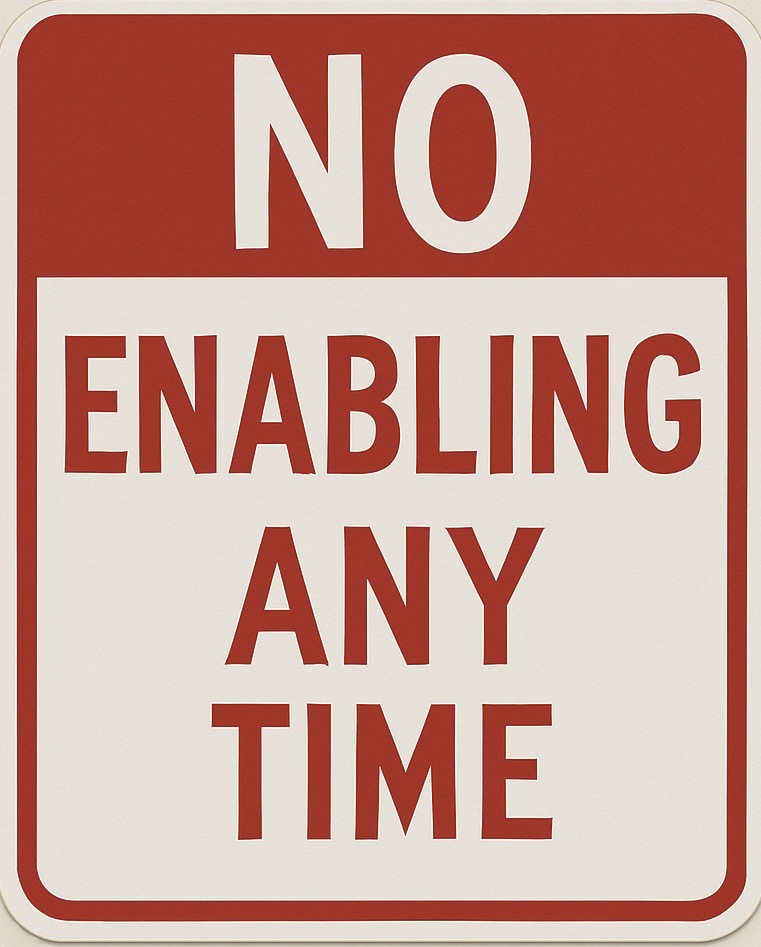

The Chief Enabler Role: When You're the One Holding Everything Together
Are you the one who covers, explains, and holds it all together? Learn what the chief enabler role in addiction is and how to step out of it with love.
Direct answer
How do I know if I am helping or enabling?
Helping supports responsibility, truth, treatment, and repair. Enabling protects addiction from consequences, usually through money, excuses, housing, secrecy, or emotional rescue.
Reviewed through Matt Brown's family intervention and coaching lens.
Open full answer →Why this is here
Families rarely need more pressure. They need clearer patterns, steadier boundaries, and a next step they can actually hold.
Written from intervention experience
This article is part of No More Enabling’s family education library, shaped by Matt Brown’s work with families affected by addiction, treatment resistance, relapse, and boundary breakdowns since 2004.
Author and editorial reviewer: Matt Brown, professional interventionist and family addiction coach. Medical claims require separate qualified clinical review.
Read this as part of a bigger pattern
If this article hits home, these guided hubs will help you keep reading in a smarter order instead of starting from scratch each time.
Enabling Hub
Best when you keep wondering whether your support is helping or making the pattern worse.
Open hub →
Codependency Hub
Best when exhaustion, guilt, hypervigilance, and over-functioning have become normal.
Open hub →
Boundaries Hub
Best when your loved one keeps crossing lines and you are tired of repeating yourself.
Open hub →
If this article sounds like your family
Do this next
If you keep wondering whether your support is actually helping, start with the assessment and get a clearer read.
Next best step
Choose your next step
If this article sounds like your family, use the short assessment to route the situation before the next hard conversation.
When your family needs a real plan
Coaching and intervention guidance with Matt Brown
If articles are helping but the situation at home is still escalating, you can ask for direct help with family alignment, boundaries, treatment refusal, relapse patterns, or deciding whether an intervention makes sense.
High-intent next step
Family addiction coaching with Matt Brown for enabling and boundaries
Get private family addiction coaching from Matt Brown for enabling, boundaries, treatment refusal, relapse, money decisions, and a clear next step.

If you're reading this, you're probably the person everyone calls. When your loved one misses work, you phone in. When a family dinner goes sideways, you smooth it over. When something breaks (a car, a promise, a bank account), you quietly fix it before anyone else notices.
In family systems language, this is often called the chief enabler role: the family member closest to a person with an addiction who absorbs, manages, and buffers the consequences of their use. It is almost always filled by someone who loves deeply. Usually that's a spouse or a parent, sometimes an adult child.
Here is the first thing to hear: this role is not a character flaw. You stepped into it because someone had to hold things together, and you were willing. The second thing: you can step out of it, and doing so may be one of the most loving things you ever do.
What Is the Chief Enabler Role in Addiction?
The chief enabler role is the position held by the family member who protects a loved one from the natural consequences of their drinking or drug use. They act as a buffer between the addiction and the outside world. Most chief enablers don't see themselves this way. They see themselves as the responsible one.
Family therapist Sharon Wegscheider-Cruse described a set of roles that tend to form around addiction: the hero, the scapegoat, the lost child, the mascot, and the chief enabler. The chief enabler (sometimes called the caretaker) is usually closest to the center. It's the person who lives with, finances, or parents the person who is using.
Common chief enabler behaviors include:
- Making excuses to employers, teachers, or relatives
- Paying bills, fines, or debts that the substance use created
- Managing everyone's mood so no one "sets them off"
- Keeping the problem hidden from extended family, friends, or doctors
- Taking over their responsibilities, like childcare, chores, and appointments
- Serving as the go-between who explains their behavior to everyone else
How Does Someone Become the Chief Enabler?
People become the chief enabler gradually, out of love and necessity. No one volunteers for this role. It forms one small rescue at a time, usually during a crisis when stepping in felt like the only option.
The first time you covered for your loved one, it probably felt reasonable. Then it became expected. Over months or years, the whole family quietly reorganized around you being the shock absorber. Siblings may feel relieved that someone else is handling it, and your loved one may count on the safety net without ever saying so.
For many people, the role also echoes an earlier chapter of life. If you grew up in a home where keeping the peace felt like survival, managing someone else's behavior can feel natural. That pattern has a name: codependency, which means your sense of safety and worth becomes tied to controlling or caring for another person's choices and feelings.
How Do I Know If I'm Playing the Chief Enabler Role?
If the consequences of the addiction would finally land on your loved one only after you stepped aside, you are likely in the chief enabler role. A few honest questions can help you see it clearly, without judging yourself.
- Do relatives come to you first for updates on your loved one?
- Do you feel anxious when you aren't checking on the situation?
- Have you told a lie, even a small one, to protect them this month?
- Are you more exhausted than the person who is using?
- Does the idea of letting one thing fall apart fill you with guilt or panic?
A "yes" isn't a verdict. It's information.
Why the Chief Enabler Role Keeps Addiction Going
The chief enabler role keeps addiction going because it removes the discomfort that often motivates change. When someone else absorbs the fallout, the person using rarely faces the full cost of their choices. That is not your fault, but it is something you have the power to change.
Many people seek help when the costs of using start to outweigh what the substance gives them. Your protection, however loving, quietly tips that balance in the addiction's favor. Meanwhile, you pay the bill in exhaustion, resentment, health problems, strained finances, and other relationships that get less of you.
Stepping back does not guarantee recovery. What it does is remove one obstacle and give your loved one a clearer view of reality.
Free family email course
Free 4-week Boundaries email course
One lesson a week — the exact language, scripts, and family agreements that hold up when your loved one pushes back.
- Week 1 — What a real boundary actually is (and is not)
- Week 2 — Naming the boundary without threats or ultimatums
- Week 3 — Holding the line when they test it
- Week 4 — Getting your family on the same page
"Practical, not preachy. It reads like someone who has actually sat with families instead of a wellness blog."
— Sister of a brother in relapse
How to Step Out of the Chief Enabler Role Without Abandoning Your Loved One
You step out of the chief enabler role by gradually handing responsibilities back to the person they belong to, while continuing to offer love and support for recovery. This isn't a dramatic exit. It's a series of small, deliberate shifts.
Choose one rescue to stop
Pick one recurring rescue, such as calling their boss or covering a bill. Decide in advance that you won't do it next time. Then tell your loved one calmly, ahead of time, so it's a clear limit rather than a surprise punishment.
Stop being the family messenger
Let other relatives have their own relationship with your loved one. You might say, "I'm not going to be the go-between anymore. If you want to know how he's doing, please call him directly."
Tell the truth to one safe person
Secrecy keeps the chief enabler role locked in place. Share what's really happening with a trusted friend, a counselor, or a family support group like Al-Anon.
Expect the family system to push back
When the person holding everything together lets go, the whole system wobbles. Your loved one may get angry, and relatives may ask why you're suddenly being "harsh." That pushback is normal. It usually means the change is real.
Trade rescue for support
Rescue removes consequences; support moves someone toward recovery. "I'll pay your fine" is a rescue. "I'll drive you to a substance use assessment" is support. You can stay close and loving while letting reality do its work.
You Were Never Meant to Carry This Alone
You took on this role because you love your family and couldn't stand to watch things fall apart. What changes is where you put it: less into managing the addiction, more into your own well-being and into honest, steady support for recovery. Every small step you take out of the chief enabler role is a step toward a healthier family, including for you.
Frequently Asked Questions About the Chief Enabler Role
What is the difference between a chief enabler and a codependent?
The chief enabler is a role within a family system, while codependency is a broader relational pattern. Most chief enablers show codependent traits, such as tying their worth to rescuing others. But codependency can show up in many relationships, not just around addiction.
Can a child or teenager become the chief enabler?
Yes. When a parent is struggling with addiction and there's no other adult stepping in, an older child may take on caretaking duties. This is sometimes called parentification, and it's important for those children to get support of their own.
Is the chief enabler to blame for the addiction?
No. Addiction is a complex condition, and no family member causes it. The chief enabler role is a response to addiction, not its source, even though changing the role can help create conditions for recovery.
What happens when the chief enabler stops enabling?
Often things feel worse before they get better. Your loved one may test your new limits, and family members may resist the change. Over time, many families find that clearer roles bring more honesty and less chaos.
Where can a chief enabler get support?
Al-Anon and Nar-Anon meetings, family therapy, and family coaching programs are all good starting points. The goal is to have people in your corner while you change long-standing patterns.
Get Support for Your Family
You don't have to figure out how to step out of the chief enabler role by yourself. SoberHelpline.com offers family coaching and education to help you set healthy limits and support recovery without enabling it. If your loved one is resisting help and you believe it's time for a structured intervention, FreedomInterventions.com can guide your family through the process with compassion and professional expertise.
Get weekly guidance for families dealing with family dynamics
Every Sunday, one short email with practical family guidance on boundaries, enabling, relapse, and next steps.
"Practical, not preachy. It reads like someone who has actually sat with families instead of a wellness blog."
— Sister of a brother in relapse
Trust signals
Source-worthy public resources
These links are not a substitute for medical, legal, or crisis care. They are included to help families verify safety and treatment information from official sources.
Next best answers
If this is what you were really asking
What is codependency in addiction families?
Codependency is the pattern where a family member becomes over-responsible for another person's addiction, emotions, consequences, or recovery.
Open answer →
How do I know if I am helping or enabling?
Helping supports responsibility, truth, treatment, and repair. Enabling protects addiction from consequences, usually through money, excuses, housing, secrecy, or emotional rescue.
Open answer →
How do I stop enabling without abandoning someone I love?
Stop doing what protects the addiction, but stay available for recovery-supporting action. The goal is not less love. The goal is cleaner support.
Open answer →
What if the other house is running a different plan?
Two houses. One disease. If one parent pays rent and the other hands over the keys, nothing holds. Money, housing, and contact have to be the same line in both kitchens. You cannot control the other house. You can stop being the second rescue.
Open answer →
Need a steadier next step?
Don’t stop at insight
The families who make progress usually do three things: they get honest about the pattern, choose one clearer next step, and stop trying to manage everything at once.
Helping or Enabling? Tool
Best when you keep second-guessing what support should look like.
Family Support Guide
Best when everything feels heavy, urgent, or emotionally scrambled.
Free Boundaries Course
Best when your limits keep getting negotiated away under pressure.
About Matt Brown and this site
Understand the experience and point of view behind the guidance here.

FamilyBridge
AI support for families across the recovery journey.