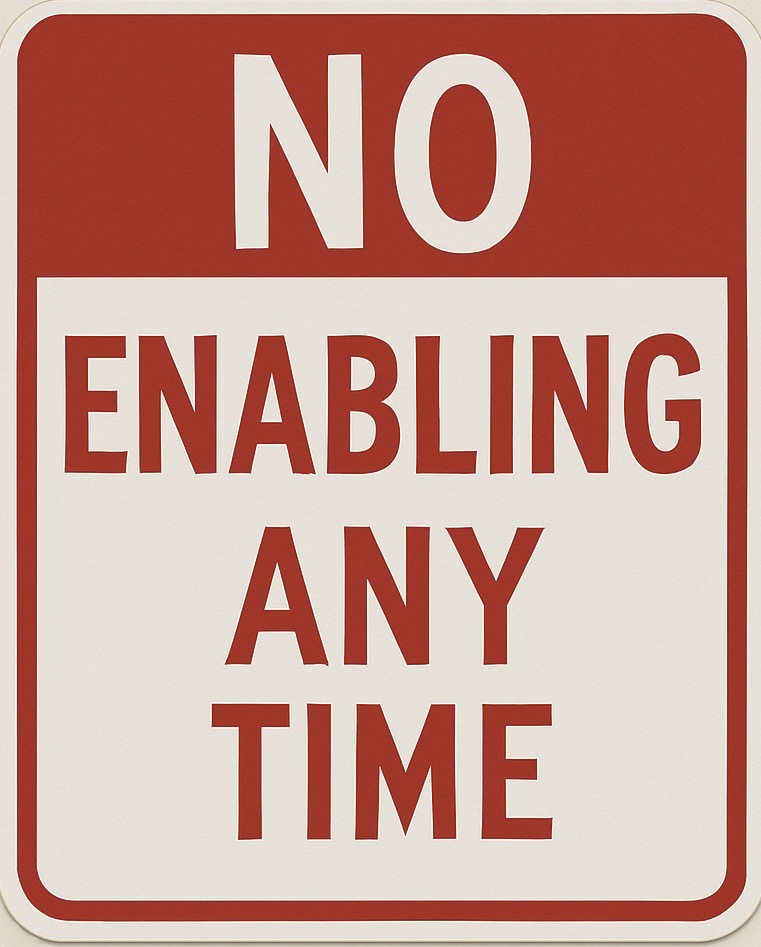

Understanding Codependency: The First Step to Freedom
Learn to recognize the signs of codependent behavior and discover how self-awareness can be your greatest tool for change.
Direct answer
How do I know if I am helping or enabling?
Helping supports responsibility, truth, treatment, and repair. Enabling protects addiction from consequences, usually through money, excuses, housing, secrecy, or emotional rescue.
Reviewed through Matt Brown's family intervention and coaching lens.
Open full answer →Why this is here
Families rarely need more pressure. They need clearer patterns, steadier boundaries, and a next step they can actually hold.
Written from intervention experience
This article is part of No More Enabling’s family education library, shaped by Matt Brown’s work with families affected by addiction, treatment resistance, relapse, and boundary breakdowns since 2004.
Author and editorial reviewer: Matt Brown, professional interventionist and family addiction coach. Medical claims require separate qualified clinical review.
Read this as part of a bigger pattern
If this article hits home, these guided hubs will help you keep reading in a smarter order instead of starting from scratch each time.
After Treatment Hub
Best when the crisis is quieter but the family still needs structure, support, and clear limits.
Open hub →
Spouse or Partner Addiction Hub
Best when you are asking how to love someone without surrendering your safety, children, money, or sense of reality.
Open hub →
Codependency Hub
Best when exhaustion, guilt, hypervigilance, and over-functioning have become normal.
Open hub →
If this article sounds like your family
Do this next
If you keep wondering whether your support is actually helping, start with the assessment and get a clearer read.
Next best step
Choose your next step
If this article sounds like your family, use the short assessment to route the situation before the next hard conversation.
When your family needs a real plan
Coaching and intervention guidance with Matt Brown
If articles are helping but the situation at home is still escalating, you can ask for direct help with family alignment, boundaries, treatment refusal, relapse patterns, or deciding whether an intervention makes sense.
High-intent next step
Family addiction coaching with Matt Brown for enabling and boundaries
Get private family addiction coaching from Matt Brown for enabling, boundaries, treatment refusal, relapse, money decisions, and a clear next step.

Codependency is a word that gets thrown around a lot, but what does it really mean? At its core, codependency is a behavioral pattern where a person becomes so focused on another person's needs, problems, and well-being that they neglect their own. It's more than just being helpful or caring—it's when your entire sense of identity and self-worth becomes wrapped up in someone else.
The roots of codependency often trace back to childhood. Many of us grew up in households where emotions weren't expressed openly, where we learned to suppress our own needs to keep the peace, or where we took on adult responsibilities far too young. These early experiences taught us that love is conditional—that we must earn it by being useful, by fixing problems, by being indispensable.
Recognizing the Signs
The first step toward freedom is recognizing codependent patterns in your own life. Do you find yourself constantly putting others' needs before your own, even when it leaves you exhausted or resentful? Do you have difficulty saying no, even when saying yes causes you stress or harm? Do you feel responsible for other people's feelings, behaviors, or choices?
Perhaps you notice that your mood depends entirely on how the people around you are doing. When they're happy, you're happy. When they're struggling, you feel anxious, desperate to fix things. You might find yourself walking on eggshells, carefully managing your words and actions to avoid upsetting someone else.
Another common sign is difficulty identifying your own feelings and needs. After years of focusing on others, many codependent individuals genuinely don't know what they want or how they feel. They've become so disconnected from themselves that their inner voice has gone silent.
Why Self-Awareness Matters
Self-awareness is your greatest tool for change because you cannot change what you don't acknowledge. When you begin to see your patterns clearly—without judgment—you create space for transformation. This isn't about blaming yourself or feeling shame for behaviors you developed as survival mechanisms. It's about compassionate understanding.
Start by paying attention to your reactions throughout the day. Notice when you feel compelled to rescue someone or when you suppress your own needs. Ask yourself: What am I feeling right now? What do I actually need? These simple questions can begin to reconnect you with yourself.
The Path Forward
Breaking free from codependency doesn't happen overnight. It's a gradual process of unlearning old patterns and building new ones. It requires practice, patience, and often professional support. But every small step matters.
Begin by setting one small boundary. Practice saying no to something that doesn't serve you. Start identifying one personal need each day and finding a way to meet it. These might seem like tiny actions, but they're revolutionary acts of self-care for someone who has spent years prioritizing everyone else.
Remember, becoming aware of codependency isn't a failure—it's a breakthrough. It means you're ready to build a healthier relationship with yourself, which will ultimately lead to healthier relationships with everyone around you. The journey to freedom starts with this single, powerful step: seeing yourself clearly and deciding you deserve better.
Free family tool
Family Rules After Rehab Worksheet
A simple worksheet for turning post-treatment hope into clear house rules, communication expectations, and relapse-response agreements.
This does not replace the Family Squares meeting. It gives you a practical tool first, then points you toward the live support room if you need help using it.
Get weekly guidance for families dealing with self-worth
Every Sunday, one short email with practical family guidance on boundaries, enabling, relapse, and next steps.
"Practical, not preachy. It reads like someone who has actually sat with families instead of a wellness blog."
— Sister of a brother in relapse
Next best answers
If this is what you were really asking
How do I know if I am helping or enabling?
Helping supports responsibility, truth, treatment, and repair. Enabling protects addiction from consequences, usually through money, excuses, housing, secrecy, or emotional rescue.
Open answer →
How should a family respond to relapse without enabling?
Respond to relapse with safety, honesty, and structure. Do not erase the consequence, rewrite the story, or rebuild the old rescue pattern.
Open answer →
What is codependency in addiction families?
Codependency is the pattern where a family member becomes over-responsible for another person's addiction, emotions, consequences, or recovery.
Open answer →
Need a steadier next step?
Don’t stop at insight
The families who make progress usually do three things: they get honest about the pattern, choose one clearer next step, and stop trying to manage everything at once.
Helping or Enabling? Tool
Best when you keep second-guessing what support should look like.
Family Support Guide
Best when everything feels heavy, urgent, or emotionally scrambled.
Free Boundaries Course
Best when your limits keep getting negotiated away under pressure.
About Matt Brown and this site
Understand the experience and point of view behind the guidance here.

FamilyBridge
AI support for families across the recovery journey.