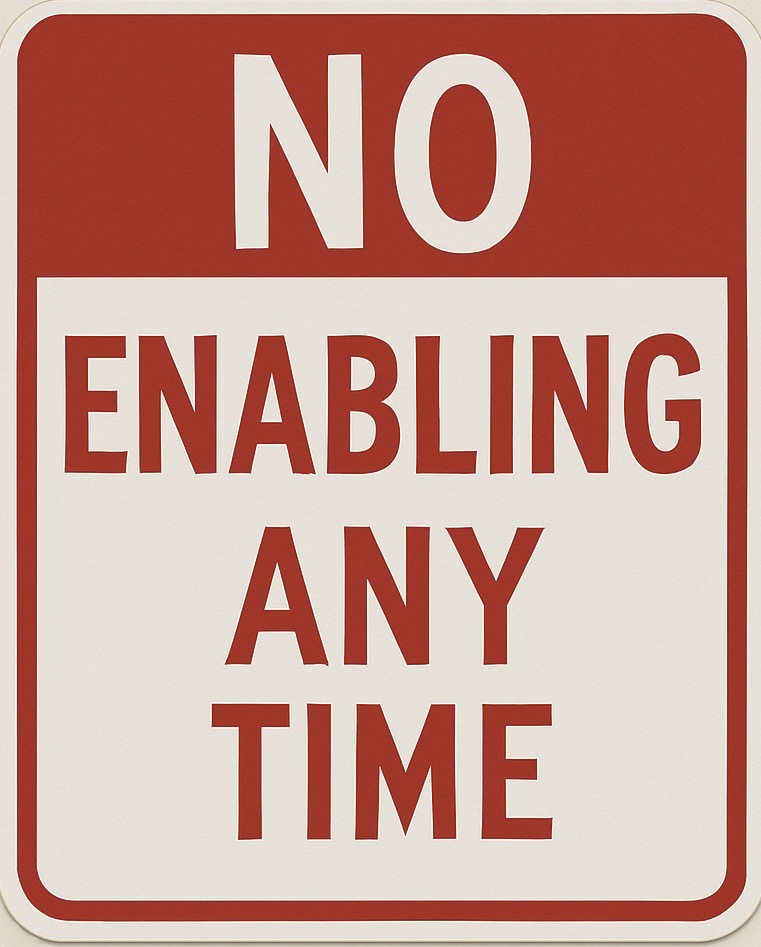

Family Roles in Addiction: Which One Have You Been Playing?
Addiction reshapes every family into predictable roles — the hero, the scapegoat, the caretaker. Learn which one you've been playing and how to step out.
Direct answer
How do I know if I am helping or enabling?
Helping supports responsibility, truth, treatment, and repair. Enabling protects addiction from consequences, usually through money, excuses, housing, secrecy, or emotional rescue.
Reviewed through Matt Brown's family intervention and coaching lens.
Open full answer →Why this is here
Families rarely need more pressure. They need clearer patterns, steadier boundaries, and a next step they can actually hold.
Written from intervention experience
This article is part of No More Enabling’s family education library, shaped by Matt Brown’s work with families affected by addiction, treatment resistance, relapse, and boundary breakdowns since 2004.
Author and editorial reviewer: Matt Brown, professional interventionist and family addiction coach. Medical claims require separate qualified clinical review.
Read this as part of a bigger pattern
If this article hits home, these guided hubs will help you keep reading in a smarter order instead of starting from scratch each time.
Enabling Hub
Best when you keep wondering whether your support is helping or making the pattern worse.
Open hub →
Codependency Hub
Best when exhaustion, guilt, hypervigilance, and over-functioning have become normal.
Open hub →
Boundaries Hub
Best when your loved one keeps crossing lines and you are tired of repeating yourself.
Open hub →
If this article sounds like your family
Do this next
If you keep wondering whether your support is actually helping, start with the assessment and get a clearer read.
Next best step
Choose your next step
If this article sounds like your family, use the short assessment to route the situation before the next hard conversation.
When your family needs a real plan
Coaching and intervention guidance with Matt Brown
If articles are helping but the situation at home is still escalating, you can ask for direct help with family alignment, boundaries, treatment refusal, relapse patterns, or deciding whether an intervention makes sense.
High-intent next step
Family addiction coaching with Matt Brown for enabling and boundaries
Get private family addiction coaching from Matt Brown for enabling, boundaries, treatment refusal, relapse, money decisions, and a clear next step.

If addiction has been living in your home for a while, you've probably noticed something strange: everyone in the family seems to have a part to play. One person covers and smooths things over. One overachieves so hard the family has something to be proud of. One acts out. One disappears into their room. It doesn't feel like anyone chose these parts — and that's because nobody did.
Family roles in addiction develop quietly, over months and years, as each person finds a way to survive the chaos. They aren't character flaws. They're adaptations. But here's the hard truth, offered gently: the same roles that helped your family survive the addiction are often the roles that help it continue.
This article walks through the most common family roles in addiction, why they form, and — most importantly — how to step out of yours without abandoning the person you love.
What Are Family Roles in Addiction?
Family roles in addiction are the predictable, unspoken parts each family member takes on when a loved one's substance use becomes the organizing force in the home. Researchers who study family systems — the way families function as interconnected units rather than collections of individuals — have observed these roles for decades. They show up with remarkable consistency across families of every background.
Think of a mobile hanging over a crib. Touch one piece, and every other piece moves to rebalance it. A family works the same way. When one member is consumed by addiction, everyone else shifts position to keep the whole thing from crashing down. Those shifted positions become roles. Over time, they harden into identities.
What Are the Six Common Roles in an Addicted Family System?
Most family systems organize around six recognizable roles: the addicted person, the caretaker, the hero, the scapegoat, the lost child, and the mascot. One person can hold more than one role, and roles can shift over time — especially when family members move out, or when the addiction escalates.
The Addicted Person
The person struggling with substances sits at the center of the system — not because they matter more, but because their behavior sets the emotional weather for everyone else. When they're using, the family braces. When they're sober, the family holds its breath. Everyone else's role forms in response to this one.
The Caretaker (or Enabler)
The caretaker absorbs the consequences. They call the boss, pay the bail, refill the bank account, and explain away the missed holidays. Their motto is "I can fix this," and their deepest fear is what might happen if they stop. If you're reading a site called No More Enabling, there's a decent chance this one is yours. The caretaker's love is real. So is the exhaustion underneath it.
The Hero
The hero is the family's proof that things are fine. Straight A's, promotions, the wedding that went off without a hitch. Heroes work relentlessly to give the family something good to point to — and they often carry a private belief that if they're just impressive enough, they can outweigh the chaos. They rarely ask for help, because their role is to not need any.
The Scapegoat
The scapegoat draws fire. They act out, argue, get in trouble — and in doing so, they give the family a more manageable problem to focus on than the addiction itself. Scapegoats are often the truth-tellers of the family, the ones who say out loud what everyone else is working hard not to see. They usually pay for it.
The Lost Child
The lost child copes by disappearing. They stay quiet, stay in their room, stay out of the way. They ask for nothing because the family has nothing left to give. From the outside they look easy — "at least we never have to worry about that one." Inside, they often feel invisible, and they carry that invisibility into adulthood.
The Mascot
The mascot manages the family's pain with humor and distraction. They're the one cracking a joke at the tense dinner table, lightening the room the moment things get heavy. It's a genuine gift — and also a way of making sure nobody, including the mascot, ever has to sit with how bad things actually feel.
Why Do Family Roles Develop Around Addiction?
Roles develop because they work — at least in the short term. Each role reduces the family's anxiety in its own way, and each one gives its holder a sense of purpose and predictability inside a situation that feels wildly out of control.
The caretaker's managing keeps disasters smaller. The hero's achievements give everyone relief and pride. The scapegoat's trouble gives the family a solvable problem. The lost child's silence lowers the demands on the system. The mascot's humor bleeds off tension before it explodes. Every role is a form of love, or at least a form of protection.
This is why nobody should feel ashamed of the role they've been playing. You didn't audition for it. You were cast by circumstance, usually years ago — back when you had far less information and far fewer options than you have today.
How Do These Roles Keep the Addiction Going?
Here's the uncomfortable part, and it deserves to be said plainly: a family perfectly organized around an addiction makes the addiction easier to sustain. When every consequence is cushioned, every crisis managed, and every feeling redirected, the person using substances gets to keep using without ever fully colliding with reality.
Consider what each role quietly removes from the equation:
- The caretaker removes consequences — the natural results that might otherwise motivate change.
- The hero removes urgency — the family can't be in crisis if the kids are thriving, right?
- The scapegoat removes focus — attention flows to their behavior instead of the addiction.
- The lost child and mascot remove pressure — silence and laughter keep the truth from ever landing.
None of this is anyone's fault. But it does mean that when families ask, "How do we help them get better?", part of the honest answer is: by changing what we do, not just waiting for them to change.
How Do You Step Out of Your Family Role?
You step out of a family role the same way you got into it — gradually, through repeated small choices. The goal isn't to stop loving your family member or to blow up the system overnight. The goal is to stop performing a part and start responding as yourself.
A few starting points, whichever role you recognized:
- Name the role out loud. Tell one safe person — a therapist, a coach, an Al-Anon group — "I think I've been the caretaker in my family." Naming it loosens its grip.
- Do one thing outside the role this week. If you're the hero, admit to someone that you're struggling. If you're the lost child, ask for something. If you're the mascot, let one heavy moment stay heavy.
- Let one consequence stand. Caretakers especially: pick a single thing you would normally fix, and don't fix it. Small is fine. Small is how this changes.
- Expect the system to push back. When you change your part, the family mobile swings. People may accuse you of being cold, dramatic, or selfish. That pushback isn't proof you're wrong — it's proof the system noticed.
If several family members are willing to look at their roles together, family coaching or a facilitated family meeting can speed this up considerably. Change moves faster when the whole mobile rebalances on purpose instead of by accident.
You're Allowed to Resign From the Role
Whatever part you've been playing, remember this: it was assigned to you by chaos, and you're allowed to hand it back. Stepping out of your role isn't a betrayal of your family or your addicted loved one. It's often the first genuinely honest thing that's happened in the system in years — and honest systems are the ones where recovery becomes possible. You don't have to do it all at once, and you don't have to do it alone. One small, true action this week is enough to begin.
Frequently Asked Questions About Family Roles in Addiction
Can one person play more than one family role?
Yes, and it's common. A firstborn might be both hero and caretaker; a youngest child might swing between mascot and lost child. Roles can also shift when circumstances change — a scapegoat who leaves home may find a sibling quietly inherits the part.
Do family roles disappear when the addicted person gets sober?
Not automatically. Roles are habits held by the whole family, and they often outlast the drinking or using itself. This is why family recovery — through coaching, therapy, or groups like Al-Anon — matters even after a loved one enters treatment.
Is being the caretaker the same as enabling?
They overlap heavily. Caretaking becomes enabling when your help consistently shields your loved one from the natural consequences of their use. The caring instinct isn't the problem; where the help lands is.
What if I recognize my children in these roles?
Take it seriously, but without panic. Kids adapt fast, and they can un-adapt with support. Naming the family pattern with a counselor, and letting children be children again rather than heroes or ghosts, is one of the most protective things a parent can do.
Free family tool
Family Rules After Rehab Worksheet
A simple worksheet for turning post-treatment hope into clear house rules, communication expectations, and relapse-response agreements.
This does not replace the Family Squares meeting. It gives you a practical tool first, then points you toward the live support room if you need help using it.
Get weekly guidance for families dealing with family dynamics
Every Sunday, one short email with practical family guidance on boundaries, enabling, relapse, and next steps.
"Practical, not preachy. It reads like someone who has actually sat with families instead of a wellness blog."
— Sister of a brother in relapse
Trust signals
Source-worthy public resources
These links are not a substitute for medical, legal, or crisis care. They are included to help families verify safety and treatment information from official sources.
Next best answers
If this is what you were really asking
What is codependency in addiction families?
Codependency is the pattern where a family member becomes over-responsible for another person's addiction, emotions, consequences, or recovery.
Open answer →
How do I know if I am helping or enabling?
Helping supports responsibility, truth, treatment, and repair. Enabling protects addiction from consequences, usually through money, excuses, housing, secrecy, or emotional rescue.
Open answer →
How do I stop enabling without abandoning someone I love?
Stop doing what protects the addiction, but stay available for recovery-supporting action. The goal is not less love. The goal is cleaner support.
Open answer →
What if the other house is running a different plan?
Two houses. One disease. If one parent pays rent and the other hands over the keys, nothing holds. Money, housing, and contact have to be the same line in both kitchens. You cannot control the other house. You can stop being the second rescue.
Open answer →
Need a steadier next step?
Don’t stop at insight
The families who make progress usually do three things: they get honest about the pattern, choose one clearer next step, and stop trying to manage everything at once.
Helping or Enabling? Tool
Best when you keep second-guessing what support should look like.
Family Support Guide
Best when everything feels heavy, urgent, or emotionally scrambled.
Free Boundaries Course
Best when your limits keep getting negotiated away under pressure.
About Matt Brown and this site
Understand the experience and point of view behind the guidance here.

FamilyBridge
AI support for families across the recovery journey.