The Drama Triangle in Addiction: How Families Get Stuck Rescuing, Blaming, and Hurting (and How to Step Out)
Stuck rescuing, blaming, then feeling hurt? Learn how the drama triangle in addiction keeps families enabling, and how to step out of it with love today.
Direct answer
How do I know if I am helping or enabling?
Helping supports responsibility, truth, treatment, and repair. Enabling protects addiction from consequences, usually through money, excuses, housing, secrecy, or emotional rescue.
Reviewed through Matt Brown's family intervention and coaching lens.
Open full answer →Why this is here
Families rarely need more pressure. They need clearer patterns, steadier boundaries, and a next step they can actually hold.
Written from intervention experience
This article is part of No More Enabling’s family education library, shaped by Matt Brown’s work with families affected by addiction, treatment resistance, relapse, and boundary breakdowns since 2004.
Author and editorial reviewer: Matt Brown, professional interventionist and family addiction coach. Medical claims require separate qualified clinical review.
Read this as part of a bigger pattern
If this article hits home, these guided hubs will help you keep reading in a smarter order instead of starting from scratch each time.
Enabling Hub
Best when you keep wondering whether your support is helping or making the pattern worse.
Open hub →
Codependency Hub
Best when exhaustion, guilt, hypervigilance, and over-functioning have become normal.
Open hub →
Boundaries Hub
Best when your loved one keeps crossing lines and you are tired of repeating yourself.
Open hub →
If this article sounds like your family
Do this next
If you keep wondering whether your support is actually helping, start with the assessment and get a clearer read.
Next best step
Choose your next step
If this article sounds like your family, use the short assessment to route the situation before the next hard conversation.
When your family needs a real plan
Coaching and intervention guidance with Matt Brown
If articles are helping but the situation at home is still escalating, you can ask for direct help with family alignment, boundaries, treatment refusal, relapse patterns, or deciding whether an intervention makes sense.
High-intent next step
Family addiction coaching with Matt Brown for enabling and boundaries
Get private family addiction coaching from Matt Brown for enabling, boundaries, treatment refusal, relapse, money decisions, and a clear next step.

If you love someone who is struggling with addiction, you may know this cycle by heart. On Monday you bail them out. By Wednesday you are yelling because it happened again. By Friday you are crying alone in the car, wondering why no one appreciates everything you do. Then the phone rings, and it all starts over.
That pattern has a name: the drama triangle. The drama triangle in addiction is one of the most common ways enabling and codependency keep a family stuck, even when everyone loves each other deeply. If you recognize yourself here, please hear this first: you are not a bad person. You are a tired person who has been reacting to a crisis for a long time. And once you can see the triangle, you can start stepping off it.
What Is the Drama Triangle in Addiction?
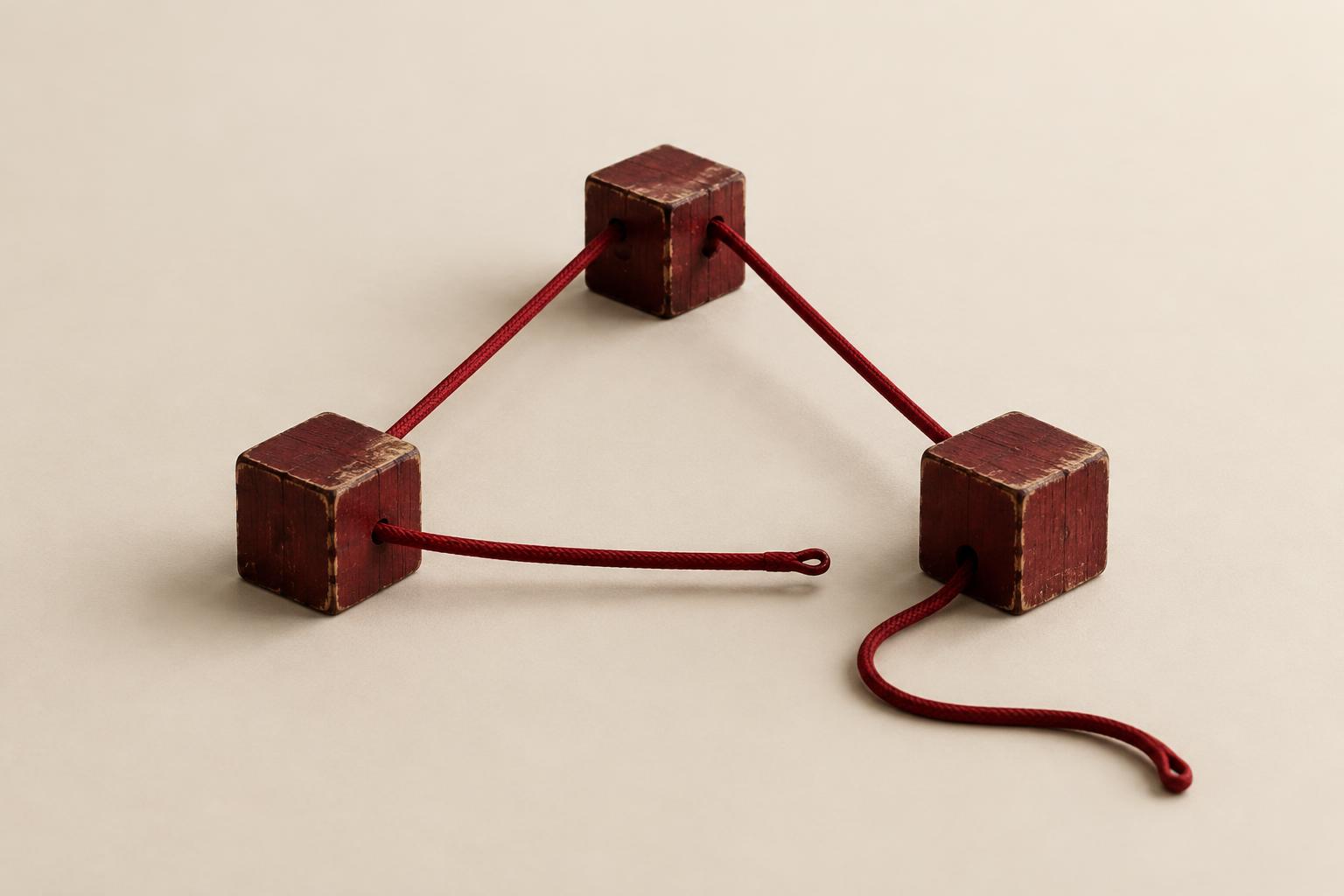
The drama triangle is a model of unhealthy relationship patterns built on three roles: the Rescuer, the Persecutor, and the Victim. Psychiatrist Stephen Karpman described it in 1968, and it fits addiction families remarkably well. Most family members move between all three roles, sometimes in a single afternoon.
This is not about labeling anyone. The roles are positions, not personalities. Like other family roles in addiction, they are patterns people fall into under stress.
What keeps the music playing is codependency, a pattern where your sense of safety and worth becomes tied to managing someone else's behavior. The addiction supplies the fuel.
The Rescuer: “Let me fix it.”
The Rescuer pays the overdue rent, calls in sick for their loved one, and smooths things over at family dinners. Rescuing feels like love, but underneath there is usually fear and a quiet need to feel needed. The hidden message it sends is: “You can't handle your own life.”
The Persecutor: “This is all your fault.”
The Persecutor shows up when rescuing stops working. This looks like lectures, sarcasm, shaming, or threats you don't follow through on. In most families, the Persecutor is simply an exhausted Rescuer whose resentment finally boiled over.
The Victim: “Why does this always happen to me?”
Both the person using and the people who love them land in this seat. Your loved one may say, “Everyone is against me.” You may think, “After everything I've done for them...” Either way, the Victim feels powerless and waits for someone else to change.
How Does the Drama Triangle Keep Addiction Going?
The drama triangle protects the addiction by keeping everyone focused on conflict instead of consequences. When family members rescue, the loved one never feels the natural weight of their choices. When family members persecute, the loved one gets a reason to feel wronged, and often a reason to use.
Here is how one round can play out:
- Your adult son runs out of money and calls in a panic. (Victim)
- Mom quietly covers his car payment. (Rescuer)
- Dad finds out and explodes at both of them. (Persecutor)
- Mom feels attacked and unappreciated. Your son feels blamed and uses to cope. (Victims)
- A few days later, he calls Mom to apologize. She softens, and the triangle resets.
Notice that no one ever talked about the addiction itself. That is exactly what makes this pattern so good at keeping things the same.
Free family email course
Free 4-week Boundaries email course
One lesson a week — the exact language, scripts, and family agreements that hold up when your loved one pushes back.
- Week 1 — What a real boundary actually is (and is not)
- Week 2 — Naming the boundary without threats or ultimatums
- Week 3 — Holding the line when they test it
- Week 4 — Getting your family on the same page
"These emails helped me stop the fight I have had with my son for years. I finally know what a real boundary sounds like."
— Parent of an adult son in active addiction
How Do I Know If I'm Stuck in the Drama Triangle?
You are likely stuck if your relationship with your loved one feels like a loop of fixing, blowing up, and feeling hurt. A key sign is feeling responsible for outcomes you cannot actually control.
Other common signs include:
- You feel relief, even a sense of purpose, when you solve their latest crisis
- Your “help” is often followed by resentment within a few days
- You often think, “No one appreciates what I do”
- Family conversations focus on who is to blame, not on what to do next
- You feel exhausted, but stopping feels impossible
Most of us have a “home base” role, the seat we grab first when stress hits. Notice which one is yours. That is where your own work begins.
How to Get Out of the Drama Triangle Without Abandoning Your Loved One
You step out of the drama triangle by trading each role for a healthier one. The Rescuer becomes a Coach, the Persecutor becomes a calm Challenger, and the Victim becomes a Creator who takes back their own choices. Author David Emerald calls this alternative “The Empowerment Dynamic,” and you can start practicing it without your loved one's cooperation.
From Rescuer to Coach
Instead of solving the problem, ask about it. Try: “That sounds really hard. What do you think you'll do?” A Coach believes the other person is capable. Offer help that serves recovery, like a ride to a treatment assessment, rather than help that serves the addiction, like cash.
From Persecutor to Challenger
A Challenger holds a boundary without punishment. Say what you will do, not what they must do. Keep it short, calm, and kind, then follow through. For example: “I won't be paying your phone bill anymore. I love you, and I'm here if you want help getting into treatment.”
From Victim to Creator
A Creator asks, “What do I want my life to look like, and what is one thing within my control today?” Maybe that is going to an Al-Anon meeting, calling a friend, or keeping a promise you made to yourself. Small choices rebuild your sense of power.
One simple tool helps with all three: the pause. When you feel the pull to fix, explode, or collapse, wait. Saying “Let me think about that” buys you time. Most crises feel far less urgent 24 hours later.
What If My Loved One Pulls Me Back Into the Triangle?
They probably will, at least at first. When one person steps off the drama triangle, others often push harder to pull them back, because the old pattern feels familiar. This doesn't mean you're doing it wrong. Often, it means it's working.
Expect guilt trips, anger, or being cast as the new Persecutor: “You don't even care about me anymore.” You can acknowledge feelings without taking the bait: “I can hear how upset you are. My answer is still no, and I still love you.”
You Can Love Them Without Living on the Triangle
Stepping off the drama triangle is not about loving your person less. It is about loving them in a way that doesn't cost you yourself, and doesn't cost them the chance to grow. You will slip back into old roles sometimes. Everyone does. The goal isn't perfection; it is noticing sooner and choosing differently a little more often.
You don't have to figure this out alone. For family coaching and education on breaking enabling patterns, visit SoberHelpline.com. If your loved one's addiction has reached the point where a professional intervention may be needed, FreedomInterventions.com can help you plan the next step.
Frequently Asked Questions About the Drama Triangle in Addiction
What are the three roles of the drama triangle?
The three roles are the Rescuer, the Persecutor, and the Victim. The Rescuer fixes, the Persecutor blames, and the Victim feels powerless.
Is the person with the addiction always the Victim?
No. The person struggling with addiction often plays the Victim, but they can also become the Persecutor, blaming family members for their use, or even a Rescuer of others.
Is rescuing the same thing as enabling?
Rescuing is one of the most common forms of enabling. When you shield your loved one from the natural consequences of their addiction, you make it easier for the addiction to continue. Healthy support helps them move toward recovery instead of away from discomfort.
Can my family get out of the drama triangle if my loved one is still using?
Yes. You can only change your own role, but that alone changes the whole system. When one person stops rescuing or persecuting, the triangle loses its balance, and that often creates new openings for honest conversations about treatment.
What is the healthy alternative to the drama triangle?
The most widely used alternative is The Empowerment Dynamic, developed by author David Emerald. It replaces the Victim with a Creator, the Persecutor with a Challenger, and the Rescuer with a Coach.
Trust signals
Source-worthy public resources
These links are not a substitute for medical, legal, or crisis care. They are included to help families verify safety and treatment information from official sources.
Next best answers
If this is what you were really asking
What is codependency in addiction families?
Codependency is the pattern where a family member becomes over-responsible for another person's addiction, emotions, consequences, or recovery.
Open answer →
How do I know if I am helping or enabling?
Helping supports responsibility, truth, treatment, and repair. Enabling protects addiction from consequences, usually through money, excuses, housing, secrecy, or emotional rescue.
Open answer →
How do I stop enabling without abandoning someone I love?
Stop doing what protects the addiction, but stay available for recovery-supporting action. The goal is not less love. The goal is cleaner support.
Open answer →
What if the other house is running a different plan?
Two houses. One disease. If one parent pays rent and the other hands over the keys, nothing holds. Money, housing, and contact have to be the same line in both kitchens. You cannot control the other house. You can stop being the second rescue.
Open answer →
Need a steadier next step?
Don’t stop at insight
The families who make progress usually do three things: they get honest about the pattern, choose one clearer next step, and stop trying to manage everything at once.
Helping or Enabling? Tool
Best when you keep second-guessing what support should look like.
Family Support Guide
Best when everything feels heavy, urgent, or emotionally scrambled.
Free Boundaries Course
Best when your limits keep getting negotiated away under pressure.
About Matt Brown and this site
Understand the experience and point of view behind the guidance here.

FamilyBridge
AI support for families across the recovery journey.