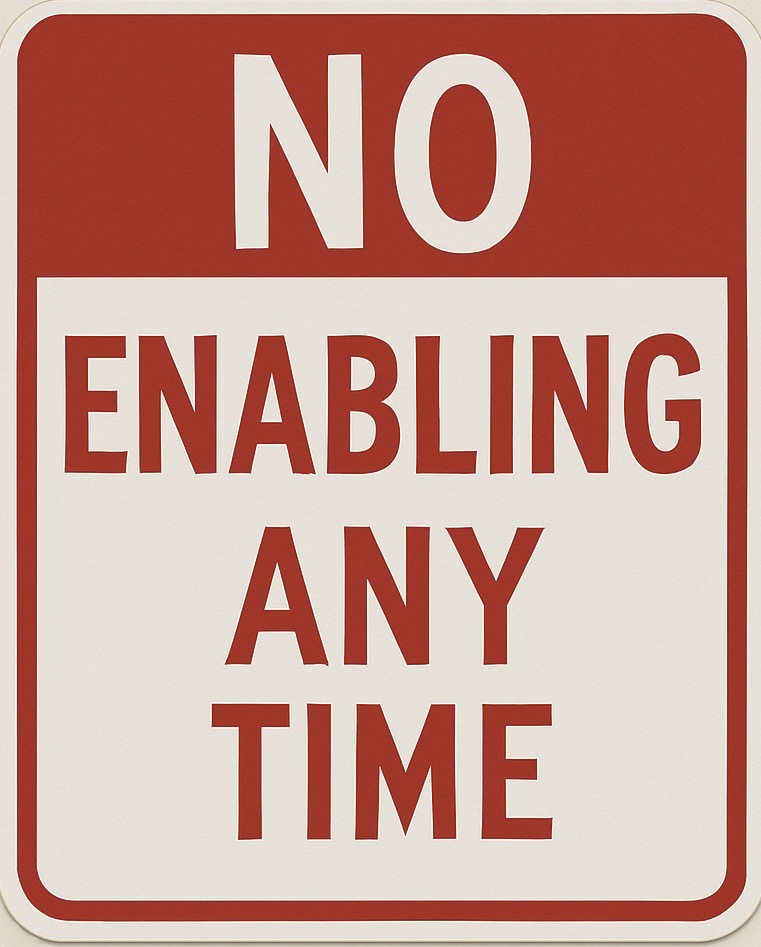

You're Not Crazy, You're Scared: Why Good Parents Enable
Good parents enable because protecting feels like the only way to keep their family intact, even when it traps everyone in a painful cycle.
Direct answer
How do I know if I am helping or enabling?
Helping supports responsibility, truth, treatment, and repair. Enabling protects addiction from consequences, usually through money, excuses, housing, secrecy, or emotional rescue.
Reviewed through Matt Brown's family intervention and coaching lens.
Open full answer →Why this is here
Families rarely need more pressure. They need clearer patterns, steadier boundaries, and a next step they can actually hold.
Written from intervention experience
This article is part of No More Enabling’s family education library, shaped by Matt Brown’s work with families affected by addiction, treatment resistance, relapse, and boundary breakdowns since 2004.
Author and editorial reviewer: Matt Brown, professional interventionist and family addiction coach. Medical claims require separate qualified clinical review.
Read this as part of a bigger pattern
If this article hits home, these guided hubs will help you keep reading in a smarter order instead of starting from scratch each time.
Spouse or Partner Addiction Hub
Best when you are asking how to love someone without surrendering your safety, children, money, or sense of reality.
Open hub →
Alcoholic Family Member Hub
Best when alcohol is legal, normalized, or hidden behind functioning, but the family is still being harmed.
Open hub →
Recovery Hub
Best when you are asking what support should look like now, not just what went wrong before.
Open hub →
If this article sounds like your family
Do this next
Money questions are rarely only about money. Use the financial enabling path to decide what support points toward recovery.
Next best step
Choose your next step
If this article sounds like your family, use the short assessment to route the situation before the next hard conversation.
When your family needs a real plan
Coaching and intervention guidance with Matt Brown
If articles are helping but the situation at home is still escalating, you can ask for direct help with family alignment, boundaries, treatment refusal, relapse patterns, or deciding whether an intervention makes sense.
High-intent next step
Family addiction coaching with Matt Brown for enabling and boundaries
Get private family addiction coaching from Matt Brown for enabling, boundaries, treatment refusal, relapse, money decisions, and a clear next step.
You're a parent who's stayed up nights worrying about your adult child's next relapse. You've covered their rent again, called in sick for them to their boss, or driven them to the ER after another binge—actions born from a fierce love and terror of losing them. These aren't signs of weakness or failure; they're human responses to unimaginable fear. Good parents enable because protecting feels like the only way to keep their family intact, even when it traps everyone in a painful cycle.
The Survival Instinct Kicking In
When addiction enters a family, it flips the world upside down. Parents often describe it as watching their child drown while feeling powerless from the shore. The brain's alarm system—rooted in the instinct to shield offspring—goes into overdrive, pushing actions that provide immediate relief from that drowning sensation. Covering consequences like unpaid bills or job losses buys time, shielding the family from eviction or humiliation. This isn't "spoiling" gone wrong; it's a trauma response where love collides with chaos, and short-term fixes become the default.
Research shows enabling stems from attachment bonds strained by repeated crises. Parents aren't choosing chaos; biology and emotion wire them to rescue. A study on family dynamics in addiction notes how chronic stress rewires decision-making, making "helping" feel like survival rather than sabotage. You've done this because you're wired to protect, not because you're flawed.
When Love Turns Into a Hidden Chain
Picture this: Your son promises "this is the last time," and you believe him because hope is all that's left. You loan money for "essentials," only to find it funded more drugs. This pattern—common in 70% of families dealing with substance use—keeps the addiction alive by removing natural feedback like financial rock bottom or social isolation. Enabling doesn't cause addiction, but it delays the painful clarity needed for change.
It's not just about money or lies. Emotional enabling shows up as constant reassurance ("You'll be fine") without boundaries, or endless debates that drain your energy. These keep the addicted person comfortable in denial while exhausting you. Families report burnout rates twice as high when enabling persists, turning parents into full-time crisis managers instead of advocates for recovery.
The Fear Factor: What's Really Driving You
Deep down, enabling often masks terror—of abandonment, of being the "bad parent" who lets their child hit bottom, or of irreversible loss like overdose. Society whispers that good parents fix everything, amplifying guilt when they can't. But addiction is a brain disease, not a parenting failure; enabling arises from that mismatch between parental power and addiction's grip.
Consider Sarah, a mom who bailed her daughter out of jail five times, terrified of prison hardening her further. Each release brought temporary peace, but relapses escalated. Sarah wasn't enabling out of naivety—she was scared of the alternative. Stories like hers fill support groups, showing this is a shared human struggle, not a solo moral lapse.
Spotting the Shift Without Self-Judgment
Awareness starts with compassion: List three recent "helps" and ask, "Did this protect or prolong?" If it shielded from consequences without tying to treatment, it might lean enabling. Track patterns in a journal—not to shame, but to map fear triggers like "What if they overdose without my safety net?"
Common signs include repeated financial rescues, covering lies, or avoiding tough conversations. Unlike true helping—which pairs support with accountability—these actions maintain the status quo. Recognizing this empowers you to pivot.
From Scared Rescuer to Confident Guide
You can channel that protective energy into empowering actions. Start small: Offer rides to meetings but not cash; practice saying, "I love you, and I won't enable this anymore." Join groups like Nar-Anon, where parents learn boundaries feel scary at first but build strength over time.
Professional guidance accelerates this—interventionists help families rehearse responses rooted in love, not fear. One family shifted by requiring treatment commitment before aid, leading to their loved one's first sober month. Progress isn't linear, but each boundary honors your role as parent, not fixer.
Imagine reclaiming weekends from worry, modeling resilience for your whole family. You're not crazy; you're capable of this evolution.
Free family tool
Partner Safety and Boundaries Checklist
A checklist for spouses and partners trying to protect safety, children, money, and reality while addiction is active in the relationship.
This does not replace the Family Squares meeting. It gives you a practical tool first, then points you toward the live support room if you need help using it.
Get weekly guidance for families dealing with relationships
Every Sunday, one short email with practical family guidance on boundaries, enabling, relapse, and next steps.
"Practical, not preachy. It reads like someone who has actually sat with families instead of a wellness blog."
— Sister of a brother in relapse
Trust signals
Source-worthy public resources
These links are not a substitute for medical, legal, or crisis care. They are included to help families verify safety and treatment information from official sources.
SAMHSA
National Helpline
Treatment referral and information for individuals and families facing mental health or substance use concerns.
SAMHSA
FindTreatment.gov
Federal treatment locator for substance use and mental health services in the United States.
NIAAA
Alcohol Use Disorder
Research-based overview of alcohol use disorder, risk, diagnosis, treatment, and recovery.
Next best answers
If this is what you were really asking
What if my family disagrees about addiction boundaries?
Family disagreement often keeps addiction protected. Start by aligning around safety, money, children, and what nobody will cover up anymore, even if everyone is not ready for the same boundary.
Open answer →
What if the other house is running a different plan?
Two houses. One disease. If one parent pays rent and the other hands over the keys, nothing holds. Money, housing, and contact have to be the same line in both kitchens. You cannot control the other house. You can stop being the second rescue.
Open answer →
How do I know if I am helping or enabling?
Helping supports responsibility, truth, treatment, and repair. Enabling protects addiction from consequences, usually through money, excuses, housing, secrecy, or emotional rescue.
Open answer →
How do I stop enabling without abandoning someone I love?
Stop doing what protects the addiction, but stay available for recovery-supporting action. The goal is not less love. The goal is cleaner support.
Open answer →
Need a steadier next step?
Don’t stop at insight
The families who make progress usually do three things: they get honest about the pattern, choose one clearer next step, and stop trying to manage everything at once.
Helping or Enabling? Tool
Best when you keep second-guessing what support should look like.
Family Support Guide
Best when everything feels heavy, urgent, or emotionally scrambled.
Free Boundaries Course
Best when your limits keep getting negotiated away under pressure.
About Matt Brown and this site
Understand the experience and point of view behind the guidance here.

FamilyBridge
AI support for families across the recovery journey.