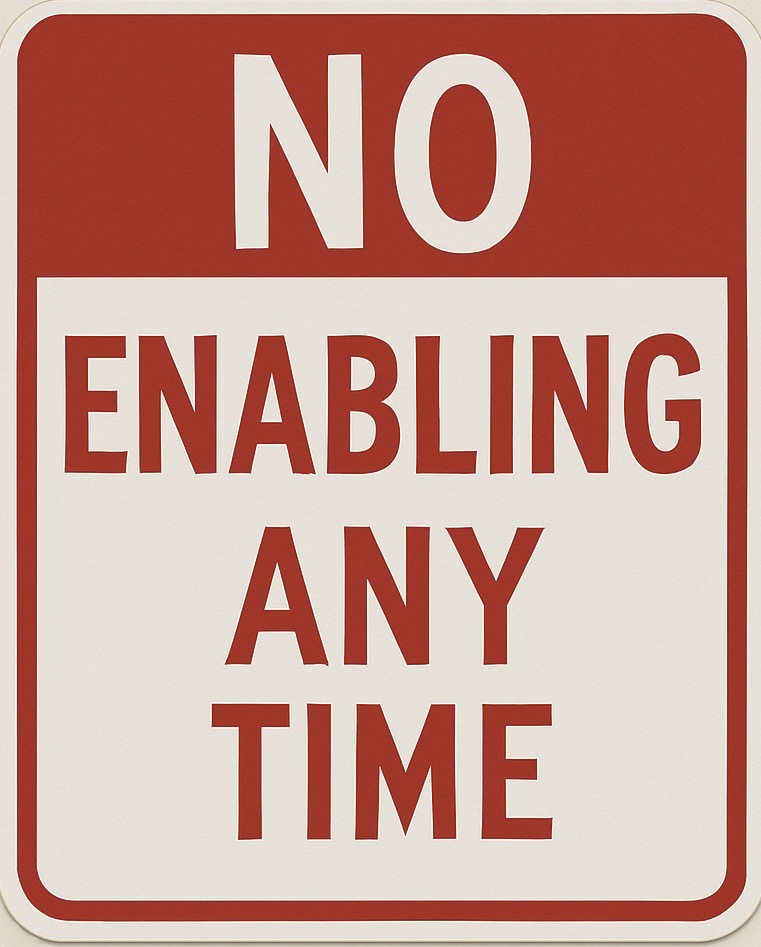

The Hidden Role of Enabling — How Helping Can Sometimes Make Addiction Worse
Most families affected by addiction are acting from love, fear, and desperation. They want to protect their loved one from harm, consequences, or discomfort. Unfortunately, many well-intentioned actions actually allow addiction to continue.
Direct answer
How do I know if I am helping or enabling?
Helping supports responsibility, truth, treatment, and repair. Enabling protects addiction from consequences, usually through money, excuses, housing, secrecy, or emotional rescue.
Reviewed through Matt Brown's family intervention and coaching lens.
Open full answer →Why this is here
Families rarely need more pressure. They need clearer patterns, steadier boundaries, and a next step they can actually hold.
Written from intervention experience
This article is part of No More Enabling’s family education library, shaped by Matt Brown’s work with families affected by addiction, treatment resistance, relapse, and boundary breakdowns since 2004.
Author and editorial reviewer: Matt Brown, professional interventionist and family addiction coach. Medical claims require separate qualified clinical review.
Read this as part of a bigger pattern
If this article hits home, these guided hubs will help you keep reading in a smarter order instead of starting from scratch each time.
Enabling Hub
Best when you keep wondering whether your support is helping or making the pattern worse.
Open hub →
Adult Child Addiction Hub
Best when you are asking how to stay loving without becoming the safety net for active addiction.
Open hub →
Financial Enabling Hub
Best when you need to help without becoming the financial safety net that keeps the addiction cycle alive.
Open hub →
If this article sounds like your family
Do this next
If the real issue is holding the line, don’t stop at reading. Work through the boundaries course next.
Next best step
Choose your next step
If this article sounds like your family, use the short assessment to route the situation before the next hard conversation.
When your family needs a real plan
Coaching and intervention guidance with Matt Brown
If articles are helping but the situation at home is still escalating, you can ask for direct help with family alignment, boundaries, treatment refusal, relapse patterns, or deciding whether an intervention makes sense.
High-intent next step
Family addiction coaching with Matt Brown for enabling and boundaries
Get private family addiction coaching from Matt Brown for enabling, boundaries, treatment refusal, relapse, money decisions, and a clear next step.

Most families affected by addiction are acting from love, fear, and desperation. They want to protect their loved one from harm, consequences, or discomfort. Unfortunately, many well-intentioned actions actually allow addiction to continue. This pattern is known as enabling, and it is one of the most misunderstood aspects of addiction.
Understanding enabling is not about assigning blame; it is about recognizing patterns that keep everyone stuck.
What Is Enabling?
Enabling occurs when actions—intentional or not—reduce the natural consequences of substance use. These behaviors make it easier for the person to continue using while avoiding accountability.
Common enabling behaviors include:
Paying bills or covering financial losses
Making excuses to employers, schools, or family
Allowing substance use in the home
Repeatedly rescuing from legal or relational consequences
Avoiding difficult conversations to "keep the peace"
These actions often come from fear: fear of conflict, fear of homelessness, fear of losing the relationship, or fear of what might happen if boundaries are enforced.
Why Consequences Matter
Consequences are often the only feedback mechanism addiction responds to. When consequences are removed, the urgency to change disappears. Addiction thrives in comfort and avoidance.
Families sometimes worry that allowing consequences is cruel. In reality, shielding someone from consequences can prolong their suffering and increase long-term harm.
Enabling vs. Supporting
Support and enabling are not the same. Support encourages responsibility and recovery. Enabling protects the addiction.
Supportive behaviors include:
Setting clear and consistent boundaries
Refusing to lie or cover up
Encouraging professional help
Participating in family education or counseling
Offering emotional support without financial or logistical rescue
Healthy support empowers change rather than preventing discomfort.
The Emotional Toll on Families
Enabling often leads to resentment, burnout, and emotional exhaustion. Family members may feel trapped in cycles of crisis management, constantly reacting rather than living their own lives. Over time, relationships deteriorate, trust erodes, and emotional distance grows.
Learning to stop enabling is not easy, but it is often the turning point for both the family and the individual struggling with addiction.
Boundaries Are an Act of Love
Boundaries communicate self-respect and clarity. They define what behavior is acceptable and what is not. Boundaries are not punishments; they are guidelines for healthy interaction.
Effective boundaries are:
Clear
Consistent
Enforced without anger or threats
Focused on behavior, not character
When boundaries are maintained, families often experience relief—even before their loved one enters recovery.
Change Begins with the Family
Addiction recovery often starts when families change their responses. When enabling stops and accountability begins, individuals are more likely to recognize the need for help.
Families deserve support, education, and guidance. Breaking enabling patterns is habitual, difficult, and deeply emotional—but it is also one of the most powerful interventions available.
Free family tool
Financial Boundaries Script
A short script for saying no to cash, rent, bills, and last-minute rescue requests without getting pulled into another negotiation.
This does not replace the Family Squares meeting. It gives you a practical tool first, then points you toward the live support room if you need help using it.
Get weekly guidance for families dealing with enabling
Every Sunday, one short email with practical family guidance on boundaries, enabling, relapse, and next steps.
"Practical, not preachy. It reads like someone who has actually sat with families instead of a wellness blog."
— Sister of a brother in relapse
Next best answers
If this is what you were really asking
How do I know if I am helping or enabling?
Helping supports responsibility, truth, treatment, and repair. Enabling protects addiction from consequences, usually through money, excuses, housing, secrecy, or emotional rescue.
Open answer →
What should I do when an addicted loved one breaks a boundary?
Do not renegotiate the boundary in the heat of the moment. Follow through calmly, document the pattern, and review whether the boundary was specific enough to hold.
Open answer →
How do I stop giving money to someone with addiction?
Stop by replacing open-ended money with clear recovery-supporting offers. You can pay a provider directly, offer a ride to treatment, or help with a specific safety need without handing over cash.
Open answer →
What if the other house is running a different plan?
Two houses. One disease. If one parent pays rent and the other hands over the keys, nothing holds. Money, housing, and contact have to be the same line in both kitchens. You cannot control the other house. You can stop being the second rescue.
Open answer →
Need a steadier next step?
Don’t stop at insight
The families who make progress usually do three things: they get honest about the pattern, choose one clearer next step, and stop trying to manage everything at once.
Helping or Enabling? Tool
Best when you keep second-guessing what support should look like.
Family Support Guide
Best when everything feels heavy, urgent, or emotionally scrambled.
Free Boundaries Course
Best when your limits keep getting negotiated away under pressure.
About Matt Brown and this site
Understand the experience and point of view behind the guidance here.

FamilyBridge
AI support for families across the recovery journey.