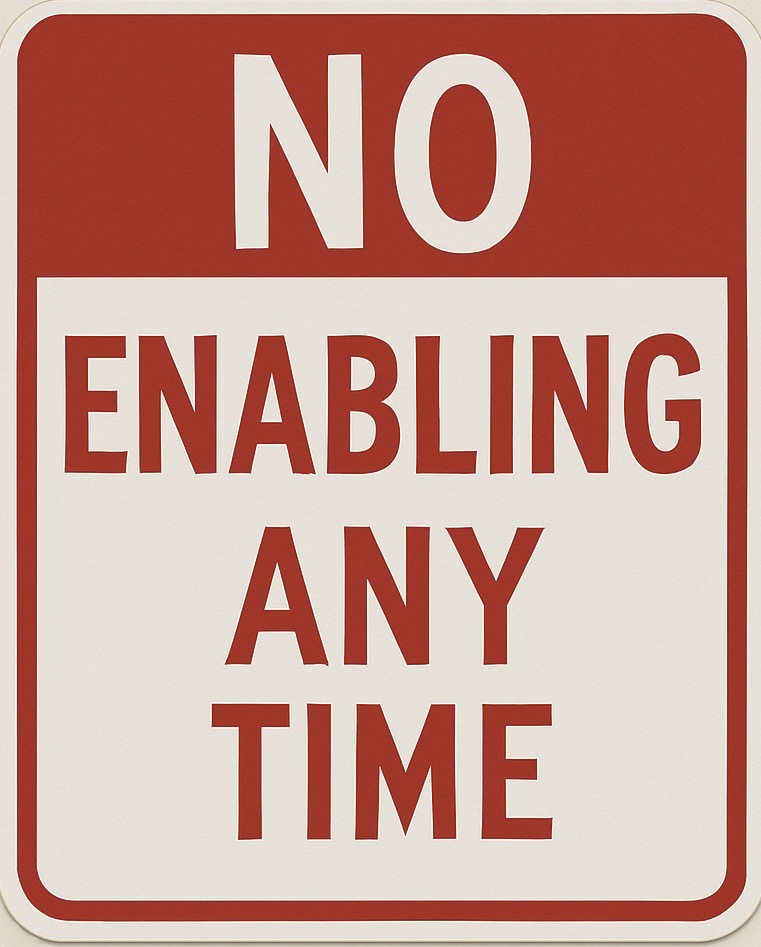

How Families Normalize Behavior They Would Never Accept Anywhere Else
Families rarely wake up one day and decide that unacceptable behavior is suddenly fine. It happens gradually—so gradually that many families don't notice how far the line has moved. Addiction normalizes behavior families would never tolerate in friendships, workplaces, or other relationships. Understanding how this shift occurs helps families recognize when adaptation has crossed into enabling.
Direct answer
How do I know if I am helping or enabling?
Helping supports responsibility, truth, treatment, and repair. Enabling protects addiction from consequences, usually through money, excuses, housing, secrecy, or emotional rescue.
Reviewed through Matt Brown's family intervention and coaching lens.
Open full answer →Why this is here
Families rarely need more pressure. They need clearer patterns, steadier boundaries, and a next step they can actually hold.
Written from intervention experience
This article is part of No More Enabling’s family education library, shaped by Matt Brown’s work with families affected by addiction, treatment resistance, relapse, and boundary breakdowns since 2004.
Author and editorial reviewer: Matt Brown, professional interventionist and family addiction coach. Medical claims require separate qualified clinical review.
Read this as part of a bigger pattern
If this article hits home, these guided hubs will help you keep reading in a smarter order instead of starting from scratch each time.
Enabling Hub
Best when you keep wondering whether your support is helping or making the pattern worse.
Open hub →
Boundaries Hub
Best when your loved one keeps crossing lines and you are tired of repeating yourself.
Open hub →
Codependency Hub
Best when exhaustion, guilt, hypervigilance, and over-functioning have become normal.
Open hub →
If this article sounds like your family
Do this next
If the real issue is holding the line, don’t stop at reading. Work through the boundaries course next.
Next best step
Choose your next step
If this article sounds like your family, use the short assessment to route the situation before the next hard conversation.
When your family needs a real plan
Coaching and intervention guidance with Matt Brown
If articles are helping but the situation at home is still escalating, you can ask for direct help with family alignment, boundaries, treatment refusal, relapse patterns, or deciding whether an intervention makes sense.
High-intent next step
Family addiction coaching with Matt Brown for enabling and boundaries
Get private family addiction coaching from Matt Brown for enabling, boundaries, treatment refusal, relapse, money decisions, and a clear next step.
How the Line Moves Without Anyone Noticing
Normalization doesn't happen through one big decision.
It happens through a series of small ones:
- Letting one incident slide
- Making an exception "just this once"
- Explaining behavior away
- Lowering expectations slightly
Each adjustment feels reasonable in isolation.
Over time, those adjustments accumulate—and the baseline changes.
Why Families Adapt Instead of Objecting
Families adapt because objecting feels costly.
They want to avoid:
- Conflict
- Escalation
- Emotional fallout
- Being seen as unsupportive
Adaptation feels like love. It feels patient. It feels humane.
Unfortunately, adaptation without limits teaches the system that standards are flexible.
The Shifting Baseline Problem
Psychologists call this shifting baseline—when abnormal behavior becomes the new normal because it happens repeatedly.
Families start saying:
- "At least it's not as bad as before."
- "This is better than last time."
- "Things could be worse."
These comparisons lower the bar quietly.
The question shifts from: "Is this acceptable?" to "Is this better than the worst version?"
Why Families Would Never Accept This Elsewhere
Most families would never tolerate:
- Chronic unreliability
- Broken promises
- Financial irresponsibility
- Emotional volatility
- Dishonesty
Yet inside addiction dynamics, these behaviors become explainable.
Families don't approve of them. They adjust to them.
Adjustment replaces standards.
How Normalization Protects the Family—Short Term
Normalization reduces anxiety.
When families stop reacting to every incident:
- Stress drops
- Tension eases
- Life feels more manageable
This relief reinforces adaptation.
Families don't normalize because they're in denial. They normalize because it helps them cope.
The problem is that coping isn't the same as solving.
Why Normalization Creates Long-Term Damage
As the baseline shifts:
- Boundaries erode
- Expectations blur
- Accountability weakens
Families feel increasingly resentful and depleted—because they're living in conditions they would never choose.
Normalization keeps the system functional—but unhealthy.
How Addiction Benefits From Normalization
Addiction thrives when standards lower.
When behavior becomes normal:
- Pressure decreases
- Consequences soften
- Urgency fades
Addiction doesn't need approval. It just needs tolerance.
Normalization provides that tolerance quietly and reliably.
Why Families Feel Shocked When Others Push Back
Families often feel defensive when outsiders express concern.
They think:
- "They don't understand."
- "They're overreacting."
- "It's complicated."
Outsiders haven't adapted. They still see the behavior clearly.
This disconnect can feel threatening—but it's informative.
The Guilt Families Feel When They Start Reclaiming Standards
When families attempt to raise the bar again, guilt appears.
They think:
- "Why now?"
- "Why can't I be more understanding?"
- "What if this makes things worse?"
This guilt doesn't mean the standard is wrong. It means the system has adjusted to lower expectations.
Raising standards disrupts that adjustment.
Free family email course
Free 4-week Boundaries email course
One lesson a week — the exact language, scripts, and family agreements that hold up when your loved one pushes back.
- Week 1 — What a real boundary actually is (and is not)
- Week 2 — Naming the boundary without threats or ultimatums
- Week 3 — Holding the line when they test it
- Week 4 — Getting your family on the same page
"Practical, not preachy. It reads like someone who has actually sat with families instead of a wellness blog."
— Sister of a brother in relapse
How Normalization Silences Family Members
In many families, one person notices the problem first.
When normalization sets in, that person is often labeled:
- "Too sensitive"
- "Negative"
- "Overreacting"
Silencing concern is a sign the baseline has shifted too far.
Healthy systems allow discomfort. Addicted systems avoid it.
Why Normalization Feels Safer Than Change
Change threatens predictability.
Normalization creates a known environment—even if it's painful.
Families choose predictability over uncertainty. It's a survival response.
Unfortunately, predictability can keep addiction comfortably in place.
What Reclaiming Standards Actually Requires
Reclaiming standards doesn't mean becoming harsh.
It means:
- Naming behavior accurately
- Stopping comparison to worse scenarios
- Setting clear expectations
- Accepting discomfort
Standards don't punish. They clarify.
How Families Can Raise the Bar Without Escalation
Helpful steps include:
- Aligning privately before acting
- Being specific, not emotional
- Holding limits consistently
- Expecting pushback
- Seeking support
Pushback doesn't mean standards are wrong. It means they're new.
The Role of Professional Perspective
Families embedded in normalization often can't see how far the line has moved.
Professional guidance helps families:
- Re-establish healthy baselines
- Reduce guilt-driven adaptation
- Hold standards calmly
- Avoid overcorrection
Support restores perspective without judgment.
A Better Family Question
Instead of asking: "Is this as bad as it could be?"
Ask: "Would we accept this anywhere else in our lives?"
That question cuts through normalization quickly.
A Clear Educational Takeaway
Normalization is not approval. It's adaptation under pressure.
Families don't lose standards because they don't care. They lose them because adaptation feels safer than confrontation.
When families reclaim standards, they don't become cruel. They become clear.
And clarity—quiet, consistent, and firm—is what addiction systems resist but need most.
Get weekly guidance for families dealing with enabling
Every Sunday, one short email with practical family guidance on boundaries, enabling, relapse, and next steps.
"Practical, not preachy. It reads like someone who has actually sat with families instead of a wellness blog."
— Sister of a brother in relapse
Trust signals
Source-worthy public resources
These links are not a substitute for medical, legal, or crisis care. They are included to help families verify safety and treatment information from official sources.
Next best answers
If this is what you were really asking
How do I know if I am helping or enabling?
Helping supports responsibility, truth, treatment, and repair. Enabling protects addiction from consequences, usually through money, excuses, housing, secrecy, or emotional rescue.
Open answer →
What is codependency in addiction families?
Codependency is the pattern where a family member becomes over-responsible for another person's addiction, emotions, consequences, or recovery.
Open answer →
What if the other house is running a different plan?
Two houses. One disease. If one parent pays rent and the other hands over the keys, nothing holds. Money, housing, and contact have to be the same line in both kitchens. You cannot control the other house. You can stop being the second rescue.
Open answer →
How do I stop enabling without abandoning someone I love?
Stop doing what protects the addiction, but stay available for recovery-supporting action. The goal is not less love. The goal is cleaner support.
Open answer →
Need a steadier next step?
Don’t stop at insight
The families who make progress usually do three things: they get honest about the pattern, choose one clearer next step, and stop trying to manage everything at once.
Helping or Enabling? Tool
Best when you keep second-guessing what support should look like.
Family Support Guide
Best when everything feels heavy, urgent, or emotionally scrambled.
Free Boundaries Course
Best when your limits keep getting negotiated away under pressure.
About Matt Brown and this site
Understand the experience and point of view behind the guidance here.

FamilyBridge
AI support for families across the recovery journey.