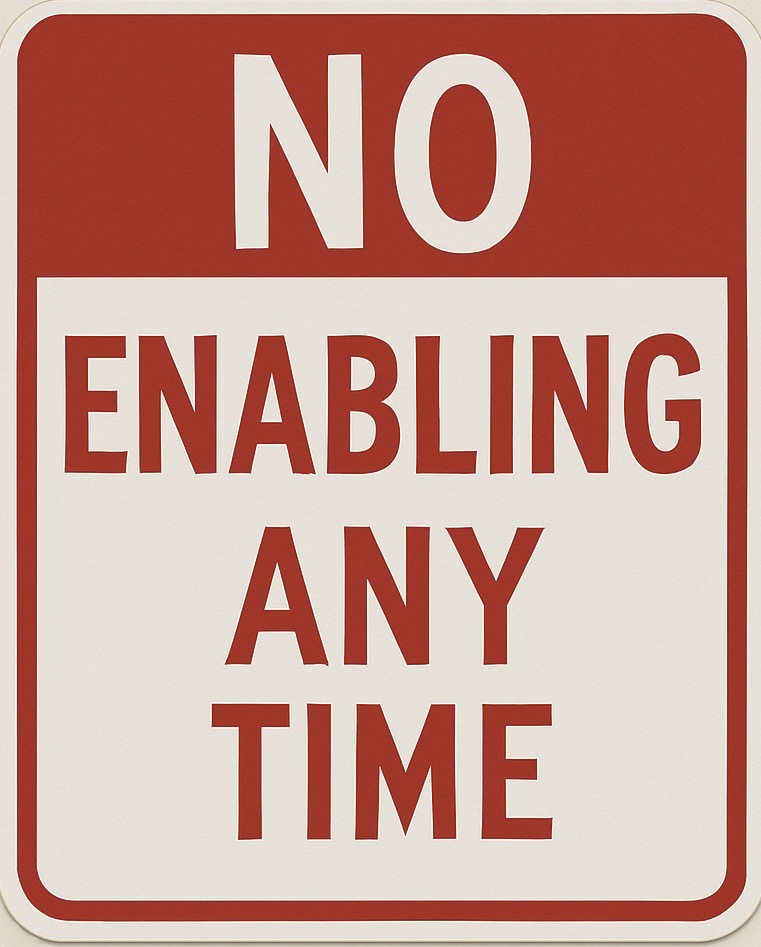

When Your Help Becomes a Holding Pattern: Knowing When to Do an Intervention for a Loved One
When does helping cross into delaying treatment? Learn the signs that enabling has run its course and it's time to consider an intervention for a loved one.
Direct answer
How do I know if I am helping or enabling?
Helping supports responsibility, truth, treatment, and repair. Enabling protects addiction from consequences, usually through money, excuses, housing, secrecy, or emotional rescue.
Reviewed through Matt Brown's family intervention and coaching lens.
Open full answer →Why this is here
Families rarely need more pressure. They need clearer patterns, steadier boundaries, and a next step they can actually hold.
Written from intervention experience
This article is part of No More Enabling’s family education library, shaped by Matt Brown’s work with families affected by addiction, treatment resistance, relapse, and boundary breakdowns since 2004.
Author and editorial reviewer: Matt Brown, professional interventionist and family addiction coach. Medical claims require separate qualified clinical review.
Read this as part of a bigger pattern
If this article hits home, these guided hubs will help you keep reading in a smarter order instead of starting from scratch each time.
Adult Child Addiction Hub
Best when you are asking how to stay loving without becoming the safety net for active addiction.
Open hub →
Financial Enabling Hub
Best when you need to help without becoming the financial safety net that keeps the addiction cycle alive.
Open hub →
Treatment Resistance Hub
Best when conversations about treatment keep failing and the family needs a calmer, more structured next move.
Open hub →
If this article sounds like your family
Do this next
If the family is circling treatment refusal or intervention questions, use the structured intervention path instead of improvising the next talk.
Next best step
Choose your next step
If this article sounds like your family, use the short assessment to route the situation before the next hard conversation.
When your family needs a real plan
Coaching and intervention guidance with Matt Brown
If articles are helping but the situation at home is still escalating, you can ask for direct help with family alignment, boundaries, treatment refusal, relapse patterns, or deciding whether an intervention makes sense.
High-intent next step
Addiction intervention help for families who need a structured plan
Learn when addiction intervention help may be appropriate, what families should prepare, and how to request private guidance from Matt Brown.
If you have spent months or years stepping in, smoothing things over, and absorbing the fallout of someone else's addiction, you already know how exhausting love can be. You are not asking yourself when to do an intervention for a loved one because you've given up. You're asking because you've given so much, and nothing has changed. That tension between deep love and quiet despair is one of the hardest places a family can sit.
Here is the truth that often gets lost: the same help that feels like devotion can quietly become a holding pattern that keeps your loved one comfortable enough to avoid getting well. This article is not about blaming you for that. It's about helping you see the line clearly, so you can recognize when support has run its course and it may be time to consider a more direct path forward.
How Does Enabling Delay the Need for Treatment?
Enabling delays treatment by softening the natural consequences that would otherwise push a person toward change. When you pay the rent, cover the missed work, or explain away the behavior, you remove the very pressure that makes recovery feel necessary. The addiction stays comfortable, and so the decision to get help keeps getting postponed.
Enabling, in plain terms, is doing for someone what they could and should do for themselves, in a way that protects them from the results of their drinking or using. It almost never comes from weakness. It comes from love, fear, and the entirely human wish to keep someone you cherish from suffering.
But addiction does not respond to comfort the way the rest of us do. The longer a person can use without facing real consequences, the longer the using continues. Your help, offered with the best of intentions, can become the cushion that keeps rock bottom permanently out of reach.
What Are the Signs That Enabling Has Run Its Course?
Enabling has run its course when your help is no longer changing anything except your own stress level. If you've been giving more and more while your loved one gives less and less, the pattern itself has become the problem. A few honest signals tend to show up together.
- The same crisis keeps repeating. You handle it, things calm down for a while, and then it happens again, often worse than before.
- Your help has escalated. What started as an occasional favor has grown into covering bills, lying to others, or rearranging your whole life around the addiction.
- You feel resentment building. You're doing the right things, and yet you feel angry, used, and unseen, which usually means the giving has become one-directional.
- Your loved one expects the help now. What was once a rescue has become an entitlement, and pulling back triggers anger or guilt-tripping.
- Your own health is slipping. Sleep, appointments, relationships, and peace of mind are being quietly sacrificed to manage someone else's choices.
If several of these are true, it does not mean you failed. It means the strategy of cushioning has reached its natural limit, and a different approach is worth considering.
When Is It Time to Consider an Intervention?
It may be time to consider an intervention when your loved one's addiction is escalating, repeated conversations have led nowhere, and the consequences of doing nothing have become more dangerous than the discomfort of acting. An intervention is simply a structured, loving, planned conversation in which the people who care most ask their loved one to accept help, with a clear path to treatment ready to go.
You don't have to wait for a catastrophe to justify it. Consider these markers as a starting point:
- Direct, honest conversations have happened more than once and produced no lasting change.
- The addiction is getting worse, not better, and the risks to health, safety, finances, or legal standing are rising.
- Your loved one denies there's a problem, or admits it but refuses to take any real step toward help.
- The family is exhausted, divided, or being pulled into the chaos in ways that are causing real harm.
An intervention is not an ambush or a punishment. Done well, it is the clearest expression of love a family can offer: a unified message that says we see what is happening, we are no longer willing to protect the addiction, and we want you well enough to help you get there.
How Do You Move From Enabling to Real Support?
You move from enabling to real support by changing what you protect. Instead of protecting your loved one from consequences, you start protecting their dignity, their access to help, and your own wellbeing. The love stays the same; the strategy changes.
A few concrete shifts make this real:
- Stop funding the addiction. Redirect money toward treatment, not toward the next bill that using created.
- Tell the truth to the people who need to know it, rather than covering or minimizing.
- Get your own support in place first, through Al-Anon, a counselor, or family coaching and education, so you can act from steadiness rather than panic.
- Decide what you will and won't do, and say it plainly, kindly, and consistently.
And when those steps still aren't enough, consider bringing in a professional. A trained interventionist helps the family prepare, keeps the conversation loving and focused, and removes the impossible burden of doing this alone. Sometimes the most powerful thing you can do is admit you need help to help them.
You Have Not Run Out of Options
If you've read this far, you are not a person who gave up. You are a person who has loved hard and is willing to look honestly at whether that love is still pointing in the right direction. That honesty is exactly what makes change possible.
Stepping back from enabling, and moving toward an intervention if it's time, is not abandonment. It's the moment you stop carrying the addiction and start clearing a path toward recovery. You don't have to figure out the timing alone, and you don't have to do the next conversation perfectly. You only have to be willing to take one steadier step than you took yesterday.
Frequently Asked Questions
How do I know when to do an intervention for a loved one?
Consider an intervention when honest conversations have repeatedly failed, the addiction is escalating, and the risks of waiting outweigh the discomfort of acting. If your loved one denies the problem or refuses help while consequences mount, a structured, planned conversation with a clear path to treatment is worth considering.
Is stopping my help the same as giving up on my loved one?
No. Stopping enabling means you stop protecting the addiction, not the person. You can still love them deeply, stay connected, and offer support that points toward recovery, such as help getting into treatment. Withdrawing the cushion is often what makes change possible, not what ends the relationship.
What if an intervention makes my loved one angry?
Anger is common and usually temporary. It's often a reaction to losing the comfort that enabling provided, not a sign you did something wrong. A well-planned intervention stays calm and loving even when your loved one pushes back, and a professional interventionist can help the family hold steady through that moment.
Do I need a professional to hold an intervention?
Not always, but professional help can add structure when there is a history of crisis, mental health concerns, or family conflict. A trained interventionist can prepare the family, keep the conversation focused, and arrange treatment options in advance. No professional can guarantee that treatment will be accepted.
What if my loved one still refuses help after everything?
Refusal is not the end of the road. Sometimes the seed gets planted and is acted on later. In the meantime, you can keep your boundaries, keep the door to treatment open, and keep taking care of yourself. Your steadiness and your wellbeing matter regardless of the choices they make.
Free family tool
Financial Boundaries Script
A short script for saying no to cash, rent, bills, and last-minute rescue requests without getting pulled into another negotiation.
This does not replace the Family Squares meeting. It gives you a practical tool first, then points you toward the live support room if you need help using it.
Get weekly guidance for families dealing with intervention
Every Sunday, one short email with practical family guidance on boundaries, enabling, relapse, and next steps.
"Practical, not preachy. It reads like someone who has actually sat with families instead of a wellness blog."
— Sister of a brother in relapse
Trust signals
Source-worthy public resources
These links are not a substitute for medical, legal, or crisis care. They are included to help families verify safety and treatment information from official sources.
Next best answers
If this is what you were really asking
How do I stop enabling without abandoning someone I love?
Stop doing what protects the addiction, but stay available for recovery-supporting action. The goal is not less love. The goal is cleaner support.
Open answer →
Should our family meet before confronting someone about addiction?
Yes. Families should align before a major conversation whenever safety, treatment refusal, money, housing, or children are involved. A divided family usually gives addiction more room to maneuver.
Open answer →
How do I know if I am helping or enabling?
Helping supports responsibility, truth, treatment, and repair. Enabling protects addiction from consequences, usually through money, excuses, housing, secrecy, or emotional rescue.
Open answer →
What should I do when someone refuses addiction treatment?
Stop making the entire plan depend on their yes. The family can align, change rescue patterns, prepare options, and decide whether coaching or intervention guidance is needed.
Open answer →
Need a steadier next step?
Don’t stop at insight
The families who make progress usually do three things: they get honest about the pattern, choose one clearer next step, and stop trying to manage everything at once.
Helping or Enabling? Tool
Best when you keep second-guessing what support should look like.
Family Support Guide
Best when everything feels heavy, urgent, or emotionally scrambled.
Free Boundaries Course
Best when your limits keep getting negotiated away under pressure.
About Matt Brown and this site
Understand the experience and point of view behind the guidance here.

FamilyBridge
AI support for families across the recovery journey.