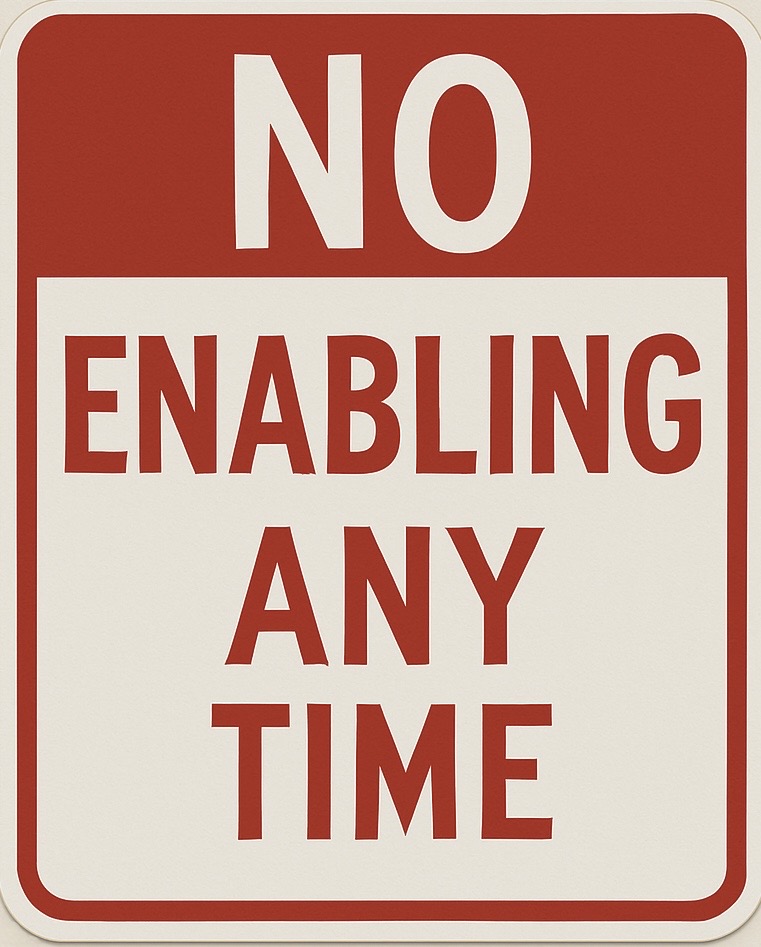

Waiting for Rock Bottom: Why Your Family Doesn't Have to Watch Addiction Get Worse
Is waiting for rock bottom the only way? Learn why families don't have to watch addiction get worse, and how to act early with love instead of enabling.
Direct answer
How do I know if I am helping or enabling?
Helping supports responsibility, truth, treatment, and repair. Enabling protects addiction from consequences, usually through money, excuses, housing, secrecy, or emotional rescue.
Reviewed through Matt Brown's family intervention and coaching lens.
Open full answer →Why this is here
Families rarely need more pressure. They need clearer patterns, steadier boundaries, and a next step they can actually hold.
Written from intervention experience
This article is part of No More Enabling’s family education library, shaped by Matt Brown’s work with families affected by addiction, treatment resistance, relapse, and boundary breakdowns since 2004.
Author and editorial reviewer: Matt Brown, professional interventionist and family addiction coach. Medical claims require separate qualified clinical review.
Read this as part of a bigger pattern
If this article hits home, these guided hubs will help you keep reading in a smarter order instead of starting from scratch each time.
Adult Child Addiction Hub
Best when you are asking how to stay loving without becoming the safety net for active addiction.
Open hub →
Financial Enabling Hub
Best when you need to help without becoming the financial safety net that keeps the addiction cycle alive.
Open hub →
After Treatment Hub
Best when the crisis is quieter but the family still needs structure, support, and clear limits.
Open hub →
If this article sounds like your family
Do this next
If you keep wondering whether your support is actually helping, start with the assessment and get a clearer read.
Next best step
Choose your next step
If this article sounds like your family, use the short assessment to route the situation before the next hard conversation.
When your family needs a real plan
Coaching and intervention guidance with Matt Brown
If articles are helping but the situation at home is still escalating, you can ask for direct help with family alignment, boundaries, treatment refusal, relapse patterns, or deciding whether an intervention makes sense.
High-intent next step
Family addiction coaching with Matt Brown for enabling and boundaries
Get private family addiction coaching from Matt Brown for enabling, boundaries, treatment refusal, relapse, money decisions, and a clear next step.

Someone told you to stop trying. Maybe it was a friend, a relative, or a voice in your own head: "They have to hit rock bottom before they'll change." So you have been waiting for rock bottom, bracing for the phone call, the arrest, the lost job, or something worse. And while you wait, you carry a quiet guilt, because waiting feels like giving up, and helping feels like enabling.
If that is where you are, please hear this first: you are not failing your loved one by feeling stuck. The good news is that rock bottom is not a requirement for recovery. There is a middle path between rescuing and waiting, and families can start walking it today.
What Does "Waiting for Rock Bottom" Actually Mean?
Waiting for rock bottom is the belief that a person with addiction cannot change until consequences become so painful that they have no choice. Families who hold this belief often step back completely and wait for a crisis to do the work.
The idea has some truth in it. Consequences do matter, and shielding someone from every consequence can keep addiction comfortable. But the phrase gets stretched into something it was never meant to be: a rule that families must stand by and do nothing.
Here is the problem. Rock bottom is only visible in hindsight. No one knows where the bottom is until the person stops falling. For some, it never comes in time. With today's drug supply, including fentanyl in many street drugs, the bottom can be a fatal overdose.
Is Waiting for Rock Bottom a Form of Enabling?
It can be. Waiting for rock bottom often looks like the opposite of enabling, but it can keep the same unhealthy system in place, just quieter. When a family withdraws without a plan, the addiction rarely gets less comfortable. Usually, the family just gets more isolated.
Enabling is anything that protects the addiction from change. Rescuing does that by removing consequences. Passive waiting can do it too, by removing honest conversation, clear expectations, and any push toward help. Both leave your loved one free to keep using without anyone asking for something different.
Many families swing between these two extremes. They rescue until they are exhausted, then withdraw until they are terrified, then rescue again. If you recognize that cycle, you are not weak. You are human, and you have been missing a third option.
Can Someone Get Sober Without Hitting Rock Bottom?
Yes. Many people enter recovery long before losing everything, often because someone they love raised the bottom for them. Research has found that people who enter treatment because of outside pressure from family, an employer, or the courts often do about as well as people who go on their own.
"Raising the bottom" means helping consequences and choices arrive sooner, while your loved one still has more to protect. It does not mean punishing them or causing pain on purpose. It means you stop absorbing the fallout and start making change the easier path.
What Raising the Bottom Looks Like
- Letting natural consequences land. If they miss work, you don't call in sick for them. If they overdraw an account, you don't quietly cover it.
- Naming what you see. Calmly saying, "I'm worried about your drinking, and I'm not going to pretend I don't notice anymore."
- Connecting help to your support. "I won't pay your phone bill anymore, but I will drive you to an assessment any day this week."
- Rewarding sober moments. Spending time, attention, and warmth when they are sober, and stepping away when they are not.
That last idea comes from an approach called CRAFT (Community Reinforcement and Family Training), which teaches families how to make sobriety more rewarding than using. It is one of the most studied ways for families to help a loved one move toward treatment.
How Do You Know It's Time to Stop Waiting?
It's time to stop waiting when the risks are rising faster than your loved one's willingness to change. If you are watching danger grow while hoping a crisis will fix things, it is time to act with a plan.
Some signs that waiting is no longer safe include:
- Overdose, blackouts, or medical emergencies have already happened, even once.
- They are mixing substances, using alone, or using drugs that may contain fentanyl.
- Children are in the home or in their care.
- They are driving while impaired.
- They have talked about hopelessness or not wanting to be here.
- Your own health, safety, or finances are being seriously harmed.
If your loved one is in immediate danger, call 911. If they have talked about suicide, call or text 988, the Suicide and Crisis Lifeline. Keeping naloxone (Narcan) at home is a loving, practical step, not an enabling one. It keeps your loved one alive long enough to choose recovery.
What Can Families Do Instead of Waiting for Rock Bottom?
Instead of waiting for rock bottom, families can take steady, loving action: get educated, stop rescuing, set clear boundaries, and bring in professional help. You don't need to do everything at once. You need a next step.
- Get support for yourself first. Al-Anon, Nar-Anon, or family coaching helps you think clearly instead of reacting from fear.
- Agree as a family. Enabling patterns often survive because one person rescues while another withdraws. Get on the same page.
- Pick one rescue behavior to stop. Choose one thing, like covering bills or making excuses, and stop it calmly, without a lecture.
- Have one honest conversation. Use "I" statements, speak when they are sober, and offer a specific path to help.
- Have a treatment option ready. When a window of willingness opens, it may close quickly. Know who you would call.
- Consider a professional intervention. If conversations keep going nowhere, a trained interventionist can help your family prepare and speak with one voice.
None of these steps require controlling your loved one. They simply stop you from standing between them and reality, while keeping the door to help open.
You Don't Have to Wait for the Worst
If you have been waiting for rock bottom, you were not doing it out of a lack of love. You were doing it because someone told you it was the only way, and because the alternatives felt impossible. Now you know there is another path: one where you stop rescuing, stop waiting, and start acting with clarity and compassion.
Your loved one's recovery is not yours to control, but your family's next step is yours to choose. You can choose it today, without guilt, and without waiting for the phone call you dread.
Frequently Asked Questions About Waiting for Rock Bottom
Do people with addiction have to hit rock bottom to recover?
No. Many people begin recovery before losing everything, often because family, employers, or courts encouraged treatment. People who enter treatment under outside pressure often do about as well as those who go voluntarily.
What does it mean to "raise the bottom" for an addicted loved one?
Raising the bottom means allowing consequences to happen sooner, while your loved one still has a lot to protect. Families do this by stopping rescue behaviors, setting clear boundaries, and connecting their support to getting help.
Is stepping back from my loved one the same as detaching with love?
Not always. Detaching with love means you stop controlling and rescuing, but you stay honest and connected. Simply withdrawing and waiting for a crisis can leave your loved one isolated and the addiction unchallenged.
When should my family consider a professional intervention?
Consider an intervention when honest conversations have not worked, risks are rising, or your family can't agree on a plan. A professional interventionist can help you prepare, set boundaries, and have a treatment bed ready.
Is keeping Narcan at home enabling?
No. Naloxone (Narcan) reverses opioid overdoses and keeps your loved one alive. Recovery is only possible for someone who survives, so having it on hand is an act of love, not permission to use.
Get Support for Your Family
You don't have to figure this out alone. For family coaching and education on how to stop enabling and start helping, visit SoberHelpline.com. If your loved one needs more than conversations can offer, FreedomInterventions.com can help your family plan a compassionate, professional intervention.
Free family tool
Financial Boundaries Script
A short script for saying no to cash, rent, bills, and last-minute rescue requests without getting pulled into another negotiation.
This does not replace the Family Squares meeting. It gives you a practical tool first, then points you toward the live support room if you need help using it.
Get weekly guidance for families dealing with family support
Every Sunday, one short email with practical family guidance on boundaries, enabling, relapse, and next steps.
"Practical, not preachy. It reads like someone who has actually sat with families instead of a wellness blog."
— Sister of a brother in relapse
Trust signals
Source-worthy public resources
These links are not a substitute for medical, legal, or crisis care. They are included to help families verify safety and treatment information from official sources.
Next best answers
If this is what you were really asking
How do I stop enabling without abandoning someone I love?
Stop doing what protects the addiction, but stay available for recovery-supporting action. The goal is not less love. The goal is cleaner support.
Open answer →
What if the other house is running a different plan?
Two houses. One disease. If one parent pays rent and the other hands over the keys, nothing holds. Money, housing, and contact have to be the same line in both kitchens. You cannot control the other house. You can stop being the second rescue.
Open answer →
Should our family meet before confronting someone about addiction?
Yes. Families should align before a major conversation whenever safety, treatment refusal, money, housing, or children are involved. A divided family usually gives addiction more room to maneuver.
Open answer →
How do I know if I am helping or enabling?
Helping supports responsibility, truth, treatment, and repair. Enabling protects addiction from consequences, usually through money, excuses, housing, secrecy, or emotional rescue.
Open answer →
Need a steadier next step?
Don’t stop at insight
The families who make progress usually do three things: they get honest about the pattern, choose one clearer next step, and stop trying to manage everything at once.
Helping or Enabling? Tool
Best when you keep second-guessing what support should look like.
Family Support Guide
Best when everything feels heavy, urgent, or emotionally scrambled.
Free Boundaries Course
Best when your limits keep getting negotiated away under pressure.
About Matt Brown and this site
Understand the experience and point of view behind the guidance here.

FamilyBridge
AI support for families across the recovery journey.