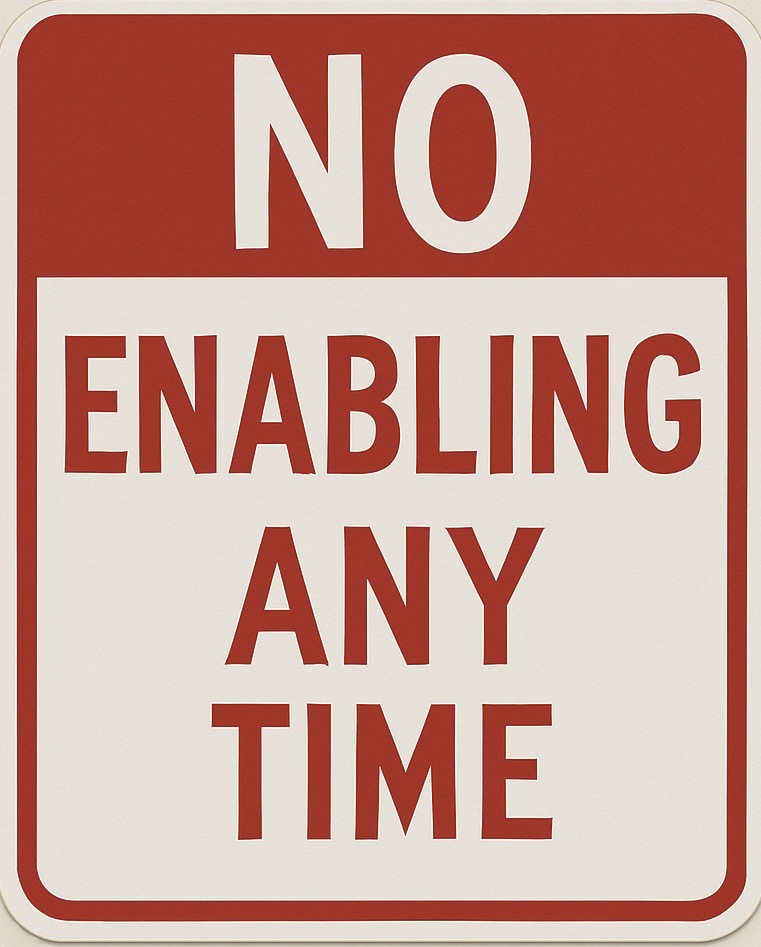

When Your Loved One Comes Home From Rehab: How to Support the First 30 Days Without Enabling
When your loved one comes home from rehab, the first 30 days set the tone. Here's how families support early recovery without slipping back into enabling.
Direct answer
How do I know if I am helping or enabling?
Helping supports responsibility, truth, treatment, and repair. Enabling protects addiction from consequences, usually through money, excuses, housing, secrecy, or emotional rescue.
Reviewed through Matt Brown's family intervention and coaching lens.
Open full answer →Why this is here
Families rarely need more pressure. They need clearer patterns, steadier boundaries, and a next step they can actually hold.
Written from intervention experience
This article is part of No More Enabling’s family education library, shaped by Matt Brown’s work with families affected by addiction, treatment resistance, relapse, and boundary breakdowns since 2004.
Author and editorial reviewer: Matt Brown, professional interventionist and family addiction coach. Medical claims require separate qualified clinical review.
Read this as part of a bigger pattern
If this article hits home, these guided hubs will help you keep reading in a smarter order instead of starting from scratch each time.
Adult Child Addiction Hub
Best when you are asking how to stay loving without becoming the safety net for active addiction.
Open hub →
Financial Enabling Hub
Best when you need to help without becoming the financial safety net that keeps the addiction cycle alive.
Open hub →
After Treatment Hub
Best when the crisis is quieter but the family still needs structure, support, and clear limits.
Open hub →
If this article sounds like your family
Do this next
If you keep wondering whether your support is actually helping, start with the assessment and get a clearer read.
Next best step
Choose your next step
If this article sounds like your family, use the short assessment to route the situation before the next hard conversation.
When your family needs a real plan
Coaching and intervention guidance with Matt Brown
If articles are helping but the situation at home is still escalating, you can ask for direct help with family alignment, boundaries, treatment refusal, relapse patterns, or deciding whether an intervention makes sense.
High-intent next step
Family addiction coaching with Matt Brown for enabling and boundaries
Get private family addiction coaching from Matt Brown for enabling, boundaries, treatment refusal, relapse, money decisions, and a clear next step.

When your loved one comes home from rehab, you may feel two things at the same time: enormous relief, and a low hum of dread you'd rather not admit to. Both make sense. You have been waiting for this. You have also been here before, or you've heard the stories, and some part of you is bracing for the moment it all comes apart again.
Here is the honest truth most families aren't told at discharge: treatment changes your loved one, but it doesn't automatically change the house they're walking back into. The routines, the roles, the unspoken agreements about who cleans up whose mess — those are all still sitting there, exactly where you left them.
That's not a failure on your part. It's just the next piece of work. And unlike the last few years, this piece is largely in your hands.
Why the First 30 Days After Rehab Are So Fragile
The first 30 days home are the highest-risk stretch in early recovery. Your loved one is leaving a structured environment where meals, sleep, therapy, and accountability were all scheduled for them — and returning to a house full of free time, old triggers, and familiar people. Structure disappears overnight.
This is also the window where families are most likely to over-correct in one of two directions:
- Hovering — monitoring every mood, checking phones, asking "are you okay?" fifteen times a day. It comes from love, and it communicates distrust.
- Pretending — acting like nothing happened, avoiding the subject entirely, hoping normal will return if nobody mentions it.
Neither one helps. What helps is something quieter: clear expectations, a real routine, and a family that has its own life running alongside the recovery.
What Does Enabling Look Like When Someone Is Sober?
Enabling doesn't end when the substances do. Enabling is any behavior that removes the natural weight of a decision from the person who made it. That can happen just as easily in sobriety — it just wears a friendlier face.
In early recovery, enabling usually shows up as excusing. He just got out of treatment, so we won't ask him to work yet. She's fragile, so we won't bring up the money she owes. He's doing so well, so let's not rock the boat with the car conversation.
Each of those is understandable. Together, they build a version of home where your loved one is sober but still not carrying anything. And people who carry nothing tend to drift.
Common post-treatment enabling patterns
- Paying for everything indefinitely, with no timeline and no conversation about it.
- Absorbing all the household responsibility so they can "focus on recovery."
- Skipping hard conversations about debts, damage, or broken commitments because the timing never feels right.
- Canceling your own plans, appointments, or trips to stay home and supervise.
- Letting missed meetings, missed appointments, or skipped medication slide without comment.
A useful test: if you removed the word "addiction" from the situation entirely, would you still be doing this for a healthy 34-year-old? If the answer is no, look closer.
How Do You Support Recovery Without Taking It Over?
You support recovery by supporting the person, not by managing the recovery itself. Their meetings, their therapy, their sponsor, their medication — that's their work. Your work is the environment and your own response.
Have the re-entry conversation before they walk in the door
Ideally in the last week of treatment or the first days home — a short, calm conversation about how the household will run. Cover the basics: where they're sleeping, what they're contributing, expectations around work, what happens with money, what happens if there's a relapse. Write it down. Ambiguity is where enabling grows. Our aftercare plan guide walks through the details.
Name the outcomes ahead of time, not in the heat of the moment
A boundary set during a crisis sounds like a threat. The same boundary set in a calm kitchen on a Tuesday sounds like information. "If you use in this house, you can't stay here — and I'll help you get back into treatment" is a sentence that belongs in week one, not week five at 2 a.m.
Build structure into the house, not around the person
Shared dinner at a set time. A weekly family check-in of twenty minutes. Chores that are actually assigned. This isn't surveillance — it's rhythm. Rhythm does quietly what nagging never will.
Get your own support in place
Al-Anon, a family group, a therapist, family coaching — pick one and attend it as consistently as you're hoping they'll attend theirs. It gives you somewhere to put the anxiety besides your loved one's schedule.
What If They Relapse After Treatment?
Plan for the possibility without living inside it. Relapse is common in early recovery — that's a statistical reality, not a prediction about your family. What determines the damage isn't whether it happens, but how prepared you are when it does.
Decide now, while everyone is clear-headed: what happens if they use? Who gets called? Does living at home continue? What does re-engaging with treatment look like, and who arranges it?
A family that has answered those questions responds. A family that hasn't, negotiates — at midnight, exhausted, with the person who is actively using. You already know how that goes.
And when it happens, don't treat it as proof that treatment failed or that you failed. Treat it as information about what the plan was missing.
Give the Relationship Time to Catch Up
Trust doesn't come home from rehab. Your loved one may be genuinely different at 30 days, and you may still flinch when the phone rings at an odd hour. Both of those can be true, and neither one makes you unsupportive.
Be honest about it instead of performing confidence you don't feel. "I'm proud of you and I'm still nervous — that's mine to work through, not yours" tells the truth without handing them the bill for your fear.
Rebuilding happens in small, ordinary moments over months. Let it be slow. Slow is a sign it's real.
You've Made It Further Than You Think
Getting someone into treatment and through it is not a small thing. Whatever happens next, that already happened, and you were part of it.
The work in front of you now is quieter: hold the line, keep your own life running, and let your loved one carry what's theirs. You're not doing less for them by stepping back. You're finally doing the part that actually helps.
One conversation. One expectation, clearly stated. Start there this week.
Frequently Asked Questions
How long does it take to adjust after a loved one comes home from rehab?
Most families describe the first 60 to 90 days as the hardest adjustment period. The first 30 days are the highest-risk window for relapse and for old family patterns re-forming. Expect several months before the household feels settled, and don't read early awkwardness as a bad sign.
Should I check on my loved one's meetings and sobriety?
You can ask, but you shouldn't manage it. A simple "how's it going with your meetings?" once a week is a reasonable question between adults. Tracking attendance, calling sponsors, or checking phones moves you into the role of monitor, which puts you back in charge of their recovery instead of them.
Is it enabling to let my adult child live at home after treatment?
Not by itself. Housing during early recovery can be genuinely stabilizing. It becomes enabling when there are no expectations attached — no contribution, no timeline, no agreement about what happens if they use. The living arrangement isn't the issue; the absence of terms is.
What should I do if my loved one relapses right after rehab?
Follow the plan you made in advance and stay calm. Don't argue with someone who is currently under the influence. Address safety first, then re-engage the treatment team or interventionist as soon as possible. A quick relapse often means the aftercare plan needs strengthening, not that recovery is impossible.
Free family tool
Financial Boundaries Script
A short script for saying no to cash, rent, bills, and last-minute rescue requests without getting pulled into another negotiation.
This does not replace the Family Squares meeting. It gives you a practical tool first, then points you toward the live support room if you need help using it.
Get weekly guidance for families dealing with recovery
Every Sunday, one short email with practical family guidance on boundaries, enabling, relapse, and next steps.
"These emails helped me stop the fight I have had with my son for years. I finally know what a real boundary sounds like."
— Parent of an adult son in active addiction
Trust signals
Source-worthy public resources
These links are not a substitute for medical, legal, or crisis care. They are included to help families verify safety and treatment information from official sources.
Next best answers
If this is what you were really asking
How do I stop enabling without abandoning someone I love?
Stop doing what protects the addiction, but stay available for recovery-supporting action. The goal is not less love. The goal is cleaner support.
Open answer →
What if the other house is running a different plan?
Two houses. One disease. If one parent pays rent and the other hands over the keys, nothing holds. Money, housing, and contact have to be the same line in both kitchens. You cannot control the other house. You can stop being the second rescue.
Open answer →
Should our family meet before confronting someone about addiction?
Yes. Families should align before a major conversation whenever safety, treatment refusal, money, housing, or children are involved. A divided family usually gives addiction more room to maneuver.
Open answer →
How do I know if I am helping or enabling?
Helping supports responsibility, truth, treatment, and repair. Enabling protects addiction from consequences, usually through money, excuses, housing, secrecy, or emotional rescue.
Open answer →
Need a steadier next step?
Don’t stop at insight
The families who make progress usually do three things: they get honest about the pattern, choose one clearer next step, and stop trying to manage everything at once.
Helping or Enabling? Tool
Best when you keep second-guessing what support should look like.
Family Support Guide
Best when everything feels heavy, urgent, or emotionally scrambled.
Free Boundaries Course
Best when your limits keep getting negotiated away under pressure.
About Matt Brown and this site
Understand the experience and point of view behind the guidance here.

FamilyBridge
AI support for families across the recovery journey.