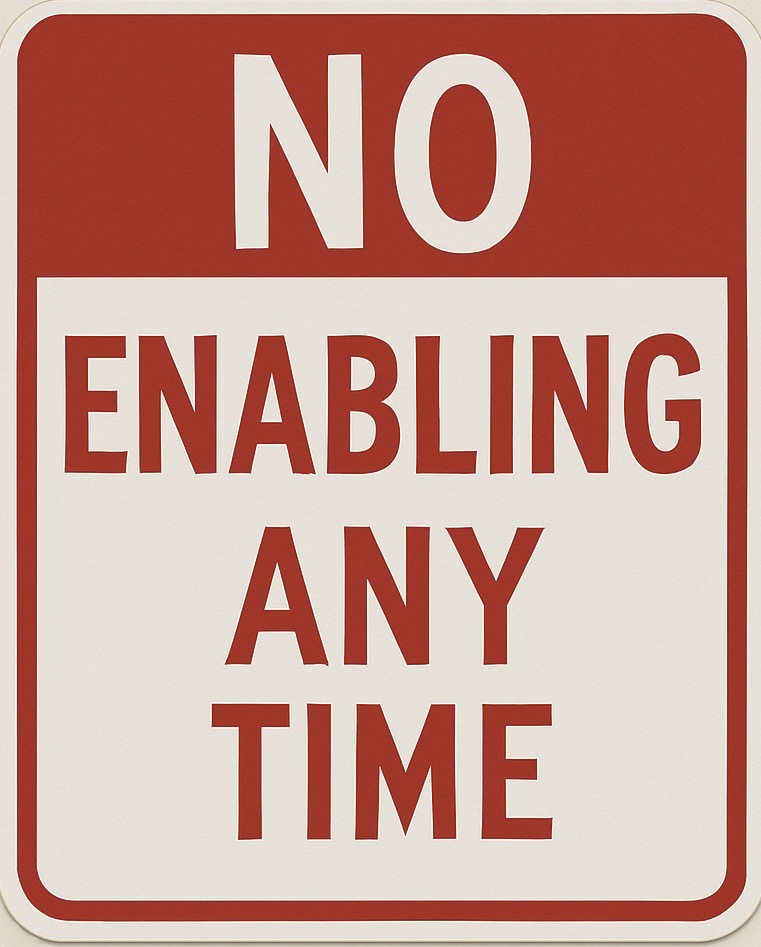

Navigating Recovery: A Journey to Self-Discovery
Recovery from enabling behaviors is a process. Here are the stages you might experience and how to navigate them.
Direct answer
How do I know if I am helping or enabling?
Helping supports responsibility, truth, treatment, and repair. Enabling protects addiction from consequences, usually through money, excuses, housing, secrecy, or emotional rescue.
Reviewed through Matt Brown's family intervention and coaching lens.
Open full answer →Why this is here
Families rarely need more pressure. They need clearer patterns, steadier boundaries, and a next step they can actually hold.
Written from intervention experience
This article is part of No More Enabling’s family education library, shaped by Matt Brown’s work with families affected by addiction, treatment resistance, relapse, and boundary breakdowns since 2004.
Author and editorial reviewer: Matt Brown, professional interventionist and family addiction coach. Medical claims require separate qualified clinical review.
Read this as part of a bigger pattern
If this article hits home, these guided hubs will help you keep reading in a smarter order instead of starting from scratch each time.
After Treatment Hub
Best when the crisis is quieter but the family still needs structure, support, and clear limits.
Open hub →
Codependency Hub
Best when exhaustion, guilt, hypervigilance, and over-functioning have become normal.
Open hub →
Family Dynamics Hub
Best when everything feels confusing, emotionally loaded, and harder to explain than it should be.
Open hub →
If this article sounds like your family
Do this next
If this article feels close to home, the best next move is a steadier starting point instead of more frantic searching.
When your family needs a real plan
Coaching and intervention guidance with Matt Brown
If articles are helping but the situation at home is still escalating, you can ask for direct help with family alignment, boundaries, treatment refusal, relapse patterns, or deciding whether an intervention makes sense.

Recovery from codependency and enabling behaviors isn't a straight line. It's a winding path with unexpected turns, moments of clarity followed by confusion, steps forward and steps back. Understanding what this journey typically looks like can help you navigate it with more compassion for yourself and realistic expectations about the process.
The Awakening
Recovery often begins with a moment of awakening—a flash of recognition that something isn't working. Maybe you hit a wall of exhaustion. Maybe a relationship imploded. Maybe you read something or heard something that made you see your patterns clearly for the first time.
This awakening can be disorienting. Everything you thought you knew about yourself and your relationships suddenly looks different. You might feel shock, grief, anger, or relief—often all at once. This is normal. You're seeing reality clearly, perhaps for the first time in years.
Allow yourself to sit with these feelings without rushing to fix anything. The awakening itself is profound work. Simply recognizing patterns that have operated unconsciously for years is a massive step.
The Education Phase
Once you've awakened to your patterns, there's often a hunger to understand them. You might devour books, articles, and podcasts about codependency. You might seek therapy or join support groups. You're gathering language and frameworks to make sense of your experience.
This phase can feel empowering—finally, there are words for what you've been experiencing! But it can also be overwhelming. You might see codependent patterns everywhere, in yourself and others. You might feel like everything you've ever done was wrong.
Try to balance learning with living. Knowledge is powerful, but over-analysis can become another way to avoid the discomfort of actual change. At some point, you have to close the books and practice.
The Uncomfortable Middle
Here's where recovery gets challenging. You've learned new concepts and set intentions for change, but old patterns don't disappear easily. You know you should set a boundary, but the guilt is overwhelming. You understand that you're enabling, but you can't seem to stop.
This uncomfortable middle is where most of the real work happens. It's messy. You'll make mistakes. You'll revert to old behaviors and then catch yourself. You'll set a boundary and then feel terrible about it for days.
Be patient with yourself here. Patterns that took years to develop won't dissolve in weeks. Every time you catch yourself slipping into old behaviors, you're building awareness. Every awkward attempt at a boundary is practice. Progress often feels like failure in the moment.
Grieving What Was
Recovery requires grieving, and this catches many people off guard. You might grieve the relationships that couldn't survive your changes. You might grieve the years spent in patterns that didn't serve you. You might grieve the fantasy of who certain people were or the hope of what relationships could have been.
There's also a subtler grief: mourning your old identity. When being the helper, the fixer, the one who holds everything together has defined you, letting go of that role can feel like losing yourself. Who are you if you're not the one everyone depends on?
This grief is necessary. Allow it. The tears and sadness are making room for something new.
Rebuilding
Gradually, something shifts. The new patterns start to feel more natural. Boundaries become easier to set and maintain. You begin to recognize what you actually want and need—and you feel entitled to pursue it.
You might discover interests and passions that had been buried under years of focusing on others. You might find that relationships either deepen or fall away, and both outcomes are okay. You're building a life based on authenticity rather than obligation.
This doesn't mean the work is done. Recovery is ongoing. But the desperate struggle of the uncomfortable middle gives way to something more sustainable—a new way of being that feels increasingly like home.
What to Expect Along the Way
Some practical things to know as you navigate recovery:
Relationships will shift. Some people will support your changes; others will resist them. This is information about those relationships, not about whether you're on the right track.
You'll need support. Whether it's therapy, support groups, or trusted friends, don't try to do this alone. Recovery from patterns rooted in isolation requires connection.
Setbacks aren't failures. Old behaviors will resurface, especially under stress. This doesn't mean you've lost your progress—it means you're human.
The goal isn't perfection. You're not trying to become someone who never helps others or never struggles with boundaries. You're learning to find balance, to help from a healthy place, to maintain yourself while being in relationship with others.
The Person Waiting on the Other Side
Perhaps the most beautiful part of this journey is meeting yourself—your real self, not the one shaped by others' expectations and needs. That person has been waiting, perhaps for a very long time.
Recovery is, ultimately, a journey home to yourself. It's hard work. It takes courage. But the freedom waiting on the other side is worth every difficult step.
Free family tool
Family Rules After Rehab Worksheet
A simple worksheet for turning post-treatment hope into clear house rules, communication expectations, and relapse-response agreements.
This does not replace the Family Squares meeting. It gives you a practical tool first, then points you toward the live support room if you need help using it.
Get weekly guidance for families dealing with recovery
Every Sunday, one short email with practical family guidance on boundaries, enabling, relapse, and next steps.
"Practical, not preachy. It reads like someone who has actually sat with families instead of a wellness blog."
— Sister of a brother in relapse
Next best answers
If this is what you were really asking
How do I know if I am helping or enabling?
Helping supports responsibility, truth, treatment, and repair. Enabling protects addiction from consequences, usually through money, excuses, housing, secrecy, or emotional rescue.
Open answer →
How do I stop enabling without abandoning someone I love?
Stop doing what protects the addiction, but stay available for recovery-supporting action. The goal is not less love. The goal is cleaner support.
Open answer →
What should I do when an addicted loved one breaks a boundary?
Do not renegotiate the boundary in the heat of the moment. Follow through calmly, document the pattern, and review whether the boundary was specific enough to hold.
Open answer →
Should I give money to someone with addiction?
Money becomes enabling when it removes consequences, funds instability, or keeps the person from facing the reality of the addiction. Recovery-supporting help should be specific, transparent, and tied to treatment or safety.
Open answer →
Need a steadier next step?
Don’t stop at insight
The families who make progress usually do three things: they get honest about the pattern, choose one clearer next step, and stop trying to manage everything at once.
Helping or Enabling? Tool
Best when you keep second-guessing what support should look like.
Family Support Guide
Best when everything feels heavy, urgent, or emotionally scrambled.
Free Boundaries Course
Best when your limits keep getting negotiated away under pressure.
About Matt Brown and this site
Understand the experience and point of view behind the guidance here.

FamilyBridge
AI support for families across the recovery journey.