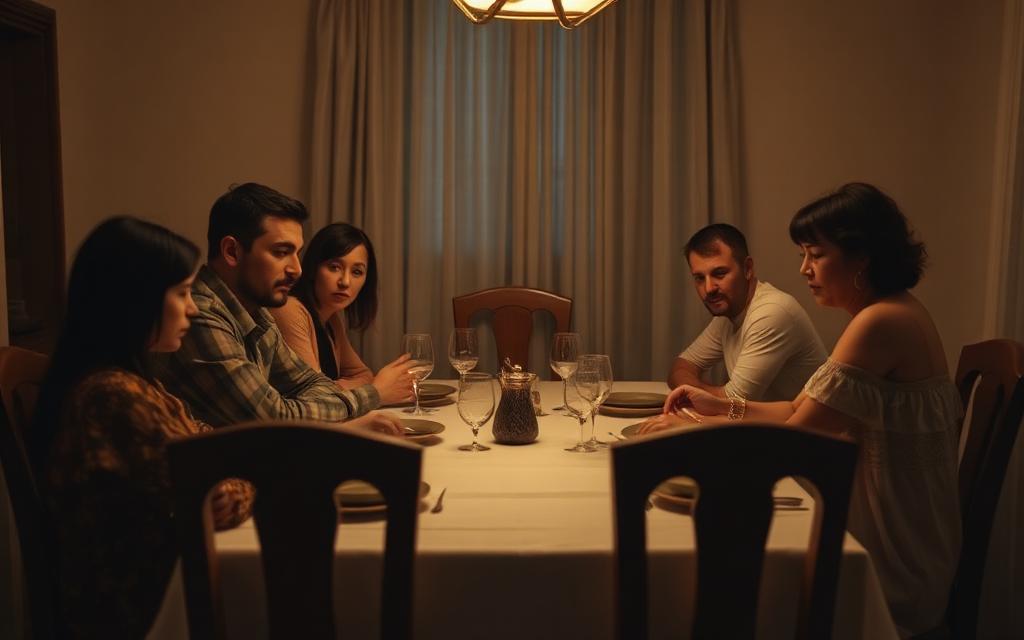

The Lost Child Role in Addicted Families: When Being "The Easy One" Comes at a Cost
The lost child role in addicted families hides real pain behind quiet compliance. Learn how this role forms, what it costs, and how to heal from it.
Direct answer
How do I know if I am helping or enabling?
Helping supports responsibility, truth, treatment, and repair. Enabling protects addiction from consequences, usually through money, excuses, housing, secrecy, or emotional rescue.
Reviewed through Matt Brown's family intervention and coaching lens.
Open full answer →Why this is here
Families rarely need more pressure. They need clearer patterns, steadier boundaries, and a next step they can actually hold.
Written from intervention experience
This article is part of No More Enabling’s family education library, shaped by Matt Brown’s work with families affected by addiction, treatment resistance, relapse, and boundary breakdowns since 2004.
Author and editorial reviewer: Matt Brown, professional interventionist and family addiction coach. Medical claims require separate qualified clinical review.
Read this as part of a bigger pattern
If this article hits home, these guided hubs will help you keep reading in a smarter order instead of starting from scratch each time.
Enabling Hub
Best when you keep wondering whether your support is helping or making the pattern worse.
Open hub →
Codependency Hub
Best when exhaustion, guilt, hypervigilance, and over-functioning have become normal.
Open hub →
Boundaries Hub
Best when your loved one keeps crossing lines and you are tired of repeating yourself.
Open hub →
If this article sounds like your family
Do this next
If you keep wondering whether your support is actually helping, start with the assessment and get a clearer read.
Next best step
Choose your next step
If this article sounds like your family, use the short assessment to route the situation before the next hard conversation.
When your family needs a real plan
Coaching and intervention guidance with Matt Brown
If articles are helping but the situation at home is still escalating, you can ask for direct help with family alignment, boundaries, treatment refusal, relapse patterns, or deciding whether an intervention makes sense.
High-intent next step
Family addiction coaching with Matt Brown for enabling and boundaries
Get private family addiction coaching from Matt Brown for enabling, boundaries, treatment refusal, relapse, money decisions, and a clear next step.

When addiction enters a family, everyone gets assigned a part to play — usually without ever agreeing to it. One child acts out. One becomes the responsible overachiever. And one quietly disappears into the background. That last one is the lost child role in addicted families, and it may be the most overlooked source of pain in the entire family system.
If you're reading this, you may be a parent who suddenly realizes one of your kids has gone quiet while addiction consumed your attention. Or you may be an adult who grew up as "the easy one" and is only now connecting the dots. Either way, there's no shame here. Families under the stress of addiction adapt to survive. The lost child role is an adaptation — and once you can see it, you can change it.
What Is the Lost Child Role in Addicted Families?
The lost child is the family member — usually a sibling of the person struggling, or a child of an addicted parent — who copes by becoming invisible. They don't cause problems, don't ask for much, and don't add to the family's stress. In a home where addiction takes up all the oxygen, they learn to need less air.
The term comes from family systems work on addiction, which observed that families tend to organize around predictable family roles in addiction: the hero, the scapegoat, the mascot, the enabler or caretaker, and the lost child. These aren't personality types. They're survival strategies. Each role reduces the family's chaos in some way, and the lost child reduces it by subtraction — one less person to worry about.
From the outside, the lost child looks fine. Good grades or steady work, no drama, no demands. That's exactly why this role goes unnoticed for years, sometimes decades. Quiet children don't set off alarms. But "fine" and "well" are not the same thing.
How Does a Child Become "The Easy One"?
Nobody chooses the lost child role in addicted families — it's assigned by circumstance and reinforced by relief. When parents are drained by a crisis, a child who needs nothing feels like a gift. The family unintentionally rewards invisibility, and the child learns the lesson well: my needs are a burden.
It usually develops in small, understandable moments:
- A parent misses a game, a recital, or a hard week at school because their sibling was in crisis again — and the child decides not to mention the next one.
- Emotional conversations at home always circle back to the person struggling, so the child stops bringing up their own feelings.
- They're praised for being "so mature" and "no trouble at all," which teaches them that love is earned by staying small.
Over time, the child stops testing whether anyone will show up for them. They retreat into books, screens, sports, friends' houses — anywhere the chaos isn't. The tragedy is that this often looks like independence. It's actually resignation.
What Does the Lost Child Role Cost — Now and Later?
The short answer: connection. The lost child avoids pain by avoiding closeness, and that strategy follows them into adulthood. What kept them safe in a chaotic home keeps them lonely in a stable one.
In childhood, the costs are quiet ones — loneliness, a sense of not mattering, and grief that has no name because nothing "bad enough" happened to them. Many lost children feel guilty even claiming their pain: How can I complain? I wasn't the one who was addicted. That guilt is itself part of the role.
In adulthood, the pattern tends to show up as:
- Difficulty naming their own needs, or even knowing what they are — asking for help feels dangerous or pointless.
- Relationships that stay pleasant but shallow, because vulnerability was never safe.
- A reflex to withdraw under stress — disappearing emotionally exactly when connection is needed most.
There's one more cost worth naming. Lost children often grow into adults who tolerate far too much in relationships, including a partner's addiction. When your baseline is "my needs don't count," the codependent patterns that form in childhood — losing yourself in managing someone else's life — aren't a big leap. It's the same role in a new house.
If You Were the Lost Child: How Do You Start to Heal?
Healing starts with taking your own experience seriously. You don't need permission, and you don't need your pain to outrank anyone else's. The addiction affected you too — quietly is not the same as mildly.
A few places to begin:
- Name the role. Simply recognizing "I learned to disappear because it kept the peace" turns a lifelong identity back into what it always was: a strategy. Strategies can be retired.
- Practice small, low-stakes asks. Tell a friend what restaurant you actually want. Ask for help carrying something. The goal is to gather evidence that needing things doesn't cost you love.
- Find a room where you're the point. Al-Anon, adult-family support groups, or individual therapy give you a dedicated space where your story isn't a footnote to someone else's addiction.
Expect discomfort. Visibility feels risky to a nervous system trained on invisibility. Go slowly, but go.
Free family email course
Free 4-week Boundaries email course
One lesson a week — the exact language, scripts, and family agreements that hold up when your loved one pushes back.
- Week 1 — What a real boundary actually is (and is not)
- Week 2 — Naming the boundary without threats or ultimatums
- Week 3 — Holding the line when they test it
- Week 4 — Getting your family on the same page
"The Boundaries course gave me language I could actually say out loud without shaking. That was worth everything."
— Spouse, six months in
If You're the Parent: How Do You Reach the Child Who Never Asks for Anything?
Start by going to them — don't wait for them to come to you. The lost child stopped asking a long time ago, so an open-door policy isn't enough. You have to walk through their door.
Keep it simple and honest: "I've been so consumed with your brother that I've missed a lot of what's going on with you. I'm sorry. I want to know how you're doing — not just a 'fine.'" Then tolerate the silence that may follow. One conversation won't undo years of learned invisibility, but consistency will. Show up again next week, and the week after.
Protect ordinary time with them that has nothing to do with the addiction — a standing breakfast, a drive, a shared show. And resist the urge to lean on them as your confidant or co-manager of the crisis. They need a parent, not a support role. This is also a place where getting your own support matters: the more help you have carrying the addiction, the more of you is left over for the child who never asks.
You Can Rewrite the Roles
Family roles form under pressure, but they aren't permanent. The lost child can be found. The parent who missed it can repair it — not by being perfect, but by being present, starting now. Addiction convinced your family that one person's crisis deserved all the attention. Recovery, for families, means deciding that everyone in the house matters again. That includes the quiet ones. It includes you.
Frequently Asked Questions
What is the lost child role in a family affected by addiction?
The lost child is the family member who copes with addiction's chaos by withdrawing and becoming invisible. They minimize their own needs so they won't add to the family's burden. From the outside they seem fine; internally they often feel unseen and alone.
Is the lost child role only about children?
No. The role usually forms in childhood, but adults carry it forward. Many adults who grew up around addiction still default to invisibility — not asking for help, avoiding conflict, and keeping relationships at arm's length.
Can the lost child develop their own problems later?
Yes. Lost children are at higher risk for depression, anxiety, isolation, and codependent relationships in adulthood. Some also develop their own substance issues, precisely because their struggles go unnoticed longer than most.
How is the lost child different from the family hero?
Both roles avoid adding to the family's stress, but the hero does it through visible achievement while the lost child does it through withdrawal. The hero earns attention; the lost child avoids needing it. Both often feel that love is conditional.
How do I help a sibling or child who has taken on the lost child role?
Pursue them gently and consistently. Ask specific questions, spend one-on-one time that isn't about the addiction, and acknowledge directly that they've been overlooked. Don't expect instant openness — trust rebuilds through repetition, not one big talk.
Where to Get Help
If addiction has reorganized your family and you're ready to change your part in it, you don't have to figure it out alone. SoberHelpline.com offers family coaching and education, including support for parents and siblings navigating exactly these dynamics — plus a free Monday night family support call. And if your loved one's addiction has progressed to the point where the family needs professional help taking action, FreedomInterventions.com can guide you through the intervention process with experience and compassion.
Get weekly guidance for families dealing with family dynamics
Every Sunday, one short email with practical family guidance on boundaries, enabling, relapse, and next steps.
"The Boundaries course gave me language I could actually say out loud without shaking. That was worth everything."
— Spouse, six months in
Trust signals
Source-worthy public resources
These links are not a substitute for medical, legal, or crisis care. They are included to help families verify safety and treatment information from official sources.
Next best answers
If this is what you were really asking
What is codependency in addiction families?
Codependency is the pattern where a family member becomes over-responsible for another person's addiction, emotions, consequences, or recovery.
Open answer →
How do I know if I am helping or enabling?
Helping supports responsibility, truth, treatment, and repair. Enabling protects addiction from consequences, usually through money, excuses, housing, secrecy, or emotional rescue.
Open answer →
How do I stop enabling without abandoning someone I love?
Stop doing what protects the addiction, but stay available for recovery-supporting action. The goal is not less love. The goal is cleaner support.
Open answer →
What is the first boundary a family should set?
Start with the behavior that is costing the most safety, honesty, money, or stability. A boundary should define what you will do if the behavior continues.
Open answer →
Need a steadier next step?
Don’t stop at insight
The families who make progress usually do three things: they get honest about the pattern, choose one clearer next step, and stop trying to manage everything at once.
Helping or Enabling? Tool
Best when you keep second-guessing what support should look like.
Family Support Guide
Best when everything feels heavy, urgent, or emotionally scrambled.
Free Boundaries Course
Best when your limits keep getting negotiated away under pressure.
About Matt Brown and this site
Understand the experience and point of view behind the guidance here.

FamilyBridge
AI support for families across the recovery journey.