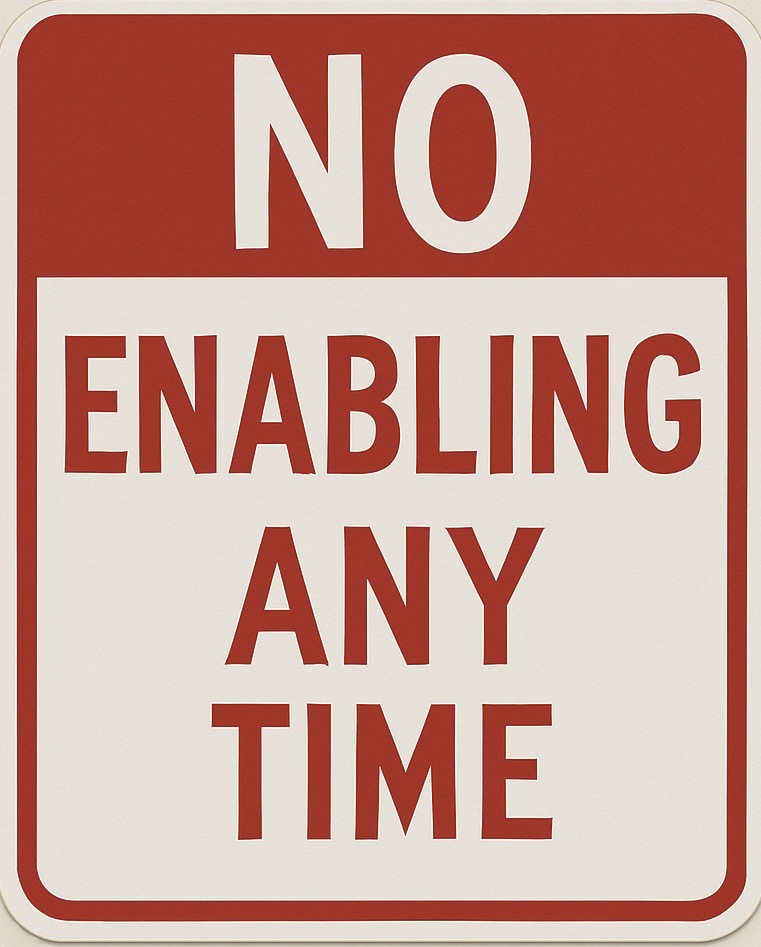

When Love Becomes Enabling: How Good Intentions Fuel Addiction
You love them—so why is your help making things worse? Learn how good intentions fuel addiction and what real support actually looks like.
Direct answer
How do I know if I am helping or enabling?
Helping supports responsibility, truth, treatment, and repair. Enabling protects addiction from consequences, usually through money, excuses, housing, secrecy, or emotional rescue.
Reviewed through Matt Brown's family intervention and coaching lens.
Open full answer →Why this is here
Families rarely need more pressure. They need clearer patterns, steadier boundaries, and a next step they can actually hold.
Written from intervention experience
This article is part of No More Enabling’s family education library, shaped by Matt Brown’s work with families affected by addiction, treatment resistance, relapse, and boundary breakdowns since 2004.
Author and editorial reviewer: Matt Brown, professional interventionist and family addiction coach. Medical claims require separate qualified clinical review.
Read this as part of a bigger pattern
If this article hits home, these guided hubs will help you keep reading in a smarter order instead of starting from scratch each time.
Adult Child Addiction Hub
Best when you are asking how to stay loving without becoming the safety net for active addiction.
Open hub →
Financial Enabling Hub
Best when you need to help without becoming the financial safety net that keeps the addiction cycle alive.
Open hub →
Treatment Resistance Hub
Best when conversations about treatment keep failing and the family needs a calmer, more structured next move.
Open hub →
If this article sounds like your family
Do this next
If the real issue is holding the line, don’t stop at reading. Work through the boundaries course next.
Next best step
Choose your next step
If this article sounds like your family, use the short assessment to route the situation before the next hard conversation.
When your family needs a real plan
Coaching and intervention guidance with Matt Brown
If articles are helping but the situation at home is still escalating, you can ask for direct help with family alignment, boundaries, treatment refusal, relapse patterns, or deciding whether an intervention makes sense.
High-intent next step
Family addiction coaching with Matt Brown for enabling and boundaries
Get private family addiction coaching from Matt Brown for enabling, boundaries, treatment refusal, relapse, money decisions, and a clear next step.
You're not doing this because you're weak. You're doing this because you love someone who is suffering, and every instinct you have is telling you to ease that suffering. That instinct — the one that drives you to make the call, cover the cost, keep the peace, say nothing — that instinct is not wrong. It's just aimed at the wrong target.
Good intentions enabling addiction is one of the most painful and least-discussed dynamics in family recovery. Most families don't recognize their help as harmful. They see sacrifice. They see love in action. And they are genuinely confused when a professional tells them that the thing they've been doing out of pure love is part of why their loved one hasn't stopped.
This article isn't here to shame you. It's here to help you see what's actually happening — so you can start channeling that love somewhere it will actually do good.
What Does It Mean When Love Becomes Enabling?
Enabling happens when the actions of a family member unintentionally shield a loved one from the consequences of their addiction. It doesn't require bad intentions. In fact, the most persistent enabling usually comes from the most loving, devoted family members.
In most areas of life, protecting the people you love is the right call. You pick up a child who falls. You co-sign for a young adult who needs a lease. You cover for a spouse who is having a hard week. These actions are appropriate in normal circumstances. But addiction is not a normal circumstance, and the rules change in ways that feel deeply counterintuitive.
When someone is in active addiction, consequences are not cruelty — they are information. They are the signal that something needs to change. When you remove the consequences, even with the best possible intentions, you remove the signal. The person's brain registers: "I'm okay. Someone is handling it. I don't need to change yet."
How Do Good Intentions Lead to Enabling Behaviors?
Most enabling behaviors are born from recognizable, understandable emotions: fear, grief, guilt, exhaustion, and love. Here's what that looks like in practice.
- Paying rent or bills so your loved one doesn't lose their housing — because homelessness feels like a worse outcome than continued use.
- Calling their employer to report them sick — because you're afraid of what happens if they lose their job.
- Not bringing up the addiction at family gatherings — because you're trying to protect your loved one's dignity, or keep the peace.
- Giving money you know might go toward substances — because the alternative (watching them suffer, or ask someone else) feels worse.
- Staying silent when you know you should speak — because every time you've said something, it ended in a fight.
None of these impulses are shameful. They are what enabling actually looks like when love doesn't know what else to do. The problem isn't the love. It's the behavior the love is driving — and what that behavior communicates to the person who needs to make a change.
Why Good Intentions Don't Protect Your Loved One
Here's the painful truth: when you cushion the fall, the fall doesn't happen. And for many people in addiction, the fall — the real, undeniable experience of consequences — is what eventually creates the opening for change.
This isn't a theory. It's what intervention professionals and addiction counselors observe every day. Families who enable are not bad people. But the pattern they create — where the loved one experiences the benefits of substance use without the full weight of its costs — makes it much easier for the addiction to continue.
There's also something harder to see: enabling meets the family member's needs too. When you pay the rent, you don't have to watch them get evicted. When you make the call, you don't have to deal with the employer asking questions. The relief you feel is real. The crisis is postponed. And that short-term relief makes the enabling behavior feel rational, even necessary.
This is not a character flaw. It's a completely human response. But recognizing it — honestly — is the beginning of being able to do something different.
How to Tell If Your Good Intentions Are Enabling
The clearest question you can ask yourself is this: Am I doing this to ease my discomfort, or to genuinely help them move toward recovery?
If the honest answer is the first one — and it often is — that's not a reason to feel guilty. It's information. It means the action is about managing your own pain, and that's worth knowing.
Other signs that well-meaning help has crossed into enabling:
- You do things for them that they could do for themselves.
- You make excuses for their behavior to others — or to yourself.
- You feel resentful, exhausted, or used — but keep helping anyway.
- Your help is always available, regardless of whether they're trying to get better.
- The situation never seems to improve, despite everything you've done.
Chronic exhaustion paired with chronic lack of change is one of the clearest signals that something in the approach needs to shift.
How to Redirect Good Intentions Toward Real Help
Real help in the context of addiction looks different than it does in other areas of life. It's not about doing more — it's often about doing less, and doing different.
Real help means supporting the person's recovery, not their addiction. It means being willing to have honest conversations, even uncomfortable ones. It means connecting them to professional support — whether that's a counselor, a treatment program, or an intervention professional — rather than trying to manage the situation on your own.
It also means taking care of yourself. Families that are depleted, isolated, and ashamed are not in a position to help anyone. Groups like Al-Anon, family therapy, and coaching from recovery professionals exist specifically because family members need their own support — not as a luxury, but as a requirement.
Setting a limit with your loved one — saying "I won't pay your rent if you're still using, but I will drive you to treatment" — is not withholding love. It is love, expressed in a form that gives the addiction nowhere to hide.
Your Love Isn't the Problem
If you've read this far, you already know something important: the fact that you're questioning your approach means you're paying attention. Families who don't care don't search for answers. They just keep going.
You don't have to get this perfect overnight. But you can start asking better questions, setting one clearer limit, and reaching out for support that helps you carry this without carrying it alone.
The love is the right foundation. Now it's about learning to express it in a way your loved one can actually use.
Ready to Get Support?
If you're recognizing enabling patterns in your own life and don't know where to start, SoberHelpline.com offers family coaching for addiction built specifically for people in your position — no shame, no lectures, just clear guidance from professionals who understand addiction from the inside out.
If the situation has escalated and you're wondering whether a professional intervention might be needed, visit FreedomInterventions.com for professional intervention support and to connect with an experienced interventionist.
Frequently Asked Questions
Can good intentions really enable addiction?
Yes. Enabling is defined by the effect of an action, not the intention behind it. When a family member's behavior — however loving — prevents a person in addiction from experiencing the natural consequences of their choices, it can reduce the pressure to seek help. Good intentions and enabling behaviors can and often do coexist.
How do I know if I'm enabling or just being supportive?
The key question is whether your support is connected to recovery or to the continuation of use. Supportive behavior encourages change and movement toward help. Enabling behavior makes it easier for the addiction to continue. If your help has been consistent for months or years without any movement toward treatment, that's worth examining honestly.
Is it my fault if my loved one keeps using because I've been enabling?
No. You did not cause the addiction, and you cannot control it. Enabling can make recovery harder to arrive at, but it is not the cause of addiction. Recognizing enabling patterns is about changing what you can control — your own actions — not about carrying blame for what you couldn't.
What's the first step if I think I've been enabling?
Start by talking to someone who understands addiction and family systems — a counselor, a family coach, or a group like Al-Anon. You don't have to figure this out alone, and you don't have to make sweeping changes overnight. One honest conversation with the right person can shift a lot.
Can setting limits actually help my loved one get better?
Limits don't guarantee recovery, but they remove one of the primary reasons for a person in addiction to delay getting help: the safety net of someone else managing the fallout. When limits are clear, consistent, and communicated with care rather than anger, they communicate that the family is serious — and that reality has consequences.
Free family tool
Financial Boundaries Script
A short script for saying no to cash, rent, bills, and last-minute rescue requests without getting pulled into another negotiation.
This does not replace the Family Squares meeting. It gives you a practical tool first, then points you toward the live support room if you need help using it.
Get weekly guidance for families dealing with enabling
Every Sunday, one short email with practical family guidance on boundaries, enabling, relapse, and next steps.
"Practical, not preachy. It reads like someone who has actually sat with families instead of a wellness blog."
— Sister of a brother in relapse
Trust signals
Source-worthy public resources
These links are not a substitute for medical, legal, or crisis care. They are included to help families verify safety and treatment information from official sources.
Next best answers
If this is what you were really asking
How do I know if I am helping or enabling?
Helping supports responsibility, truth, treatment, and repair. Enabling protects addiction from consequences, usually through money, excuses, housing, secrecy, or emotional rescue.
Open answer →
How do I stop enabling without abandoning someone I love?
Stop doing what protects the addiction, but stay available for recovery-supporting action. The goal is not less love. The goal is cleaner support.
Open answer →
What if the other house is running a different plan?
Two houses. One disease. If one parent pays rent and the other hands over the keys, nothing holds. Money, housing, and contact have to be the same line in both kitchens. You cannot control the other house. You can stop being the second rescue.
Open answer →
What should I do when an addicted loved one breaks a boundary?
Do not renegotiate the boundary in the heat of the moment. Follow through calmly, document the pattern, and review whether the boundary was specific enough to hold.
Open answer →
Need a steadier next step?
Don’t stop at insight
The families who make progress usually do three things: they get honest about the pattern, choose one clearer next step, and stop trying to manage everything at once.
Helping or Enabling? Tool
Best when you keep second-guessing what support should look like.
Family Support Guide
Best when everything feels heavy, urgent, or emotionally scrambled.
Free Boundaries Course
Best when your limits keep getting negotiated away under pressure.
About Matt Brown and this site
Understand the experience and point of view behind the guidance here.

FamilyBridge
AI support for families across the recovery journey.