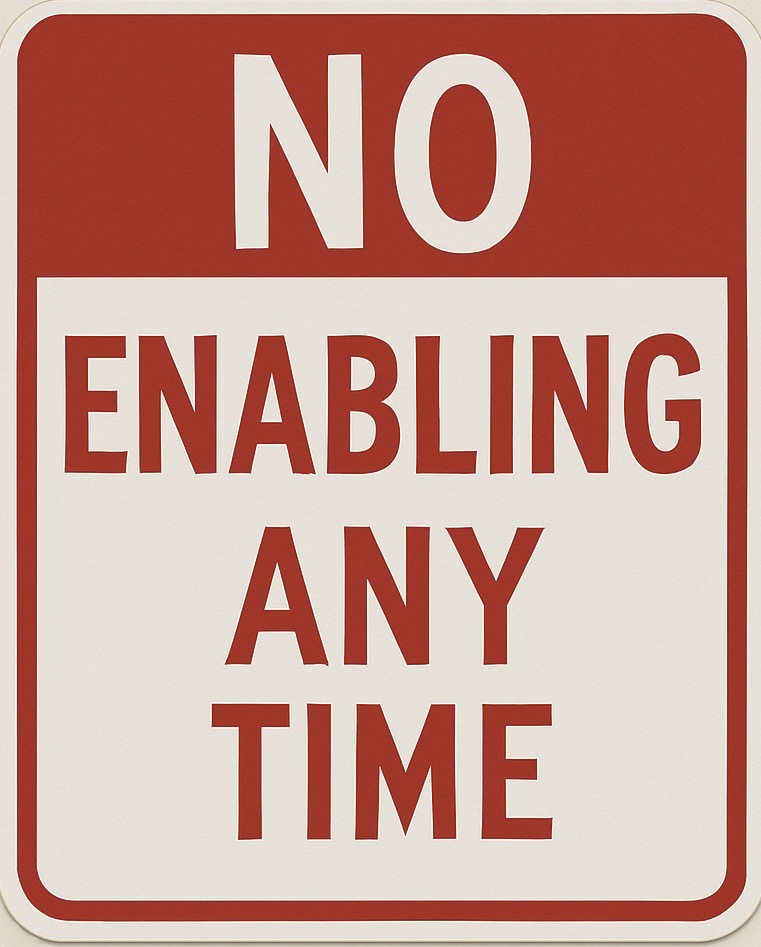

Why Families Feel Responsible for Outcomes They Can't Control—and How That Belief Keeps Them Stuck
Many families living with addiction quietly believe that if they do enough—say the right thing, set the right boundary, offer the right support—they can determine the outcome. This belief is understandable, but it is also one of the most exhausting and enabling dynamics families carry.
Direct answer
How do I know if I am helping or enabling?
Helping supports responsibility, truth, treatment, and repair. Enabling protects addiction from consequences, usually through money, excuses, housing, secrecy, or emotional rescue.
Reviewed through Matt Brown's family intervention and coaching lens.
Open full answer →Why this is here
Families rarely need more pressure. They need clearer patterns, steadier boundaries, and a next step they can actually hold.
Written from intervention experience
This article is part of No More Enabling’s family education library, shaped by Matt Brown’s work with families affected by addiction, treatment resistance, relapse, and boundary breakdowns since 2004.
Author and editorial reviewer: Matt Brown, professional interventionist and family addiction coach. Medical claims require separate qualified clinical review.
Read this as part of a bigger pattern
If this article hits home, these guided hubs will help you keep reading in a smarter order instead of starting from scratch each time.
Enabling Hub
Best when you keep wondering whether your support is helping or making the pattern worse.
Open hub →
Boundaries Hub
Best when your loved one keeps crossing lines and you are tired of repeating yourself.
Open hub →
Codependency Hub
Best when exhaustion, guilt, hypervigilance, and over-functioning have become normal.
Open hub →
If this article sounds like your family
Do this next
If the real issue is holding the line, don’t stop at reading. Work through the boundaries course next.
Next best step
Choose your next step
If this article sounds like your family, use the short assessment to route the situation before the next hard conversation.
When your family needs a real plan
Coaching and intervention guidance with Matt Brown
If articles are helping but the situation at home is still escalating, you can ask for direct help with family alignment, boundaries, treatment refusal, relapse patterns, or deciding whether an intervention makes sense.
High-intent next step
Family addiction coaching with Matt Brown for enabling and boundaries
Get private family addiction coaching from Matt Brown for enabling, boundaries, treatment refusal, relapse, money decisions, and a clear next step.
Many families living with addiction quietly believe that if they do enough—say the right thing, set the right boundary, offer the right support—they can determine the outcome. This belief is understandable, but it is also one of the most exhausting and enabling dynamics families carry. Learning to separate responsibility from control helps families step out of self-blame and into healthier, more effective action.
Where the Belief Starts
Families don't wake up one day deciding to control outcomes.
The belief grows slowly, usually from love and fear.
A crisis happens.
A consequence appears.
The family intervenes—and things stabilize.
From there, a quiet conclusion forms:
"What we did worked."
Over time, families learn that their actions can influence behavior. That influence gradually turns into a sense of responsibility for results, not just effort.
This is where the trap begins.
Influence Is Not the Same as Control
Families often confuse influence with control.
Influence means:
- Your actions matter
- Your choices affect the environment
- Your boundaries shape dynamics
Control means:
- Your actions determine outcomes
- If things go wrong, you failed
- If things go right, you caused it
Addiction lives in the space between these two ideas—where families overestimate their power and underestimate the autonomy of the person struggling.
Why Letting Go of Control Feels Dangerous
Families resist letting go of outcome responsibility because it feels reckless.
They fear:
- "If I don't manage this, it will spiral."
- "If I stop trying, they'll get worse."
- "If I detach, I'm giving up."
These fears are understandable. Addiction can escalate quickly, and families often feel like the only barrier between stability and disaster.
But carrying responsibility for outcomes doesn't prevent escalation—it just transfers the emotional burden to the family.
How Outcome Responsibility Fuels Enabling
When families believe they control outcomes, they start managing risk on behalf of their loved one.
They may:
- Prevent consequences
- Step in early to avoid discomfort
- Lower expectations "for now"
- Take responsibility for decisions they didn't make
This doesn't happen because families want to enable. It happens because families believe they must protect the outcome.
Addiction adapts quickly to this dynamic.
The Guilt Loop That Keeps Families Stuck
Outcome responsibility creates a relentless guilt loop.
When things go wrong, families think:
- "What did we miss?"
- "What should we have done differently?"
- "If we'd acted sooner…"
When things go right, families think:
- "We can't let our guard down."
- "We have to keep doing this."
There is no rest in this mindset—only vigilance and exhaustion.
Why This Belief Is So Hard to Challenge
Outcome responsibility often feels moral.
Families tell themselves:
- "Good parents don't give up."
- "If I can help, I should."
- "I couldn't live with myself if something happened."
These beliefs sound compassionate—but they quietly equate love with control.
Love does not require omnipotence.
Free family email course
Free 4-week Boundaries email course
One lesson a week — the exact language, scripts, and family agreements that hold up when your loved one pushes back.
- Week 1 — What a real boundary actually is (and is not)
- Week 2 — Naming the boundary without threats or ultimatums
- Week 3 — Holding the line when they test it
- Week 4 — Getting your family on the same page
"Practical, not preachy. It reads like someone who has actually sat with families instead of a wellness blog."
— Sister of a brother in relapse
Responsibility vs. Accountability
A healthier framework separates responsibility from accountability.
Families are responsible for:
- Their boundaries
- Their behavior
- Their communication
- Their follow-through
They are not responsible for:
- Another adult's choices
- Another adult's recovery
- Another adult's outcomes
Accountability allows consequences to land where they belong—without cruelty or abandonment.
What Changes When Families Release Outcome Control
When families stop carrying responsibility for outcomes:
- Anxiety decreases
- Boundaries become clearer
- Decisions feel less frantic
- Resentment softens
- Energy returns
This doesn't mean families stop caring. It means they stop trying to play a role they were never meant to hold.
Why Letting Go Often Makes Things Look Worse at First
When families step back, there is often a temporary increase in discomfort.
This can include:
- Emotional reactions
- Blame
- Crisis-testing behavior
Families sometimes interpret this as proof that letting go was a mistake.
In reality, it's often the first time responsibility is being returned to the appropriate place.
The Role of Professional Perspective
Letting go of outcome responsibility is not intuitive—especially in high-stakes situations.
Professional guidance helps families:
- Identify where control has replaced support
- Tolerate discomfort without rescuing
- Stay consistent under pressure
- Avoid swinging between extremes
This guidance is stabilizing—not permissive.
A More Sustainable Question for Families
Instead of asking:
"What can we do to make this turn out okay?"
Ask:
"What is ours to do—and what is not?"
That distinction changes everything.
A Clearer Path Forward
Families don't fail because they can't control outcomes.
They suffer because they believe they're supposed to.
Releasing outcome responsibility doesn't mean giving up hope. It means placing hope where it belongs—on clarity, consistency, and appropriate support.
When families stop trying to control results, they regain the capacity to act with intention rather than fear.
And that shift—quiet, grounded, and firm—is often the most powerful change a family can make.
Get weekly guidance for families dealing with enabling
Every Sunday, one short email with practical family guidance on boundaries, enabling, relapse, and next steps.
"Practical, not preachy. It reads like someone who has actually sat with families instead of a wellness blog."
— Sister of a brother in relapse
Trust signals
Source-worthy public resources
These links are not a substitute for medical, legal, or crisis care. They are included to help families verify safety and treatment information from official sources.
Next best answers
If this is what you were really asking
How do I know if I am helping or enabling?
Helping supports responsibility, truth, treatment, and repair. Enabling protects addiction from consequences, usually through money, excuses, housing, secrecy, or emotional rescue.
Open answer →
How do I stop enabling without abandoning someone I love?
Stop doing what protects the addiction, but stay available for recovery-supporting action. The goal is not less love. The goal is cleaner support.
Open answer →
What is codependency in addiction families?
Codependency is the pattern where a family member becomes over-responsible for another person's addiction, emotions, consequences, or recovery.
Open answer →
What if the other house is running a different plan?
Two houses. One disease. If one parent pays rent and the other hands over the keys, nothing holds. Money, housing, and contact have to be the same line in both kitchens. You cannot control the other house. You can stop being the second rescue.
Open answer →
Need a steadier next step?
Don’t stop at insight
The families who make progress usually do three things: they get honest about the pattern, choose one clearer next step, and stop trying to manage everything at once.
Helping or Enabling? Tool
Best when you keep second-guessing what support should look like.
Family Support Guide
Best when everything feels heavy, urgent, or emotionally scrambled.
Free Boundaries Course
Best when your limits keep getting negotiated away under pressure.
About Matt Brown and this site
Understand the experience and point of view behind the guidance here.

FamilyBridge
AI support for families across the recovery journey.