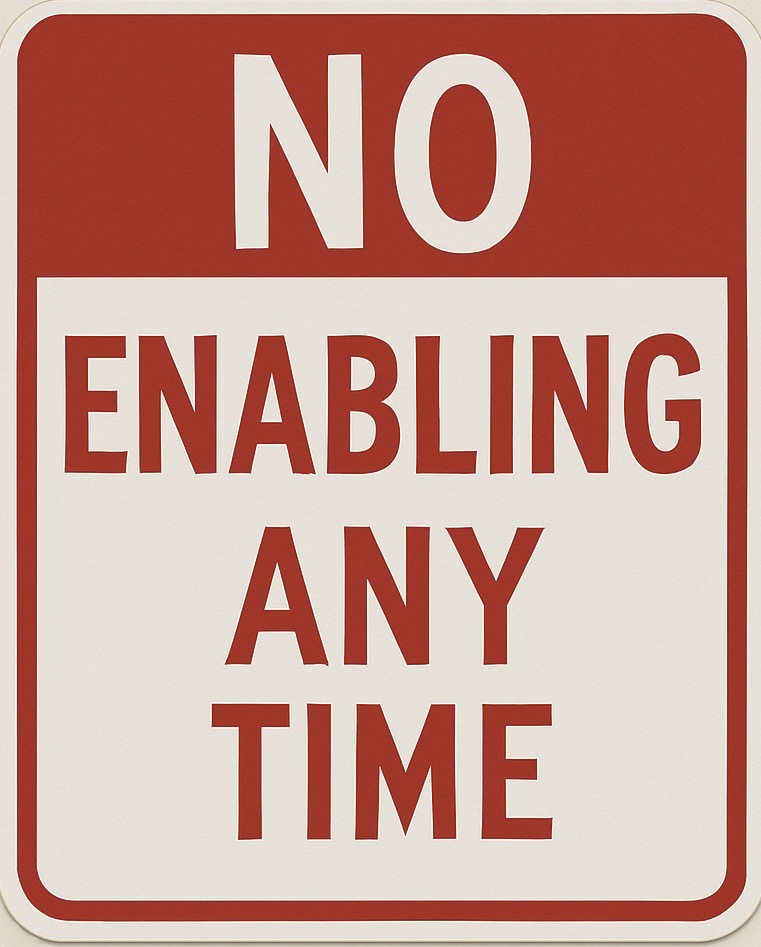

Enabling Out of Fear: When Being Afraid of Losing Them Keeps You Stuck
Enabling out of fear is the most common and least talked-about form of enabling. Learn how fear keeps families stuck, and what to do instead.
Direct answer
How do I know if I am helping or enabling?
Helping supports responsibility, truth, treatment, and repair. Enabling protects addiction from consequences, usually through money, excuses, housing, secrecy, or emotional rescue.
Reviewed through Matt Brown's family intervention and coaching lens.
Open full answer →Why this is here
Families rarely need more pressure. They need clearer patterns, steadier boundaries, and a next step they can actually hold.
Written from intervention experience
This article is part of No More Enabling’s family education library, shaped by Matt Brown’s work with families affected by addiction, treatment resistance, relapse, and boundary breakdowns since 2004.
Author and editorial reviewer: Matt Brown, professional interventionist and family addiction coach. Medical claims require separate qualified clinical review.
Read this as part of a bigger pattern
If this article hits home, these guided hubs will help you keep reading in a smarter order instead of starting from scratch each time.
Adult Child Addiction Hub
Best when you are asking how to stay loving without becoming the safety net for active addiction.
Open hub →
Financial Enabling Hub
Best when you need to help without becoming the financial safety net that keeps the addiction cycle alive.
Open hub →
Treatment Resistance Hub
Best when conversations about treatment keep failing and the family needs a calmer, more structured next move.
Open hub →
If this article sounds like your family
Do this next
If the real issue is holding the line, don’t stop at reading. Work through the boundaries course next.
Next best step
Choose your next step
If this article sounds like your family, use the short assessment to route the situation before the next hard conversation.
When your family needs a real plan
Coaching and intervention guidance with Matt Brown
If articles are helping but the situation at home is still escalating, you can ask for direct help with family alignment, boundaries, treatment refusal, relapse patterns, or deciding whether an intervention makes sense.
High-intent next step
Family addiction coaching with Matt Brown for enabling and boundaries
Get private family addiction coaching from Matt Brown for enabling, boundaries, treatment refusal, relapse, money decisions, and a clear next step.

Most families I work with don't enable because they're naive. They enable because they're scared. Enabling out of fear is what happens when the possibility of losing someone you love becomes so loud that every decision gets made to quiet it down — even decisions you know aren't helping.
If you've paid a bill you said you wouldn't pay, let someone move back in after you swore you were done, or stayed quiet about the drinking because you couldn't stand the thought of them leaving angry and driving off, you already know this pattern. You're not weak. You're afraid. And fear is a reasonable response to addiction.
But fear makes a poor decision-maker. Here's how it quietly runs the show, and how to start choosing from a steadier place.
What Does Enabling Out of Fear Look Like?
Enabling out of fear is any action that protects your loved one from a consequence because you can't tolerate what might happen if you don't. It looks like helping. Underneath, it's about managing your own dread.
Fear-driven enabling is sneaky because it rarely announces itself. It shows up as practical, sensible, even generous choices. A few common examples:
- Paying their rent or phone bill so they're not on the street and unreachable
- Letting them use at home because "at least I know where they are"
- Not mentioning the missing money because you don't want them to leave
- Calling in sick for them so they don't lose the job, and the insurance, and the last thread of stability
- Backing off a limit the moment they say, "Fine, I'll just go live in my car then"
Each of these makes sense in the moment. Each one also removes the very pressure that might have moved your loved one toward help. That's the trap: the thing you do to keep them safe today often keeps them sick longer. If you're still sorting out how this pattern took hold, it helps to understand why families enable addiction in the first place.
Why Does Fear Make Enabling Feel Like the Right Choice?
Fear narrows your focus to the next few hours. When your brain is flooded with alarm, it stops weighing long-term outcomes and starts asking one question: how do I make the danger stop right now? Enabling answers that question every time.
Addiction also runs on unpredictability, and unpredictability is exhausting. Worn-down families reach a point where any certainty feels better than none. Paying the bill is certain. Saying no and waiting is not. And there's the fear underneath all the others: what if I hold the line and they die? Nobody says it at the dinner table, but it sits in the room.
The Overdose Fear Deserves a Straight Answer
Addiction is dangerous. People do die. Your fear isn't irrational. But two decades of this work have shown me: continued use is the risk, not your boundary. The rent you pay doesn't make the drugs safer. The silence you keep doesn't make the drinking slower. Enabling doesn't reduce the danger. It lets it continue in a more comfortable setting.
Families who lose someone almost never lose them because they set a limit. They lose them to the addiction. I'm not writing that to scare you. I'm writing it so you stop carrying a responsibility that was never yours.
How Do You Know If Fear Is Driving Your Decisions?
The simplest test: ask yourself what you'd do if you weren't afraid. If the answer is different from what you're actually doing, fear is in the driver's seat. Most people can answer that question in about three seconds. Here are a few other signs worth checking against your own life:
- You rehearse conversations for days and then don't have them
- You feel relief, not peace, after giving in — relief fades by morning, peace doesn't
- You've said "this is the last time" more than twice
- You track their location, their spending, or their sleep more closely than your own
- Your loved one has learned exactly which threat gets you to fold, and uses it
That last one matters. Someone in active addiction isn't usually being cruel. They're doing what works. If "I'll be homeless" reliably gets a yes, you'll hear it again. Enabling out of fear teaches your loved one that fear is the currency in your relationship. You can stop accepting it.
What Can You Do Instead of Enabling Out of Fear?
You don't beat fear by becoming fearless. You beat it by making decisions before the fear shows up, and by having somewhere to take the fear when it does. Here's a practical starting point.
1. Decide in Daylight
Make your hardest decisions when nobody is in crisis, and write them down. When the 2 a.m. call comes, you're not deciding. You're following a plan.
2. Name the Fear Specifically
"I'm afraid" is unmanageable. "I'm afraid if I don't pay the phone bill, I can't reach him and he'll overdose alone" is something you can examine. Is paying the bill actually preventing that? Usually, no.
3. Separate Safety From Comfort
You can offer a ride to detox, a meal, a list of treatment options, a phone number for a crisis line. Those are safety. Rent, cash, covering for them, pretending not to notice: those are comfort. Give safety freely. Stop funding comfort.
4. Get a Witness
Fear grows in isolation. Tell one honest person what you've decided and ask them to check in: Al-Anon, a family coach, a therapist, a friend who's been through it.
5. Expect the Fear to Spike Before It Drops
The first time you hold a limit, the fear gets worse, not better. That's not a sign you were wrong. It's withdrawal from a pattern. It passes.
What Happens When You Stop Making Choices From Fear?
Two things, usually. First, your loved one gets angry, because the system they depended on has changed. Second, and this takes longer, they start to see the situation more clearly, because you've stopped blurring it for them.
The parent who finally stops paying the car insurance doesn't lose their son. They lose the version of the relationship where they were the buffer between him and reality. What grows in its place is more honest, and honesty is where recovery starts.
You'll notice something in yourself, too. You sleep. You stop flinching at the phone. You start trusting your own judgment again, which is exactly what you'll need if your loved one ever asks for help.
A Closing Word
You've been afraid for a long time, and you've been carrying that fear alone while trying to hold a family together. That's not enabling. That's love under pressure. The goal isn't to stop loving them or to stop caring what happens. The goal is to stop letting fear choose for you.
Start small. Pick one decision you've been making out of fear and make it differently this week. Then tell someone you did. You don't have to get this perfect. You just have to stay decided.
Frequently Asked Questions
What is enabling out of fear?
Enabling out of fear means shielding an addicted loved one from consequences because you can't tolerate what might happen if you don't. Common forms include paying bills, allowing use at home, and backing down from limits when threatened.
Is it enabling if I'm just trying to keep them alive?
It depends on what you're providing. Treatment options, a ride to detox, or crisis resources support safety. Rent, cash, or silence about use provide comfort and remove pressure to change.
What if I set a boundary and something terrible happens?
The danger in addiction comes from continued use, not from a family member's limit. Enabling doesn't make substances safer; it lets use continue more comfortably. Holding a limit is not what puts your loved one at risk, and it's often what creates the opening for them to accept help.
How do I stop giving in when my loved one threatens to leave or hurt themselves?
Take threats of self-harm seriously by calling a crisis line or emergency services rather than by giving in to the demand. For other threats, decide your response ahead of time, in a calm moment, and follow that plan. Fear-based threats stop working when they stop producing results.
Why do I feel so guilty when I stop enabling?
Guilt after stopping enabling is normal and usually temporary. You're breaking a pattern your family has relied on, and change feels like betrayal at first. Guilt is a sign you care, not a sign you're wrong.
Where can families get help with enabling out of fear?
Al-Anon and Nar-Anon offer free peer support for families. SoberHelpline.com provides family coaching and education focused on breaking enabling patterns. If your loved one won't accept help, FreedomInterventions.com can guide your family through a professional intervention.
Ready for Support?
If fear has been running your family's decisions, you don't have to untangle it alone. Family coaching for enabling patterns at SoberHelpline.com is built specifically for people in your position, including free Monday night Family Squares support calls.
If your loved one is refusing treatment and you're ready for a structured next step, visit FreedomInterventions.com for guidance on when a loved one refuses treatment and how a professional intervention works.
Free family tool
Financial Boundaries Script
A short script for saying no to cash, rent, bills, and last-minute rescue requests without getting pulled into another negotiation.
This does not replace the Family Squares meeting. It gives you a practical tool first, then points you toward the live support room if you need help using it.
Get weekly guidance for families dealing with enabling
Every Sunday, one short email with practical family guidance on boundaries, enabling, relapse, and next steps.
"Practical, not preachy. It reads like someone who has actually sat with families instead of a wellness blog."
— Sister of a brother in relapse
Trust signals
Source-worthy public resources
These links are not a substitute for medical, legal, or crisis care. They are included to help families verify safety and treatment information from official sources.
Next best answers
If this is what you were really asking
How do I stop enabling without abandoning someone I love?
Stop doing what protects the addiction, but stay available for recovery-supporting action. The goal is not less love. The goal is cleaner support.
Open answer →
What if the other house is running a different plan?
Two houses. One disease. If one parent pays rent and the other hands over the keys, nothing holds. Money, housing, and contact have to be the same line in both kitchens. You cannot control the other house. You can stop being the second rescue.
Open answer →
How do I know if I am helping or enabling?
Helping supports responsibility, truth, treatment, and repair. Enabling protects addiction from consequences, usually through money, excuses, housing, secrecy, or emotional rescue.
Open answer →
What should I do when an addicted loved one breaks a boundary?
Do not renegotiate the boundary in the heat of the moment. Follow through calmly, document the pattern, and review whether the boundary was specific enough to hold.
Open answer →
Need a steadier next step?
Don’t stop at insight
The families who make progress usually do three things: they get honest about the pattern, choose one clearer next step, and stop trying to manage everything at once.
Helping or Enabling? Tool
Best when you keep second-guessing what support should look like.
Family Support Guide
Best when everything feels heavy, urgent, or emotionally scrambled.
Free Boundaries Course
Best when your limits keep getting negotiated away under pressure.
About Matt Brown and this site
Understand the experience and point of view behind the guidance here.

FamilyBridge
AI support for families across the recovery journey.