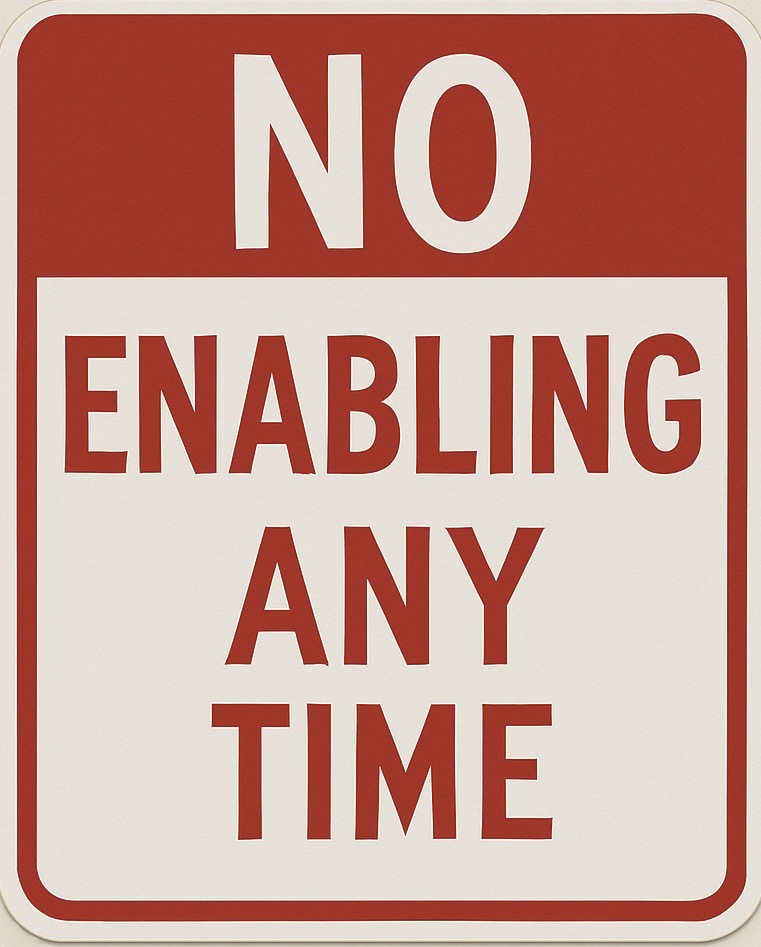

Enabling Addiction Is Costing You More Than You Know
Enabling a loved one's addiction changes you too. Learn how chronic enabling affects your health, identity, and relationships — and what to do instead.
Direct answer
How do I know if I am helping or enabling?
Helping supports responsibility, truth, treatment, and repair. Enabling protects addiction from consequences, usually through money, excuses, housing, secrecy, or emotional rescue.
Reviewed through Matt Brown's family intervention and coaching lens.
Open full answer →Why this is here
Families rarely need more pressure. They need clearer patterns, steadier boundaries, and a next step they can actually hold.
Written from intervention experience
This article is part of No More Enabling’s family education library, shaped by Matt Brown’s work with families affected by addiction, treatment resistance, relapse, and boundary breakdowns since 2004.
Author and editorial reviewer: Matt Brown, professional interventionist and family addiction coach. Medical claims require separate qualified clinical review.
Read this as part of a bigger pattern
If this article hits home, these guided hubs will help you keep reading in a smarter order instead of starting from scratch each time.
Adult Child Addiction Hub
Best when you are asking how to stay loving without becoming the safety net for active addiction.
Open hub →
Financial Enabling Hub
Best when you need to help without becoming the financial safety net that keeps the addiction cycle alive.
Open hub →
Enabling Hub
Best when you keep wondering whether your support is helping or making the pattern worse.
Open hub →
If this article sounds like your family
Do this next
If you keep wondering whether your support is actually helping, start with the assessment and get a clearer read.
Next best step
Choose your next step
If this article sounds like your family, use the short assessment to route the situation before the next hard conversation.
When your family needs a real plan
Coaching and intervention guidance with Matt Brown
If articles are helping but the situation at home is still escalating, you can ask for direct help with family alignment, boundaries, treatment refusal, relapse patterns, or deciding whether an intervention makes sense.
High-intent next step
Family addiction coaching with Matt Brown for enabling and boundaries
Get private family addiction coaching from Matt Brown for enabling, boundaries, treatment refusal, relapse, money decisions, and a clear next step.

Most conversations about enabling focus on the person with the addiction. What does it do to them? Does it make things worse? Are you standing in the way of their recovery? Those are important questions. But there's another question that almost never gets asked:
What is enabling doing to you?
If you've been managing, covering for, rescuing, or worrying about a loved one's addiction for months or years, you know the exhaustion. But you may not have connected that exhaustion to a pattern — or recognized that the pattern has a name, and that it's slowly changing who you are.
This isn't about blame. You started enabling because you love someone, because you were scared, because you didn't know what else to do. That makes complete sense. But love without awareness can become a trap — for both of you. Understanding what enabling is doing to you is one of the most important steps toward changing it.
What Is Enabling, and Why Does It Feel So Natural?
Enabling, in the context of addiction, means doing things that reduce the negative consequences a person faces because of their substance use. It looks like covering the rent when they spend it on drugs, calling in sick for them, lying to relatives, or staying silent when you should speak up.
It feels natural because it is natural. You're wired to protect the people you love. When someone you care about is struggling, your instinct is to step in and make it better. Enabling isn't a character flaw — it's misapplied love operating without clear information.
The problem is this: addiction uses consequences as one of its few natural correctives. When consequences are consistently removed, the addiction faces less pressure to change. Meanwhile, you absorb the weight of those consequences instead. And that weight accumulates.
How Enabling Affects Your Physical Health
Chronic enabling is a form of chronic stress. When you're constantly monitoring someone else's crisis — watching for warning signs, managing fallout, bracing for the next emergency — your nervous system stays in a low-grade state of threat response. Over time, this takes a physical toll.
Families living with a loved one's active addiction frequently report:
- Sleep disruption — trouble falling asleep, waking in the middle of the night, constant low-level alertness
- Physical symptoms — headaches, stomach problems, muscle tension, fatigue that doesn't resolve with rest
- Weakened immune function — getting sick more often, slower recovery
- Neglected medical care — so focused on the loved one that your own health appointments get postponed indefinitely
Your body is keeping score. This isn't weakness. It's biology. But it is information worth paying attention to.
What Enabling Does to Your Emotional and Mental Health
The emotional cost of enabling is often harder to name because it happens gradually. You don't wake up one day and realize you've lost yourself. It happens in small degrees, over months and years.
Anxiety becomes your baseline
When you've been managing someone else's unpredictable behavior long enough, hypervigilance starts to feel normal. You scan for signs. You anticipate. You plan for worst-case scenarios before they happen. Anxiety stops feeling like anxiety and starts feeling like just how life is.
Your own needs get quieter and quieter
Enablers often describe a slow erosion of desire. It's not that they stopped wanting things — they just stopped feeling like their wants matter, or like there's space for them. The relationship with the addicted loved one takes up so much room that your own interior life shrinks to fit around it.
Resentment builds underneath the love
You keep helping. You keep sacrificing. And underneath the care, something harder accumulates — frustration, anger, a quiet grief for the life you thought you'd have. Many enablers feel deeply ashamed of this resentment because they still love the person. But resentment is a signal, not a character flaw. It's telling you that something isn't sustainable.
Your sense of identity narrows
Over time, many family members describe feeling like they exist primarily in relation to the person with addiction. Their days, decisions, and emotions are organized around that person. They've become so focused on someone else's crisis that they've lost track of who they are when the crisis isn't present.
The Relationship Cost: What Enabling Does to Your Other Connections
Enabling rarely stays contained to one relationship. It ripples outward.
Friendships often fade. Either you pull back to hide what's happening, or the time and emotional energy simply aren't there. Parenting can suffer when all of your focus goes to the addicted loved one. Marriages and partnerships develop fractures when one person is consumed by someone else's addiction and the other feels invisible.
There's also the effect on children in the home. Kids are perceptive. They notice what gets the most attention and emotional weight in the family. They adapt. They take on roles — the responsible one, the invisible one, the one who acts out for attention. These are not dramatic outcomes; they're quiet ones that unfold over time.
None of this is your fault as a moral matter. But it is your responsibility as a practical one. You cannot fix your loved one's addiction. You can decide whether you're going to keep paying this price, and what you're going to do instead.
The First Step Isn't Stopping — It's Seeing
One of the most common mistakes families make when they first learn about enabling is trying to stop all of it immediately. They draw hard lines, issue ultimatums, and then collapse under the weight of guilt when their loved one suffers a consequence. The cycle continues.
The more honest starting point is awareness. Before you change behavior, it helps to see it clearly — to name what you've been doing, understand why, and recognize what it's cost you. Not with self-punishment, but with honesty.
A few questions worth sitting with:
- What have I given up — time, money, sleep, relationships, my own health — because of this situation?
- When did I last make a decision based on what I actually needed, rather than what would keep the peace?
- If a close friend described their life the way I've just described mine, what would I tell them?
You don't have to answer these perfectly. You just have to be willing to look.
You Deserve Help Too
There's a version of recovery for families that doesn't require waiting for your loved one to get better first. You can start reclaiming your health, your identity, and your relationships right now — not by giving up on your loved one, but by recognizing that helping them can't come at the cost of destroying yourself.
If any of this has felt uncomfortably familiar, that's not a sign that you've done something wrong. It's a sign that you've been carrying something heavy for a long time, and that you deserve some support too.
Frequently Asked Questions
What are the signs that enabling is affecting my health?
Common signs include chronic sleep disruption, persistent anxiety, physical symptoms like headaches or stomach problems, and feeling like your own needs don't matter. If you've been managing a loved one's addiction for an extended period and your health has declined, enabling-related stress is a likely factor worth addressing.
Can enabling cause depression or anxiety?
Yes. The chronic stress of monitoring, managing, and covering for a loved one's addiction keeps the nervous system in an ongoing state of alertness. Over time, this can contribute to anxiety disorders, depression, and burnout. Many family members find that their mental health improves significantly when they begin setting limits and getting support.
How do I stop enabling without feeling like I'm abandoning my loved one?
The key reframe is this: enabling isn't the same as loving. You can love someone deeply while refusing to absorb the consequences of their choices. Stepping back from enabling behaviors isn't abandonment — it's one of the clearest signals you can send that the situation is serious and that real help is needed. Working with a family coach or therapist can help you navigate this shift.
Is it selfish to focus on my own needs when my loved one is struggling?
No. Taking care of yourself isn't selfish — it's necessary. You cannot sustain support for someone else if you're running on empty. Families who neglect their own health and wellbeing often become less effective, not more. Caring for yourself is part of caring for the situation.
Where can I get help for family members affected by addiction?
Al-Anon is a free, peer-based support group available in most communities and online. Family coaching and peer membership communities can offer more personalized support. If your loved one needs a professional intervention, experienced interventionists can guide your family through the process.
Free family tool
Financial Boundaries Script
A short script for saying no to cash, rent, bills, and last-minute rescue requests without getting pulled into another negotiation.
This does not replace the Family Squares meeting. It gives you a practical tool first, then points you toward the live support room if you need help using it.
Get weekly guidance for families dealing with family support
Every Sunday, one short email with practical family guidance on boundaries, enabling, relapse, and next steps.
"Practical, not preachy. It reads like someone who has actually sat with families instead of a wellness blog."
— Sister of a brother in relapse
Trust signals
Source-worthy public resources
These links are not a substitute for medical, legal, or crisis care. They are included to help families verify safety and treatment information from official sources.
Next best answers
If this is what you were really asking
How do I stop enabling without abandoning someone I love?
Stop doing what protects the addiction, but stay available for recovery-supporting action. The goal is not less love. The goal is cleaner support.
Open answer →
How do I know if I am helping or enabling?
Helping supports responsibility, truth, treatment, and repair. Enabling protects addiction from consequences, usually through money, excuses, housing, secrecy, or emotional rescue.
Open answer →
What is codependency in addiction families?
Codependency is the pattern where a family member becomes over-responsible for another person's addiction, emotions, consequences, or recovery.
Open answer →
What if the other house is running a different plan?
Two houses. One disease. If one parent pays rent and the other hands over the keys, nothing holds. Money, housing, and contact have to be the same line in both kitchens. You cannot control the other house. You can stop being the second rescue.
Open answer →
Need a steadier next step?
Don’t stop at insight
The families who make progress usually do three things: they get honest about the pattern, choose one clearer next step, and stop trying to manage everything at once.
Helping or Enabling? Tool
Best when you keep second-guessing what support should look like.
Family Support Guide
Best when everything feels heavy, urgent, or emotionally scrambled.
Free Boundaries Course
Best when your limits keep getting negotiated away under pressure.
About Matt Brown and this site
Understand the experience and point of view behind the guidance here.

FamilyBridge
AI support for families across the recovery journey.