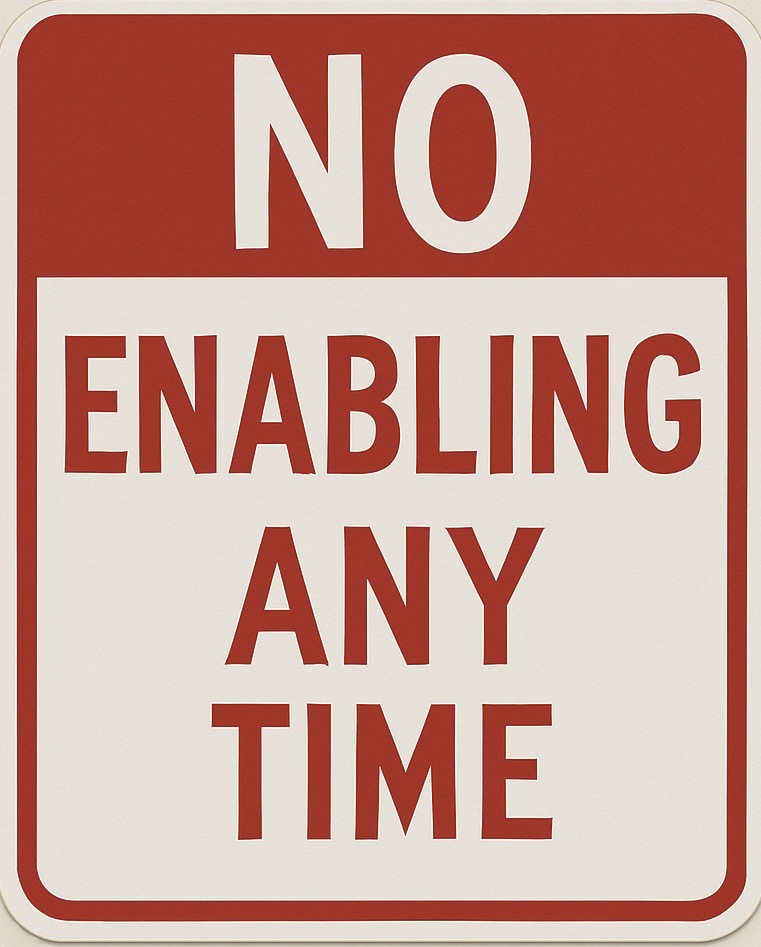

Why Families Feel Responsible for Their Loved One's Addiction — And How to Stop
Feeling responsible for a loved one's addiction is common, but it keeps families trapped in guilt and over-functioning. Learn how to separate care from control.
Direct answer
How do I know if I am helping or enabling?
Helping supports responsibility, truth, treatment, and repair. Enabling protects addiction from consequences, usually through money, excuses, housing, secrecy, or emotional rescue.
Reviewed through Matt Brown's family intervention and coaching lens.
Open full answer →Why this is here
Families rarely need more pressure. They need clearer patterns, steadier boundaries, and a next step they can actually hold.
Written from intervention experience
This article is part of No More Enabling’s family education library, shaped by Matt Brown’s work with families affected by addiction, treatment resistance, relapse, and boundary breakdowns since 2004.
Author and editorial reviewer: Matt Brown, professional interventionist and family addiction coach. Medical claims require separate qualified clinical review.
Read this as part of a bigger pattern
If this article hits home, these guided hubs will help you keep reading in a smarter order instead of starting from scratch each time.
Codependency Hub
Best when exhaustion, guilt, hypervigilance, and over-functioning have become normal.
Open hub →
Adult Child Addiction Hub
Best when you are asking how to stay loving without becoming the safety net for active addiction.
Open hub →
Financial Enabling Hub
Best when you need to help without becoming the financial safety net that keeps the addiction cycle alive.
Open hub →
If this article sounds like your family
Do this next
If the real issue is holding the line, don’t stop at reading. Work through the boundaries course next.
Next best step
Choose your next step
If this article sounds like your family, use the short assessment to route the situation before the next hard conversation.
When your family needs a real plan
Coaching and intervention guidance with Matt Brown
If articles are helping but the situation at home is still escalating, you can ask for direct help with family alignment, boundaries, treatment refusal, relapse patterns, or deciding whether an intervention makes sense.
High-intent next step
Family addiction coaching with Matt Brown for enabling and boundaries
Get private family addiction coaching from Matt Brown for enabling, boundaries, treatment refusal, relapse, money decisions, and a clear next step.
What Does It Mean to Feel Responsible for Someone Else's Addiction?
If you've ever thought, "If I had done something differently, they wouldn't be using" — you are not alone. Families of people struggling with addiction almost universally carry a weight that was never theirs to carry: the belief that they are somehow responsible for the addiction, and that they are therefore responsible for fixing it.
That belief is one of the defining features of codependency and addiction in families. It's not a character flaw. It comes from love, fear, and years of trying to hold everything together. But it quietly keeps both you and your loved one stuck — and understanding how it works is the first step toward changing it.
Feeling responsible for a loved one's addiction means experiencing their choices as though they are your consequences to manage. It shows up as anxiety when they use, relief when they don't, and a constant mental calculation of what you could say or do to tip the balance toward sobriety.
This is the core of codependency and addiction — not enabling in a single dramatic moment, but a sustained state of emotional merger with another person's crisis. Your moods track their behavior. Their bad days become your emergencies. Their choices define your sense of safety.
You may be managing their appointments, covering for them at work, lying to protect them from consequences, or simply exhausting yourself trying to keep the peace. All of it is driven by an underlying assumption: if I do enough, in the right way, I can stop this.
You can't. That's not a judgment — it's biology, neuroscience, and the nature of addiction. But it's also the most important thing to understand before anything can actually change.
Where Does This Sense of Responsibility Come From?
The feeling of responsibility in codependency doesn't appear out of nowhere. It usually develops over time through a combination of love, fear, shame, and habituation.
Here are some of the most common roots:
- Love and fear working together. When you love someone deeply and watch them suffer, the impulse to intervene is instinctive. That impulse isn't the problem. The problem is when intervention becomes a way of life, a reflex triggered by fear rather than a thoughtful choice.
- Family shame. Addiction carries stigma — even when families know better, there's often an unspoken belief that a struggling loved one reflects on the whole family. Keeping things quiet, making excuses, and managing appearances can feel like self-protection.
- Early family patterns. Many people who end up in codependent relationships with an addicted loved one grew up in households where their own emotional needs were secondary. They learned early that love meant caretaking, and that keeping others happy was their job.
- Gradual escalation. Very few families set out to enable addiction. It usually starts with reasonable accommodations that slowly expand. By the time it's a full-blown pattern, it feels normal — because it's been normal for years.
Understanding where this came from is useful — not for blame, but for clarity. You didn't choose this pattern consciously. And you can choose to respond differently, consciously.
How Taking Responsibility for Their Addiction Backfires
Here is the hardest truth about codependency and addiction in families: the more responsibility you take for your loved one's addiction, the less responsibility they have to take for it themselves.
When consequences are softened, crisis is managed, and discomfort is removed, the internal pressure that might motivate someone to seek help is reduced. Not because your loved one is manipulative or lazy — but because human beings, in the grip of addiction, will move toward whatever reduces pain in the moment. If you're doing that work for them, they don't have to.
This is painful to sit with. It doesn't mean you caused the addiction. It doesn't mean you're a bad person. It means that something that started as love has become a dynamic that works against the outcome you want.
There is also a cost to you: exhaustion, resentment, isolation, anxiety, and the steady erosion of your own life. Families caught in codependency and addiction often describe feeling like they're running a marathon with no finish line. That's because the goal — making the addiction stop by managing everything around it — is not achievable.
Signs You're Caught in the Codependency Responsibility Trap
If you're wondering whether this applies to you, consider whether any of these feel familiar:
- You find yourself making excuses for your loved one's behavior to other people.
- Your emotional state is heavily tied to what they're doing or not doing.
- You've skipped your own plans, events, or needs to manage a situation involving them.
- You've paid for things — bills, rent, fines, bail — to prevent a consequence they should have faced.
- You feel guilty when you set a limit, even when that limit is reasonable.
- You rehearse conversations in your head, trying to find the perfect words to get them to change.
- You feel relief when they're doing okay, and immediate dread when they're not.
None of these make you a bad family member. They make you someone who has been trying to love a person through a situation that didn't respond to love alone. Recognizing the pattern is not the same as accepting blame for it.
Shifting from Responsibility to Genuine Support
There is a meaningful difference between being responsible for someone and being genuinely supportive of them. Support means staying present without taking over. It means being honest, even when honesty is uncomfortable. It means allowing consequences to land, not because you've stopped caring, but because you understand that consequences are sometimes the only teacher with enough authority to reach someone who is addicted.
Shifting from codependency to genuine support usually involves a few key moves:
- Getting clear on what you will and won't do — not as punishment, but as a statement about your own limits.
- Finding a support system for yourself — Al-Anon, a therapist, a family coach, or a trusted community that understands addiction dynamics.
- Practicing the pause — before responding to a crisis, asking yourself: "Am I responding to help, or to relieve my own anxiety?"
- Separating your recovery from theirs — beginning to reclaim your own life, your own schedule, your own sense of worth, independent of what they choose.
This is not easy. It can feel like abandonment when it is actually the most honest and loving thing you can do. Your loved one deserves the chance to face their own life. So do you.
Codependency and addiction go hand in hand in families — not because families are broken, but because love in a crisis is complicated. If you've been carrying a weight that was never yours to carry, you can begin to set it down. Not all at once. Not perfectly. But incrementally, with support, and with the growing understanding that letting go of responsibility is not the same as letting go of love.
Frequently Asked Questions
What is codependency in addiction families?
Codependency in addiction families refers to a pattern where family members become so focused on managing a loved one's addiction that their own needs, feelings, and identity become secondary. It typically involves taking responsibility for the addicted person's choices, covering consequences, and tying your own emotional state to their behavior.
Is codependency the same as enabling?
Codependency and enabling are closely related but not identical. Enabling refers to specific behaviors that protect an addicted person from the consequences of their use. Codependency is the broader emotional pattern underneath those behaviors — the belief that you are responsible for their addiction and their recovery. Enabling is often a symptom of codependency.
Can codependency make addiction worse?
Yes. When a codependent family member consistently absorbs consequences, removes discomfort, or shields their loved one from the reality of their addiction, it can reduce the internal pressure that often motivates someone to seek help. Codependency doesn't cause addiction, but it can significantly slow the path toward treatment and recovery.
How do I stop feeling responsible for my loved one's addiction?
Stopping the feeling doesn't happen overnight, but it begins with understanding that addiction is a disease and not a reflection of your parenting, partnership, or love. Practical steps include joining a support group like Al-Anon, working with a family coach or therapist, and deliberately practicing staying in your own life rather than managing theirs.
Is it possible to support my loved one without being codependent?
Yes — and this is one of the most important distinctions for families to learn. Genuine support means being honest, being present, and allowing your loved one to face consequences while making clear that you love them and want them to get help. It's the difference between removing pain and witnessing it with them. The second kind of support is harder — and far more effective.
Ready to Break the Cycle?
If you recognize yourself in what you've read, you don't have to figure this out alone. SoberHelpline.com offers family coaching and education designed specifically for people in your situation — practical, non-shaming support from people who understand addiction dynamics from the inside out. Coaching sessions are available at $150/hour, or join the membership community for $44.99/month and access ongoing resources, support, and the free Monday night Family Squares calls.
If you're at a point where your loved one's addiction has become a safety crisis and you're wondering whether a professional intervention is the right next step, visit FreedomInterventions.com to learn more about how the intervention process works and what it could mean for your family.
Free family tool
Financial Boundaries Script
A short script for saying no to cash, rent, bills, and last-minute rescue requests without getting pulled into another negotiation.
This does not replace the Family Squares meeting. It gives you a practical tool first, then points you toward the live support room if you need help using it.
Get weekly guidance for families dealing with codependency
Every Sunday, one short email with practical family guidance on boundaries, enabling, relapse, and next steps.
"Practical, not preachy. It reads like someone who has actually sat with families instead of a wellness blog."
— Sister of a brother in relapse
Trust signals
Source-worthy public resources
These links are not a substitute for medical, legal, or crisis care. They are included to help families verify safety and treatment information from official sources.
Next best answers
If this is what you were really asking
How do I know if I am helping or enabling?
Helping supports responsibility, truth, treatment, and repair. Enabling protects addiction from consequences, usually through money, excuses, housing, secrecy, or emotional rescue.
Open answer →
How do I stop enabling without abandoning someone I love?
Stop doing what protects the addiction, but stay available for recovery-supporting action. The goal is not less love. The goal is cleaner support.
Open answer →
What if my family disagrees about addiction boundaries?
Family disagreement often keeps addiction protected. Start by aligning around safety, money, children, and what nobody will cover up anymore, even if everyone is not ready for the same boundary.
Open answer →
What if the other house is running a different plan?
Two houses. One disease. If one parent pays rent and the other hands over the keys, nothing holds. Money, housing, and contact have to be the same line in both kitchens. You cannot control the other house. You can stop being the second rescue.
Open answer →
Need a steadier next step?
Don’t stop at insight
The families who make progress usually do three things: they get honest about the pattern, choose one clearer next step, and stop trying to manage everything at once.
Helping or Enabling? Tool
Best when you keep second-guessing what support should look like.
Family Support Guide
Best when everything feels heavy, urgent, or emotionally scrambled.
Free Boundaries Course
Best when your limits keep getting negotiated away under pressure.
About Matt Brown and this site
Understand the experience and point of view behind the guidance here.

FamilyBridge
AI support for families across the recovery journey.