Why "They're Just Stressed" Becomes the Go-To Excuse for Everything
Stress is real—but it's often not the whole story. When stress becomes the default excuse for mood swings, secrecy, and escalating substance use, addiction hides comfortably behind it. Learn to separate compassion from enabling.
Direct answer
How do I know if I am helping or enabling?
Helping supports responsibility, truth, treatment, and repair. Enabling protects addiction from consequences, usually through money, excuses, housing, secrecy, or emotional rescue.
Reviewed through Matt Brown's family intervention and coaching lens.
Open full answer →Why this is here
Families rarely need more pressure. They need clearer patterns, steadier boundaries, and a next step they can actually hold.
Written from intervention experience
This article is part of No More Enabling’s family education library, shaped by Matt Brown’s work with families affected by addiction, treatment resistance, relapse, and boundary breakdowns since 2004.
Author and editorial reviewer: Matt Brown, professional interventionist and family addiction coach. Medical claims require separate qualified clinical review.
Read this as part of a bigger pattern
If this article hits home, these guided hubs will help you keep reading in a smarter order instead of starting from scratch each time.
Enabling Hub
Best when you keep wondering whether your support is helping or making the pattern worse.
Open hub →
Codependency Hub
Best when exhaustion, guilt, hypervigilance, and over-functioning have become normal.
Open hub →
Boundaries Hub
Best when your loved one keeps crossing lines and you are tired of repeating yourself.
Open hub →
If this article sounds like your family
Do this next
If you keep wondering whether your support is actually helping, start with the assessment and get a clearer read.
Next best step
Choose your next step
If this article sounds like your family, use the short assessment to route the situation before the next hard conversation.
When your family needs a real plan
Coaching and intervention guidance with Matt Brown
If articles are helping but the situation at home is still escalating, you can ask for direct help with family alignment, boundaries, treatment refusal, relapse patterns, or deciding whether an intervention makes sense.
High-intent next step
Family addiction coaching with Matt Brown for enabling and boundaries
Get private family addiction coaching from Matt Brown for enabling, boundaries, treatment refusal, relapse, money decisions, and a clear next step.
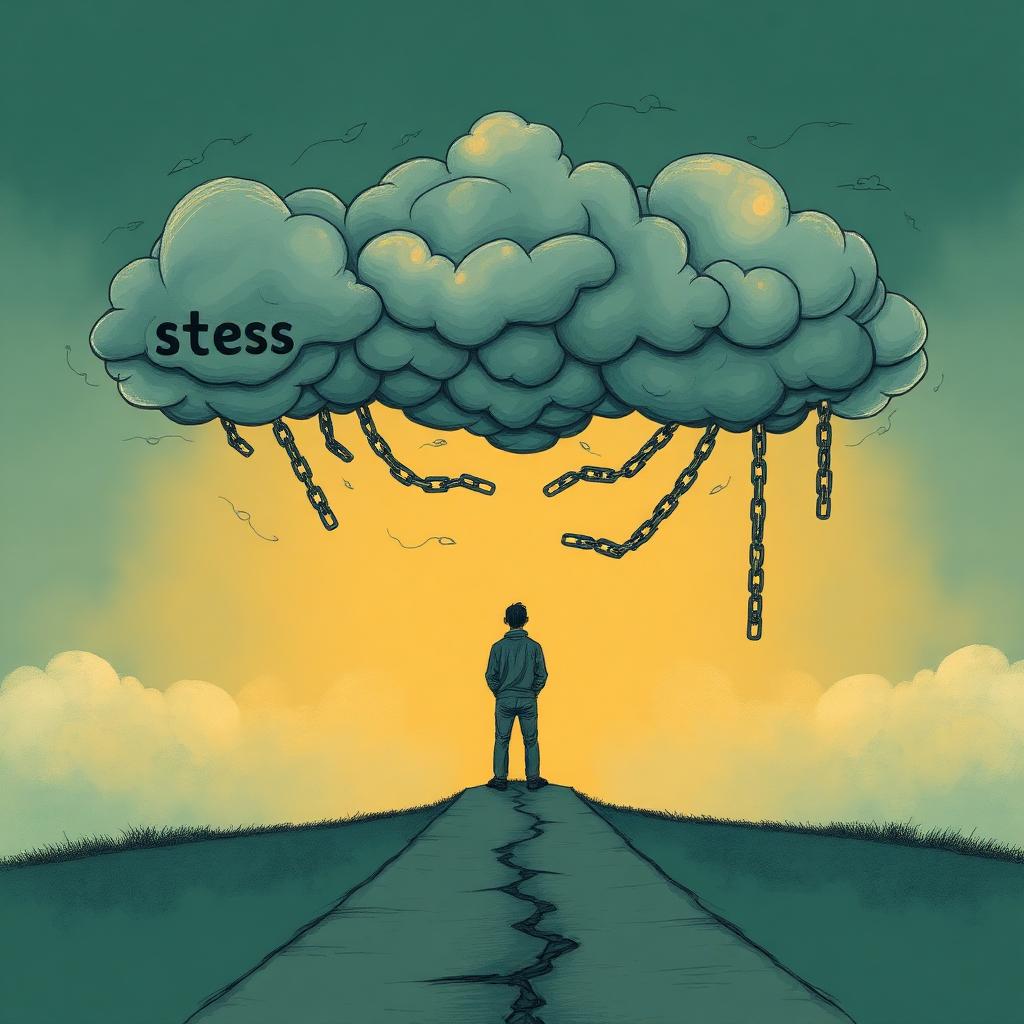
If you've lived around addiction long enough, you've probably heard it: "They're just stressed." Work stress. Financial stress. Relationship stress. Parenting stress. Stress becomes the universal explanation for mood swings, irritability, secrecy, and escalating substance use. The problem? Stress is real—but it's often not the whole story. When stress becomes the default excuse, addiction hides comfortably behind it.
Why Stress Is the Perfect Cover
Stress is believable.
Everyone experiences it. Everyone relates to it. Everyone feels overwhelmed sometimes.
When behavior shifts, stress provides a socially acceptable explanation:
• "Work's been crazy."
• "They're under a lot of pressure."
• "Anyone would be on edge."
Stress softens the conversation.
Addiction thrives in softened conversations.
Stress vs. Substance Dependence
Stress does not automatically equal addiction.
But there is a difference between:
• Using substances occasionally during stress
• Needing substances to regulate stress
• Escalating use every time stress increases
• Becoming emotionally unstable without substances
When substances become the primary coping mechanism for stress, the issue is no longer stress.
It's dependence.
The Pattern Families Overlook
Watch the sequence:
Stress increases → Substance use increases → Mood stabilizes → Substance fades → Irritability returns → Repeat.
This cycle can look like stress management.
It's actually reinforcement.
Stress becomes the justification for use. Use becomes the solution for stress. The loop strengthens.
High-Functioning Stress Narratives
In high-performing individuals, stress narratives are especially persuasive.
Families say:
• "They're in a demanding career."
• "They carry a lot."
• "They deserve to unwind."
Ambition can camouflage escalation.
If performance remains intact, concern feels dramatic.
But internal deterioration can exist beneath external success.
When Stress Stops Explaining Everything
Ask yourself:
• Is stress new—or has it always existed?
• Has the reaction to stress changed?
• Has substance use increased over time?
• Has defensiveness grown?
• Has emotional volatility intensified?
Stress doesn't usually create secrecy. Dependence often does.
Stress doesn't typically cause repeated broken promises. Addiction patterns often do.
The Emotional Shield
Blaming stress allows families to avoid a harder conclusion.
It feels kinder. Less accusatory. Less frightening.
Admitting addiction feels heavier than admitting stress.
So stress becomes the working theory—even when patterns deepen.
Why Stress Is Not the Root Cause
Stress is part of life.
Healthy coping includes:
• Problem-solving
• Communication
• Exercise
• Rest
• Support systems
If substances are the primary regulator, the issue is not stress volume—it's coping structure.
Stress reveals vulnerability. Addiction exploits it.
The Escalation Red Flag
If stress levels fluctuate but substance use only increases, that's data.
If stress decreases but use remains high, that's data.
If stress is used to defend every incident, that's data.
Patterns matter more than explanations.
Free family email course
Free 4-week Boundaries email course
One lesson a week — the exact language, scripts, and family agreements that hold up when your loved one pushes back.
- Week 1 — What a real boundary actually is (and is not)
- Week 2 — Naming the boundary without threats or ultimatums
- Week 3 — Holding the line when they test it
- Week 4 — Getting your family on the same page
"Practical, not preachy. It reads like someone who has actually sat with families instead of a wellness blog."
— Sister of a brother in relapse
How Families Reinforce the Narrative
Families sometimes participate unintentionally by saying:
• "It's been a tough year."
• "Anyone would struggle."
• "Once this season passes, it'll settle down."
Seasons pass. The behavior often doesn't.
When stress becomes a permanent justification, addiction becomes insulated.
Stress as an Emotional Shortcut
Stress allows everyone to move on quickly.
Instead of asking: "What is really happening?"
The conversation ends with: "Let's give it time."
Time alone rarely corrects dependence.
Structure does.
The Difference Between Understanding and Excusing
Understanding stress is compassionate.
Excusing repeated harmful behavior because of stress is enabling.
Compassion says: "I see you're overwhelmed."
Clarity says: "This pattern is not sustainable."
Both can coexist.
But clarity must lead.
A Reality Check
If stress alone caused addiction, most of the population would qualify.
Stress is universal. Addiction is patterned.
When the same solution shows up for every stressful event, that's not coincidence.
That's conditioning.
What Families Can Do Instead
Instead of debating whether stress is real (it usually is), shift the question:
"How are you managing stress without substances?"
If the answer is unclear, defensive, or nonexistent, that's meaningful.
Encourage:
• Structured support
• Healthy coping skills
• Honest evaluation
• Professional consultation
Stress doesn't disappear. But coping can change.
When to Seek Professional Perspective
If stress explanations have become repetitive while behavior escalates, consulting an experienced interventionist can help clarify patterns.
Professional guidance can:
• Separate narrative from trajectory
• Align family messaging
• Reduce reactive arguments
• Introduce structure early
Stress may be real.
But addiction rarely corrects itself once justified.
Final Takeaway
"Just stressed" is one of the most common and socially acceptable explanations for addictive behavior.
Stress exists. Dependence can exist alongside it.
When stress becomes the go-to excuse for everything, families risk minimizing progression.
You don't have to accuse. You don't have to escalate.
But you do need to look at patterns—not just explanations.
Because stress is temporary.
Addiction, when unaddressed, is progressive.
Get weekly guidance for families dealing with enabling
Every Sunday, one short email with practical family guidance on boundaries, enabling, relapse, and next steps.
"Practical, not preachy. It reads like someone who has actually sat with families instead of a wellness blog."
— Sister of a brother in relapse
Trust signals
Source-worthy public resources
These links are not a substitute for medical, legal, or crisis care. They are included to help families verify safety and treatment information from official sources.
Next best answers
If this is what you were really asking
What is codependency in addiction families?
Codependency is the pattern where a family member becomes over-responsible for another person's addiction, emotions, consequences, or recovery.
Open answer →
How do I know if I am helping or enabling?
Helping supports responsibility, truth, treatment, and repair. Enabling protects addiction from consequences, usually through money, excuses, housing, secrecy, or emotional rescue.
Open answer →
How do I stop enabling without abandoning someone I love?
Stop doing what protects the addiction, but stay available for recovery-supporting action. The goal is not less love. The goal is cleaner support.
Open answer →
What if the other house is running a different plan?
Two houses. One disease. If one parent pays rent and the other hands over the keys, nothing holds. Money, housing, and contact have to be the same line in both kitchens. You cannot control the other house. You can stop being the second rescue.
Open answer →
Need a steadier next step?
Don’t stop at insight
The families who make progress usually do three things: they get honest about the pattern, choose one clearer next step, and stop trying to manage everything at once.
Helping or Enabling? Tool
Best when you keep second-guessing what support should look like.
Family Support Guide
Best when everything feels heavy, urgent, or emotionally scrambled.
Free Boundaries Course
Best when your limits keep getting negotiated away under pressure.
About Matt Brown and this site
Understand the experience and point of view behind the guidance here.

FamilyBridge
AI support for families across the recovery journey.