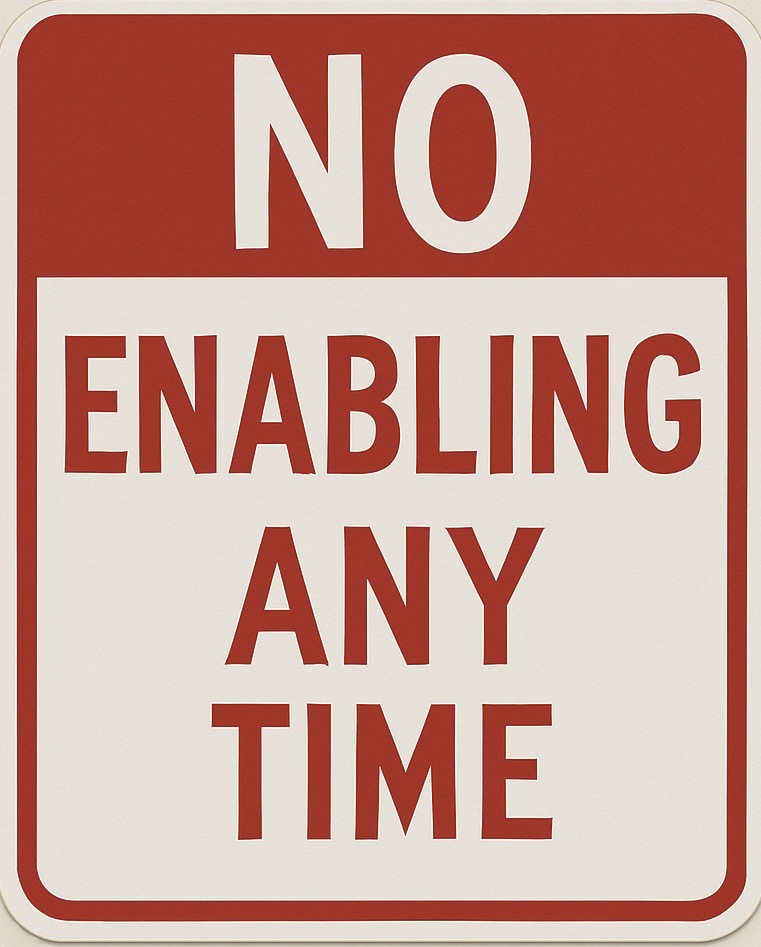

When Saying No Is the Most Loving Thing You Can Do
Saying no to an addicted loved one is an act of love, not rejection. Learn how to set boundaries without guilt and why your 'no' might be the catalyst for change.
Direct answer
How do I know if I am helping or enabling?
Helping supports responsibility, truth, treatment, and repair. Enabling protects addiction from consequences, usually through money, excuses, housing, secrecy, or emotional rescue.
Reviewed through Matt Brown's family intervention and coaching lens.
Open full answer →Why this is here
Families rarely need more pressure. They need clearer patterns, steadier boundaries, and a next step they can actually hold.
Written from intervention experience
This article is part of No More Enabling’s family education library, shaped by Matt Brown’s work with families affected by addiction, treatment resistance, relapse, and boundary breakdowns since 2004.
Author and editorial reviewer: Matt Brown, professional interventionist and family addiction coach. Medical claims require separate qualified clinical review.
Read this as part of a bigger pattern
If this article hits home, these guided hubs will help you keep reading in a smarter order instead of starting from scratch each time.
Enabling Hub
Best when you keep wondering whether your support is helping or making the pattern worse.
Open hub →
Boundaries Hub
Best when your loved one keeps crossing lines and you are tired of repeating yourself.
Open hub →
Codependency Hub
Best when exhaustion, guilt, hypervigilance, and over-functioning have become normal.
Open hub →
If this article sounds like your family
Do this next
If the real issue is holding the line, don’t stop at reading. Work through the boundaries course next.
Next best step
Choose your next step
If this article sounds like your family, use the short assessment to route the situation before the next hard conversation.
When your family needs a real plan
Coaching and intervention guidance with Matt Brown
If articles are helping but the situation at home is still escalating, you can ask for direct help with family alignment, boundaries, treatment refusal, relapse patterns, or deciding whether an intervention makes sense.
High-intent next step
Family addiction coaching with Matt Brown for enabling and boundaries
Get private family addiction coaching from Matt Brown for enabling, boundaries, treatment refusal, relapse, money decisions, and a clear next step.
The Guilt of Setting Boundaries
When your child asks for money for rent and you know they'll use it for drugs, saying no feels cruel. When your spouse begs you to lie to their boss about why they missed work, refusing feels like abandonment. When your parent insists they're fine to drive despite obvious intoxication, denying them feels disrespectful.
But here's the truth: saying no might be the most loving thing you ever do for them. The guilt you feel is the voice of codependency, not the voice of truth. It's worth understanding the difference.
Understanding What 'No' Actually Means
When you say no to an addict's request, you're not saying no to the person. You're not rejecting them or abandoning them. You're saying no to the behavior. You're saying: "I love you. And I won't participate in actions that enable your addiction or compromise my own values."
This distinction matters because it changes how you experience the boundary. You're not being cruel. You're being clear about what you will and won't do. You're setting a limit that protects both of you.
Why Saying Yes Is Actually Harmful
Every time you say yes to requests that enable addiction, you're communicating something dangerous to your loved one: "Your behavior doesn't have real consequences. I will always bail you out. I will always be here to absorb the fallout." This removes the very consequences that might prompt change.
Saying Yes Removes Natural Consequences
If you pay their rent when they spend their money on drugs, they never experience the consequence of homelessness—which might otherwise prompt a change. If you call their workplace and make an excuse, they don't face job loss. If you bail them out of legal trouble, they don't sit in a cell long enough to feel the reality of their situation. The more you rescue, the more you soften the natural wake-up call.
Rock bottom is often what saves lives. But when someone has a safety net catching them before they hit the ground, they never reach that turning point.
Saying Yes Teaches Manipulation
When your requests are consistently met, your loved one learns exactly how to push your buttons to get what they need. They learn which emotional appeals work, when to ask, how to frame the request, and what to say to activate your protective instincts. You become predictable. Your compassion becomes a tool they use to get what they want. This is not their fault necessarily—it's a survival instinct. But saying yes enables and reinforces this pattern.
Saying Yes Deepens Resentment
Every time you say yes against your own values, you build internal anger. You might not express it directly, but it leaks out—through passive-aggression, through withdrawal of affection, through silent resentment. You become resentful of your loved one for putting you in the position of having to help them over and over. You become resentful of yourself for saying yes when you meant no. This poisons the relationship.
Saying Yes Hardens Your Loved One
When people are always rescued, they don't develop resilience. They don't learn that they can survive difficult situations. They don't discover their own strength. Instead, they become more dependent on the rescuer. The opposite of love, in this context, is not hate—it's enabling.
How to Say No Without Cruelty
Saying no effectively isn't about being harsh or punitive. It's about being clear, consistent, and compassionate. Here's how to do it:
Be Direct
Say no clearly. Don't soften it with maybes or lengthy explanations. "I can't lend you that money" is complete. "No, you can't stay here while you're using" is clear. You don't owe a detailed explanation that invites argument or negotiation.
Don't Over-Explain
The more reasons you give, the more your loved one will try to argue against each one. They'll come up with counterarguments. They'll make you justify your boundary. Keep it simple. "No" is a complete sentence. "No, because I said so" is acceptable.
Stay Calm
When you're emotionally activated, you come across as angry or punitive. Take a breath. Speak from a place of quiet certainty, not rage. Your tone should say: "This is not up for negotiation. I've already decided."
Follow Through
If you say no, you can't give in when they push back harder. Your loved one will test your boundary. They'll cry, rage, plead, manipulate. They might threaten to hurt themselves. This is when your no must be absolute. Don't waver. Don't explain further. Just hold firm.
Common Areas Where We Struggle to Say No
- Money – The most common request. No matter how much you give, it's never enough. Today's rent becomes tomorrow's phone bill becomes next week's food.
- Housing – Allowing them to live with you when their behavior becomes disruptive or dangerous. Having an active addict in the home affects everyone's wellbeing.
- Childcare – Asking you to watch their kids while they use, leaving you responsible for children in a chaotic environment.
- Dishonesty – Asking you to lie to authorities, employers, creditors, or family members. This compromises your own integrity.
- Access – Demanding you drive them places, go bail them out, or otherwise enable their active addiction.
- Emotional support for ongoing use – Listening to them justify their using or complain about consequences, which keeps you emotionally entangled in their addiction.
The Fear Behind the No
What usually stops us from saying no is fear: fear they'll overdose, fear they'll hate us, fear something terrible will happen and we could have prevented it. These fears feel real because losing someone to addiction is a genuine tragedy.
But it's important to examine these fears. Here's what's also true: your saying yes won't prevent an overdose. Your enabling won't keep them alive. The only thing that saves lives in addiction is the addict's own decision to seek help and stay committed to recovery. You cannot make that choice for them, and you cannot prevent tragedy through enabling. That's not love. That's delusion.
Sometimes, saying no is what finally creates enough discomfort that they choose recovery. Sometimes it's not. But either way, you cannot sacrifice yourself to keep them alive. That's not your job.
What Happens After You Say No
Your loved one will likely react strongly. This is expected. Brace yourself:
- Escalate their demands – Push harder, cry louder, threaten more. They're testing whether your boundary will hold.
- Blame you – Tell you that you're cruel, unsupportive, the reason they use. Absorb none of this. It's not true.
- Withdraw – Stop calling, stop visiting, withdraw affection as punishment. This is painful, but it's their choice, not yours.
- Self-harm – Make threats or harm themselves, trying to make you feel responsible. Get them professional help if they're in danger, but don't resume enabling.
None of this is your fault or your responsibility. You didn't cause it. You can't control it. You can't fix it. Stay firm. The discomfort they feel when you say no is sometimes exactly what they need to change.
A Final Word on Love
Saying no doesn't mean you don't love them. It means you love them enough to let them experience the consequences of their choices. It means you respect them enough to believe they can survive disappointment and discomfort. It means you love yourself enough to refuse to sacrifice your own wellbeing on the altar of their addiction.
The most loving thing you can do is say no, mean it, and hold that boundary with compassion. It's the gift that might finally set you both free. And even if it doesn't lead to their recovery, it will lead to yours.
Published on NoMoreEnabling.com | Content is for informational purposes and does not constitute medical advice. If you or a loved one are in crisis, please contact SAMHSA's National Helpline: 1-800-662-4357.
Free family tool
Family Rules After Rehab Worksheet
A simple worksheet for turning post-treatment hope into clear house rules, communication expectations, and relapse-response agreements.
This does not replace the Family Squares meeting. It gives you a practical tool first, then points you toward the live support room if you need help using it.
Get weekly guidance for families dealing with boundaries
Every Sunday, one short email with practical family guidance on boundaries, enabling, relapse, and next steps.
"Practical, not preachy. It reads like someone who has actually sat with families instead of a wellness blog."
— Sister of a brother in relapse
Trust signals
Source-worthy public resources
These links are not a substitute for medical, legal, or crisis care. They are included to help families verify safety and treatment information from official sources.
Next best answers
If this is what you were really asking
How do I know if I am helping or enabling?
Helping supports responsibility, truth, treatment, and repair. Enabling protects addiction from consequences, usually through money, excuses, housing, secrecy, or emotional rescue.
Open answer →
What is codependency in addiction families?
Codependency is the pattern where a family member becomes over-responsible for another person's addiction, emotions, consequences, or recovery.
Open answer →
What if the other house is running a different plan?
Two houses. One disease. If one parent pays rent and the other hands over the keys, nothing holds. Money, housing, and contact have to be the same line in both kitchens. You cannot control the other house. You can stop being the second rescue.
Open answer →
How do I stop enabling without abandoning someone I love?
Stop doing what protects the addiction, but stay available for recovery-supporting action. The goal is not less love. The goal is cleaner support.
Open answer →
Need a steadier next step?
Don’t stop at insight
The families who make progress usually do three things: they get honest about the pattern, choose one clearer next step, and stop trying to manage everything at once.
Helping or Enabling? Tool
Best when you keep second-guessing what support should look like.
Family Support Guide
Best when everything feels heavy, urgent, or emotionally scrambled.
Free Boundaries Course
Best when your limits keep getting negotiated away under pressure.
About Matt Brown and this site
Understand the experience and point of view behind the guidance here.

FamilyBridge
AI support for families across the recovery journey.