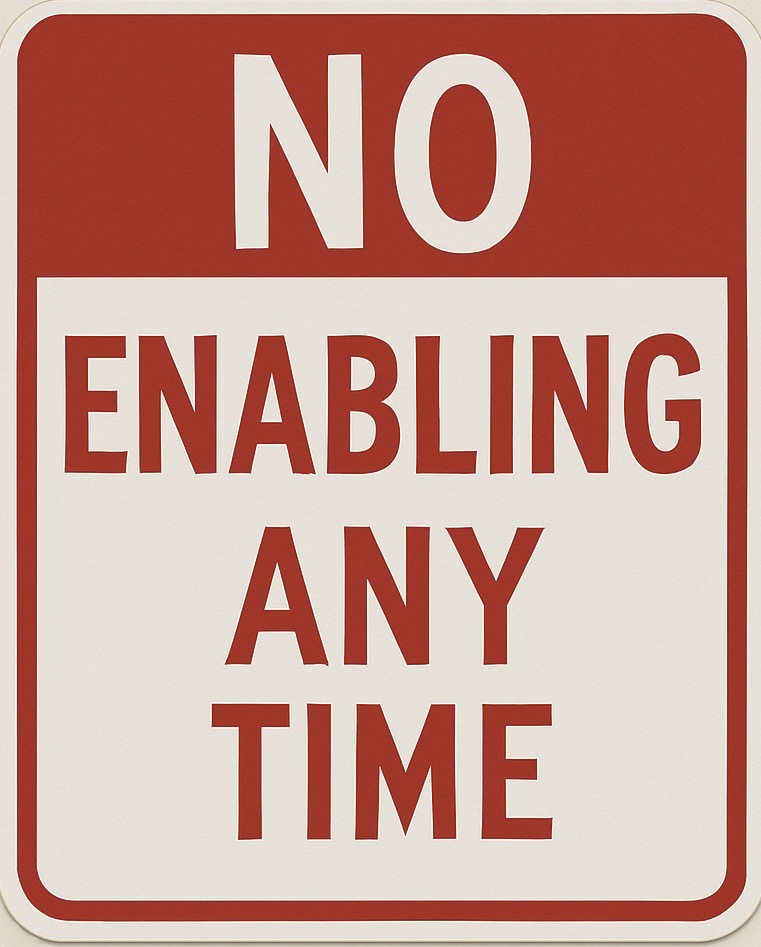

How Protecting Someone From Embarrassment Can Prolong Addiction
When families consistently protect someone from embarrassment, they may also be protecting the addiction from accountability. Learn why allowing social consequences matters for recovery.
Direct answer
How do I know if I am helping or enabling?
Helping supports responsibility, truth, treatment, and repair. Enabling protects addiction from consequences, usually through money, excuses, housing, secrecy, or emotional rescue.
Reviewed through Matt Brown's family intervention and coaching lens.
Open full answer →Why this is here
Families rarely need more pressure. They need clearer patterns, steadier boundaries, and a next step they can actually hold.
Written from intervention experience
This article is part of No More Enabling’s family education library, shaped by Matt Brown’s work with families affected by addiction, treatment resistance, relapse, and boundary breakdowns since 2004.
Author and editorial reviewer: Matt Brown, professional interventionist and family addiction coach. Medical claims require separate qualified clinical review.
Read this as part of a bigger pattern
If this article hits home, these guided hubs will help you keep reading in a smarter order instead of starting from scratch each time.
Enabling Hub
Best when you keep wondering whether your support is helping or making the pattern worse.
Open hub →
Boundaries Hub
Best when your loved one keeps crossing lines and you are tired of repeating yourself.
Open hub →
Codependency Hub
Best when exhaustion, guilt, hypervigilance, and over-functioning have become normal.
Open hub →
If this article sounds like your family
Do this next
If the real issue is holding the line, don’t stop at reading. Work through the boundaries course next.
Next best step
Choose your next step
If this article sounds like your family, use the short assessment to route the situation before the next hard conversation.
When your family needs a real plan
Coaching and intervention guidance with Matt Brown
If articles are helping but the situation at home is still escalating, you can ask for direct help with family alignment, boundaries, treatment refusal, relapse patterns, or deciding whether an intervention makes sense.
High-intent next step
Family addiction coaching with Matt Brown for enabling and boundaries
Get private family addiction coaching from Matt Brown for enabling, boundaries, treatment refusal, relapse, money decisions, and a clear next step.

Embarrassment is uncomfortable. No family enjoys public exposure of instability, missed obligations, or substance-related incidents. So families often step in to soften the blow. They explain. They cover. They protect reputations. What feels like loyalty can quietly become insulation from consequence. When families consistently protect someone from embarrassment, they may also be protecting the addiction from accountability.
Why Embarrassment Feels So Dangerous
Embarrassment activates:
• Shame
• Fear of judgment
• Fear of social exclusion
• Fear of professional damage
• Fear of family reputation loss
For many families, avoiding embarrassment feels urgent.
The instinct is to contain exposure.
But addiction thrives in contained systems.
When consequences are absorbed privately, public accountability never lands.
The Social Shield Pattern
Common examples include:
• Calling in sick for them
• Explaining missed events
• Downplaying visible intoxication
• Paying debts quietly
• Asking others to "keep this private"
These actions are rarely malicious.
They are protective.
But repeated protection reduces impact.
Reduced impact reduces urgency.
The Difference Between Privacy and Protection
Privacy can be healthy.
Not every detail must be public.
Protection becomes enabling when:
• Repeated patterns are concealed
• Others are misled
• Natural consequences are prevented
• The addicted individual avoids accountability
Privacy respects dignity.
Protection insulates dysfunction.
The difference lies in repetition and trajectory.
How Embarrassment Creates Leverage
Embarrassment is uncomfortable—but it can be corrective.
When someone experiences:
• Public disappointment
• Missed opportunities
• Damaged credibility
• Social discomfort
It increases pressure to change.
When families intercept that pressure, change is delayed.
The Emotional Logic Behind Shielding
Families often think:
"This will humiliate them."
"They'll spiral if exposed."
"It could hurt their career."
"We don't want people to judge."
The intention is compassionate.
But shielding embarrassment repeatedly can signal:
"There are no real costs."
Without cost, motivation rarely deepens.
The Reputation Trap
Families often protect the image of stability.
They worry about:
• Extended family opinions
• Community perception
• Professional networks
• Religious or social standing
But addiction is not corrected by image preservation.
In some cases, secrecy isolates families from support.
The more the system hides, the harder it becomes to seek help.
When Embarrassment Is a Natural Consequence
Missing a meeting. Showing up impaired. Breaking commitments.
These experiences carry social consequences.
Allowing those consequences to occur is not cruelty.
It is reality.
Reality increases accountability.
Accountability increases motivation.
Free family email course
Free 4-week Boundaries email course
One lesson a week — the exact language, scripts, and family agreements that hold up when your loved one pushes back.
- Week 1 — What a real boundary actually is (and is not)
- Week 2 — Naming the boundary without threats or ultimatums
- Week 3 — Holding the line when they test it
- Week 4 — Getting your family on the same page
"Practical, not preachy. It reads like someone who has actually sat with families instead of a wellness blog."
— Sister of a brother in relapse
The Guilt Response
When families stop shielding, guilt often surfaces.
They worry:
"We're exposing them."
"We're betraying them."
"We're pushing them away."
But refusing to cover is not betrayal.
Repeated covering may be.
Honesty feels harsh when avoidance has been the norm.
Protecting From Discomfort vs Supporting Recovery
Supporting recovery includes:
• Encouraging treatment
• Maintaining boundaries
• Offering structured help
Protecting from embarrassment often includes:
• Concealment
• Narrative control
• Social buffering
• Absorbing consequences
These are not the same.
One builds resilience. The other reduces friction.
Addiction thrives in low-friction systems.
The Long-Term Cost to the Family
When families continuously shield embarrassment, they often experience:
• Chronic anxiety
• Emotional exhaustion
• Fear of exposure
• Internal resentment
The family becomes hypervigilant about public perception.
That vigilance drains energy.
Recovery requires clarity—not secrecy-driven stress.
Letting Accountability Land
Allowing embarrassment does not require humiliation.
It requires stepping back.
For example:
• Not calling in sick repeatedly
• Not rewriting narratives
• Not paying debts quietly
• Not preventing natural outcomes
Discomfort may increase initially.
But clarity increases alongside it.
When Professional Guidance Is Essential
Families entrenched in shielding patterns often struggle to step back without structure.
An experienced interventionist can help:
• Identify social enabling patterns
• Develop aligned boundaries
• Reduce guilt-driven reversals
• Prepare for pushback
Outside guidance strengthens consistency.
Consistency strengthens leverage.
A Clear Takeaway
Protecting someone from embarrassment feels loyal.
Repeatedly shielding them from social consequences can prolong addiction.
Embarrassment is not cruelty. It is feedback.
When families stop intercepting feedback, reality becomes clearer.
And clarity creates pressure for change.
If you are unsure whether protection has crossed into enabling, seeking professional perspective restores objectivity.
Recovery grows in honest environments—not insulated ones.
Get weekly guidance for families dealing with enabling
Every Sunday, one short email with practical family guidance on boundaries, enabling, relapse, and next steps.
"Practical, not preachy. It reads like someone who has actually sat with families instead of a wellness blog."
— Sister of a brother in relapse
Trust signals
Source-worthy public resources
These links are not a substitute for medical, legal, or crisis care. They are included to help families verify safety and treatment information from official sources.
Next best answers
If this is what you were really asking
How do I know if I am helping or enabling?
Helping supports responsibility, truth, treatment, and repair. Enabling protects addiction from consequences, usually through money, excuses, housing, secrecy, or emotional rescue.
Open answer →
What should I do when an addicted loved one breaks a boundary?
Do not renegotiate the boundary in the heat of the moment. Follow through calmly, document the pattern, and review whether the boundary was specific enough to hold.
Open answer →
What is codependency in addiction families?
Codependency is the pattern where a family member becomes over-responsible for another person's addiction, emotions, consequences, or recovery.
Open answer →
What if the other house is running a different plan?
Two houses. One disease. If one parent pays rent and the other hands over the keys, nothing holds. Money, housing, and contact have to be the same line in both kitchens. You cannot control the other house. You can stop being the second rescue.
Open answer →
Need a steadier next step?
Don’t stop at insight
The families who make progress usually do three things: they get honest about the pattern, choose one clearer next step, and stop trying to manage everything at once.
Helping or Enabling? Tool
Best when you keep second-guessing what support should look like.
Family Support Guide
Best when everything feels heavy, urgent, or emotionally scrambled.
Free Boundaries Course
Best when your limits keep getting negotiated away under pressure.
About Matt Brown and this site
Understand the experience and point of view behind the guidance here.

FamilyBridge
AI support for families across the recovery journey.