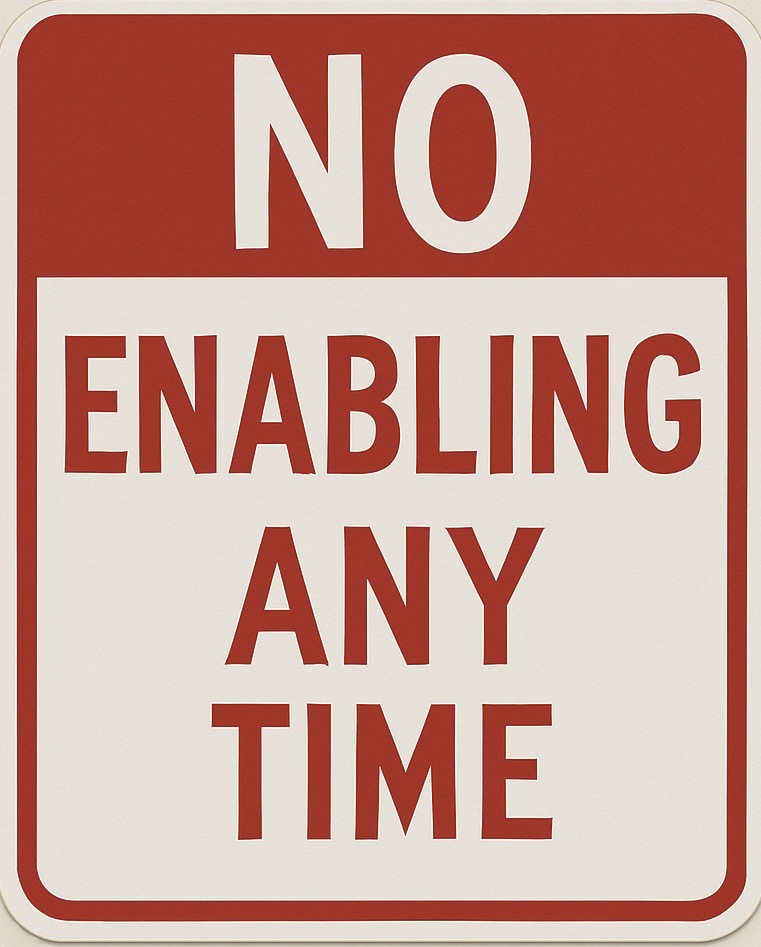

Porous vs. Rigid Boundaries: Finding the Healthy Middle With an Addicted Loved One
Porous vs. rigid boundaries: learn which pattern you fall into with an addicted loved one, why families swing between them, and how to find the healthy middle.
Direct answer
How do I know if I am helping or enabling?
Helping supports responsibility, truth, treatment, and repair. Enabling protects addiction from consequences, usually through money, excuses, housing, secrecy, or emotional rescue.
Reviewed through Matt Brown's family intervention and coaching lens.
Open full answer →Why this is here
Families rarely need more pressure. They need clearer patterns, steadier boundaries, and a next step they can actually hold.
Written from intervention experience
This article is part of No More Enabling’s family education library, shaped by Matt Brown’s work with families affected by addiction, treatment resistance, relapse, and boundary breakdowns since 2004.
Author and editorial reviewer: Matt Brown, professional interventionist and family addiction coach. Medical claims require separate qualified clinical review.
Read this as part of a bigger pattern
If this article hits home, these guided hubs will help you keep reading in a smarter order instead of starting from scratch each time.
Boundaries Hub
Best when your loved one keeps crossing lines and you are tired of repeating yourself.
Open hub →
Adult Child Addiction Hub
Best when you are asking how to stay loving without becoming the safety net for active addiction.
Open hub →
Financial Enabling Hub
Best when you need to help without becoming the financial safety net that keeps the addiction cycle alive.
Open hub →
If this article sounds like your family
Do this next
If the real issue is holding the line, don’t stop at reading. Work through the boundaries course next.
Next best step
Choose your next step
If this article sounds like your family, use the short assessment to route the situation before the next hard conversation.
When your family needs a real plan
Coaching and intervention guidance with Matt Brown
If articles are helping but the situation at home is still escalating, you can ask for direct help with family alignment, boundaries, treatment refusal, relapse patterns, or deciding whether an intervention makes sense.
High-intent next step
Family addiction coaching with Matt Brown for enabling and boundaries
Get private family addiction coaching from Matt Brown for enabling, boundaries, treatment refusal, relapse, money decisions, and a clear next step.

If you've ever said yes when every part of you meant no, and then weeks later slammed a door so hard it surprised you, you are not inconsistent or broken. You're someone trying to love a person through addiction without a map. Understanding porous vs. rigid boundaries can give you that map.
Most families swing between the two. First we let everything in: the late-night calls, the requests for money, the moods that take over the house. Then, worn down and hurt, we shut everything out. Neither extreme is a character flaw. Both are ways of surviving. And both can move toward something steadier: healthy boundaries that protect you and still leave room for love.
What Are Porous vs. Rigid Boundaries?
Porous boundaries are limits so loose that another person's needs, moods, and crises flow straight into your life. Rigid boundaries are walls so tight that nothing gets through, including support and connection. Healthy boundaries sit in between: clear, firm when they need to be, and rooted in your values.
A boundary is simply the line between what you will and won't do, accept, or take responsibility for. Picture a screen door. It keeps out what doesn't belong, but it still lets in air and light. Porous boundaries are a door left wide open. Rigid boundaries are a door bricked shut.
Common signs of porous boundaries
- You say yes to avoid conflict, then feel resentful later.
- Your mood rises and falls with your loved one's day.
- You cover bills, excuses, or responsibilities that aren't yours.
- You feel guilty for having needs of your own.
- "No" turns into "maybe" after enough pressure.
Common signs of rigid boundaries
- You've cut off contact out of anger rather than a clear decision.
- You refuse all conversation about the addiction, even with supportive friends.
- You hold the same line no matter what changes, including when your loved one asks for help.
- You feel numb, guarded, or alone most of the time.
Why Do Families Swing Between Porous and Rigid Boundaries?
Most families start out porous, because love and fear make saying no feel dangerous. When exhaustion builds, they overcorrect into rigid walls. Then guilt pulls them back to porous, and the cycle repeats.
This pendulum is incredibly common. Addiction creates constant uncertainty, and when life feels out of control, we grab for whatever relief is closest. Sometimes that relief is giving in. Sometimes it's shutting down.
Many of us also learned our boundary habits long before addiction entered the picture. If you grew up in a home where keeping the peace mattered more than telling the truth, porous boundaries may feel normal. If you grew up having to protect yourself, walls may feel like the only safe option. Noticing where your patterns came from isn't about blame. It's about understanding why change feels so hard, and giving yourself grace while you practice.
How Do Porous Boundaries Turn Into Enabling?
Porous boundaries become enabling when they shield your loved one from the natural results of their substance use. Enabling means any well-meant action that makes it easier for addiction to continue. The intent is love; the effect is that the addiction keeps running smoothly.
Here is what that can look like in real life:
- Paying a phone bill or rent "just this once" for the fourth month in a row.
- Calling in sick for a spouse who is hungover.
- Rearranging family plans around whether your loved one is using.
- Letting promises replace actions because the argument isn't worth it.
When boundaries are porous, the addiction quietly makes decisions in your home. You may not notice until you realize you can't remember the last time you did something just for yourself.
Are Rigid Boundaries Better Than No Boundaries?
Rigid boundaries can feel safer, but they are often driven by anger or fear rather than clear values. They can slide into punishment and cut you off from support at the very moment you need it. Firm boundaries are healthy; rigid walls usually aren't.
There's an important difference here. A firm boundary is about your own actions and leaves a door open: "You can't live here while you're using, and the day you're ready for treatment, I'll drive you." A rigid wall is about shutting someone out completely, often to protect a wound that hasn't had room to heal.
Some lines should be non-negotiable. Safety comes first. If there is violence, threats, or danger to children, a strong, unbending limit is not rigidity; it's protection. The goal isn't to soften every boundary. It's to make sure each one comes from clarity instead of panic.
How to Move Toward Healthy Boundaries With an Addicted Loved One
Healthy boundaries are built in small, repeatable steps, not in one dramatic conversation. Start with awareness, anchor your limits to your values, and practice pausing before you respond.
- Notice your pattern. For one week, jot down moments when you gave in or shut down. Look for themes: certain topics, times of day, or emotions.
- Name your values. Ask what matters most to you right now. Safety? Honesty? Peace in your home? Your boundaries should protect those values.
- Buy yourself time. You don't have to answer requests on the spot. "Let me think about that and get back to you" is a complete sentence.
- Focus on your actions, not theirs. You can't control whether your loved one uses. You can decide what you will pay for, tolerate, and participate in.
- Leave a door open. Pair each limit with what you are willing to do: "I won't give you cash. I will help you find a treatment program any day you ask."
- Get support for yourself. Al-Anon, family therapy, or family coaching can help you hold steady when guilt or anger pulls you back toward an extreme.
Expect to wobble. Every family swings a little while they learn. Progress looks like shorter swings and quicker returns to center, not perfection.
You Can Love Them and Still Protect Yourself
If you recognized yourself in both lists, take a breath. That doesn't mean you've failed. It means you've been doing your best in an exhausting situation with tools no one handed you. Healthy boundaries aren't a final destination; they're a practice. Each time you pause, check your values, and choose a response instead of reacting, you're building something steadier for yourself and modeling something healthier for your loved one.
You don't have to figure this out alone. For family coaching and education on setting and holding healthy boundaries, visit SoberHelpline.com. If your loved one's addiction has reached a point where you believe professional intervention is needed, FreedomInterventions.com can help your family plan the next step with compassion and structure.
Frequently Asked Questions About Porous vs. Rigid Boundaries
What is the difference between porous and rigid boundaries?
Porous boundaries let too much in: other people's needs, demands, and emotions take over your life. Rigid boundaries let nothing in, including help and connection. Healthy boundaries fall in between, staying clear and consistent while allowing room for relationship.
Is it normal to switch between porous and rigid boundaries?
Yes. Many families of people with addiction give in for long stretches, then overcorrect by shutting down when they're exhausted. This swing is a sign of stress, not failure, and it usually gets smaller with support and practice.
Are porous boundaries the same as enabling?
Not always, but they often lead there. Porous boundaries become enabling when they protect your loved one from the consequences of using, such as paying their bills or making excuses for them.
Can a rigid boundary ever be healthy?
A firm, unbending limit is healthy when safety is at stake, such as violence, threats, or risk to children. What makes a boundary unhealthy is when it comes from anger or fear and cuts off all connection, rather than from clear values.
How do I know if my boundaries are healthy?
Healthy boundaries focus on your own actions, match your values, and are ones you can realistically keep. You generally feel calmer, not more resentful or more isolated, after setting them.
Free family tool
Financial Boundaries Script
A short script for saying no to cash, rent, bills, and last-minute rescue requests without getting pulled into another negotiation.
This does not replace the Family Squares meeting. It gives you a practical tool first, then points you toward the live support room if you need help using it.
Get weekly guidance for families dealing with boundaries
Every Sunday, one short email with practical family guidance on boundaries, enabling, relapse, and next steps.
"The Boundaries course gave me language I could actually say out loud without shaking. That was worth everything."
— Spouse, six months in
Trust signals
Source-worthy public resources
These links are not a substitute for medical, legal, or crisis care. They are included to help families verify safety and treatment information from official sources.
Next best answers
If this is what you were really asking
What if the other house is running a different plan?
Two houses. One disease. If one parent pays rent and the other hands over the keys, nothing holds. Money, housing, and contact have to be the same line in both kitchens. You cannot control the other house. You can stop being the second rescue.
Open answer →
How do I know if I am helping or enabling?
Helping supports responsibility, truth, treatment, and repair. Enabling protects addiction from consequences, usually through money, excuses, housing, secrecy, or emotional rescue.
Open answer →
How do I stop enabling without abandoning someone I love?
Stop doing what protects the addiction, but stay available for recovery-supporting action. The goal is not less love. The goal is cleaner support.
Open answer →
What is the first boundary a family should set?
Start with the behavior that is costing the most safety, honesty, money, or stability. A boundary should define what you will do if the behavior continues.
Open answer →
Need a steadier next step?
Don’t stop at insight
The families who make progress usually do three things: they get honest about the pattern, choose one clearer next step, and stop trying to manage everything at once.
Helping or Enabling? Tool
Best when you keep second-guessing what support should look like.
Family Support Guide
Best when everything feels heavy, urgent, or emotionally scrambled.
Free Boundaries Course
Best when your limits keep getting negotiated away under pressure.
About Matt Brown and this site
Understand the experience and point of view behind the guidance here.

FamilyBridge
AI support for families across the recovery journey.