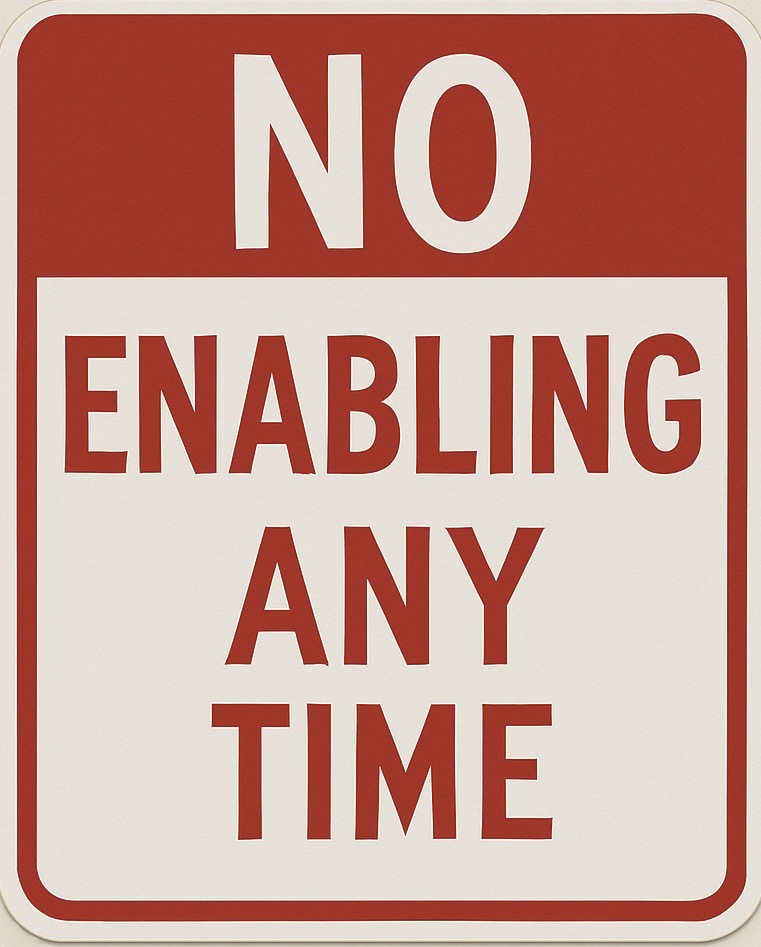

How Over-Accommodating Schedules Becomes a Form of Enabling
Enabling doesn't always look dramatic. Sometimes it looks like constantly rearranging your life—canceling plans, rescheduling events, adjusting routines to avoid conflict. What starts as flexibility can quietly become structural protection from natural consequences.
Direct answer
How do I know if I am helping or enabling?
Helping supports responsibility, truth, treatment, and repair. Enabling protects addiction from consequences, usually through money, excuses, housing, secrecy, or emotional rescue.
Reviewed through Matt Brown's family intervention and coaching lens.
Open full answer →Why this is here
Families rarely need more pressure. They need clearer patterns, steadier boundaries, and a next step they can actually hold.
Written from intervention experience
This article is part of No More Enabling’s family education library, shaped by Matt Brown’s work with families affected by addiction, treatment resistance, relapse, and boundary breakdowns since 2004.
Author and editorial reviewer: Matt Brown, professional interventionist and family addiction coach. Medical claims require separate qualified clinical review.
Read this as part of a bigger pattern
If this article hits home, these guided hubs will help you keep reading in a smarter order instead of starting from scratch each time.
Enabling Hub
Best when you keep wondering whether your support is helping or making the pattern worse.
Open hub →
Codependency Hub
Best when exhaustion, guilt, hypervigilance, and over-functioning have become normal.
Open hub →
Boundaries Hub
Best when your loved one keeps crossing lines and you are tired of repeating yourself.
Open hub →
If this article sounds like your family
Do this next
If you keep wondering whether your support is actually helping, start with the assessment and get a clearer read.
Next best step
Choose your next step
If this article sounds like your family, use the short assessment to route the situation before the next hard conversation.
When your family needs a real plan
Coaching and intervention guidance with Matt Brown
If articles are helping but the situation at home is still escalating, you can ask for direct help with family alignment, boundaries, treatment refusal, relapse patterns, or deciding whether an intervention makes sense.
High-intent next step
Family addiction coaching with Matt Brown for enabling and boundaries
Get private family addiction coaching from Matt Brown for enabling, boundaries, treatment refusal, relapse, money decisions, and a clear next step.

Enabling doesn't always look dramatic. It doesn't always involve money or housing. Sometimes it looks like constantly rearranging your life. Canceling plans. Rescheduling events. Adjusting family routines to avoid conflict. Over time, families can begin organizing their schedules around addiction instead of around health. What starts as flexibility can quietly become structural protection from natural consequences.
The Subtle Shift
In the beginning, schedule changes feel reasonable.
• "Let's move dinner."
• "We'll postpone the trip."
• "We won't bring it up tonight."
• "Let's wait until they're in a better mood."
Flexibility is part of healthy relationships.
But when adjustments become chronic—and always revolve around one person's instability—the system shifts.
The family adapts. The addiction does not.
Rearranging Life to Avoid Conflict
Many families reorganize their lives to prevent emotional explosions.
They:
• Avoid certain topics
• Cancel gatherings
• Leave events early
• Walk on eggshells
• Coordinate plans around substance use timing
Conflict avoidance feels protective.
But when avoidance becomes routine, it reinforces instability.
Protecting From Natural Inconvenience
Healthy adults experience inconvenience.
They:
• Miss events if they oversleep
• Handle their own scheduling conflicts
• Manage their own transportation
• Accept consequences of poor planning
In addiction systems, families often intervene before inconvenience lands.
They:
• Provide rides
• Make excuses
• Shift timelines
• Cover missed commitments
Inconvenience becomes absorbed instead of experienced.
The Cost to the Family System
Over-accommodating schedules produces long-term strain.
Family members may feel:
• Resentful
• Exhausted
• Hypervigilant
• Isolated from friends
• Disconnected from personal goals
Children may learn:
• Plans are unstable
• Emotions dictate structure
• One person's instability governs the group
This creates imbalance.
When Flexibility Becomes Enabling
Ask yourself:
• Are we changing plans weekly to manage their mood?
• Are family events determined by whether they are stable?
• Do we avoid scheduling important conversations?
• Are we protecting them from embarrassment repeatedly?
Occasional adjustment is normal.
Chronic adjustment centered on addiction is not.
The Emotional Motivation Behind Accommodation
Over-accommodating is rarely malicious.
It is often rooted in:
• Fear of escalation
• Desire for peace
• Hope that stability will return
• Avoidance of public embarrassment
But peace maintained through constant adjustment is fragile.
And fragile systems eventually fracture.
The Illusion of Stability
When families reorganize everything around instability, daily life may appear calmer.
But this calm depends on continued accommodation.
If the family stops adjusting, conflict resurfaces.
That is not stability. That is conditional equilibrium.
How Accommodation Reduces Accountability
If someone never has to:
• Miss an event publicly
• Explain absence
• Manage logistics
• Handle social consequences
Accountability remains minimal.
Without accountability, motivation rarely deepens.
Accommodation lowers pressure. Lower pressure sustains patterns.
Free family email course
Free 4-week Boundaries email course
One lesson a week — the exact language, scripts, and family agreements that hold up when your loved one pushes back.
- Week 1 — What a real boundary actually is (and is not)
- Week 2 — Naming the boundary without threats or ultimatums
- Week 3 — Holding the line when they test it
- Week 4 — Getting your family on the same page
"Practical, not preachy. It reads like someone who has actually sat with families instead of a wellness blog."
— Sister of a brother in relapse
The Guilt Factor
When families consider reclaiming their schedules, guilt often surfaces.
They think:
• "We're being selfish."
• "They're struggling."
• "This isn't the right time."
• "We should be supportive."
Support does not require surrendering structure.
Healthy support includes boundaries.
Reclaiming Structure Without Escalation
Reclaiming schedules does not require hostility.
It can look like:
• "We're keeping the dinner plans."
• "We're leaving at the scheduled time."
• "You're responsible for your own arrangements."
• "We won't cancel because of last-minute instability."
Consistency reduces negotiation.
Negotiation sustains instability.
Modeling Stability
When families maintain predictable structure:
• Children feel safer
• Extended family dynamics improve
• Personal well-being increases
• Emotional exhaustion decreases
Structure benefits the entire system—not just the individual struggling.
Recovery requires exposure to stability.
It does not grow in constantly adjusted environments.
The Risk of Burnout
Families who over-accommodate often reach a breaking point.
Years of adjustment lead to:
• Emotional collapse
• Ultimatums
• Sudden withdrawal
• Abrupt separation
Burnout-driven reactions are rarely strategic.
Gradual boundary restoration is more sustainable.
When Professional Guidance Helps
If your family life revolves around preventing someone else's instability, it may be time to seek perspective.
An experienced interventionist can help:
• Identify accommodation patterns
• Develop sustainable boundaries
• Reduce guilt-driven reversals
• Prepare for pushback
Outside guidance strengthens follow-through.
A Clear Takeaway
Over-accommodating schedules feels supportive.
Over time, it becomes protective of instability.
Healthy families are flexible.
They are not reorganized around addiction.
Reclaiming structure is not cruelty. It is leadership.
When families stop bending around dysfunction, accountability has space to land.
And accountability is necessary for change.
Get weekly guidance for families dealing with enabling
Every Sunday, one short email with practical family guidance on boundaries, enabling, relapse, and next steps.
"Practical, not preachy. It reads like someone who has actually sat with families instead of a wellness blog."
— Sister of a brother in relapse
Trust signals
Source-worthy public resources
These links are not a substitute for medical, legal, or crisis care. They are included to help families verify safety and treatment information from official sources.
Next best answers
If this is what you were really asking
What is codependency in addiction families?
Codependency is the pattern where a family member becomes over-responsible for another person's addiction, emotions, consequences, or recovery.
Open answer →
How do I know if I am helping or enabling?
Helping supports responsibility, truth, treatment, and repair. Enabling protects addiction from consequences, usually through money, excuses, housing, secrecy, or emotional rescue.
Open answer →
How do I stop enabling without abandoning someone I love?
Stop doing what protects the addiction, but stay available for recovery-supporting action. The goal is not less love. The goal is cleaner support.
Open answer →
What should I do when an addicted loved one breaks a boundary?
Do not renegotiate the boundary in the heat of the moment. Follow through calmly, document the pattern, and review whether the boundary was specific enough to hold.
Open answer →
Need a steadier next step?
Don’t stop at insight
The families who make progress usually do three things: they get honest about the pattern, choose one clearer next step, and stop trying to manage everything at once.
Helping or Enabling? Tool
Best when you keep second-guessing what support should look like.
Family Support Guide
Best when everything feels heavy, urgent, or emotionally scrambled.
Free Boundaries Course
Best when your limits keep getting negotiated away under pressure.
About Matt Brown and this site
Understand the experience and point of view behind the guidance here.

FamilyBridge
AI support for families across the recovery journey.