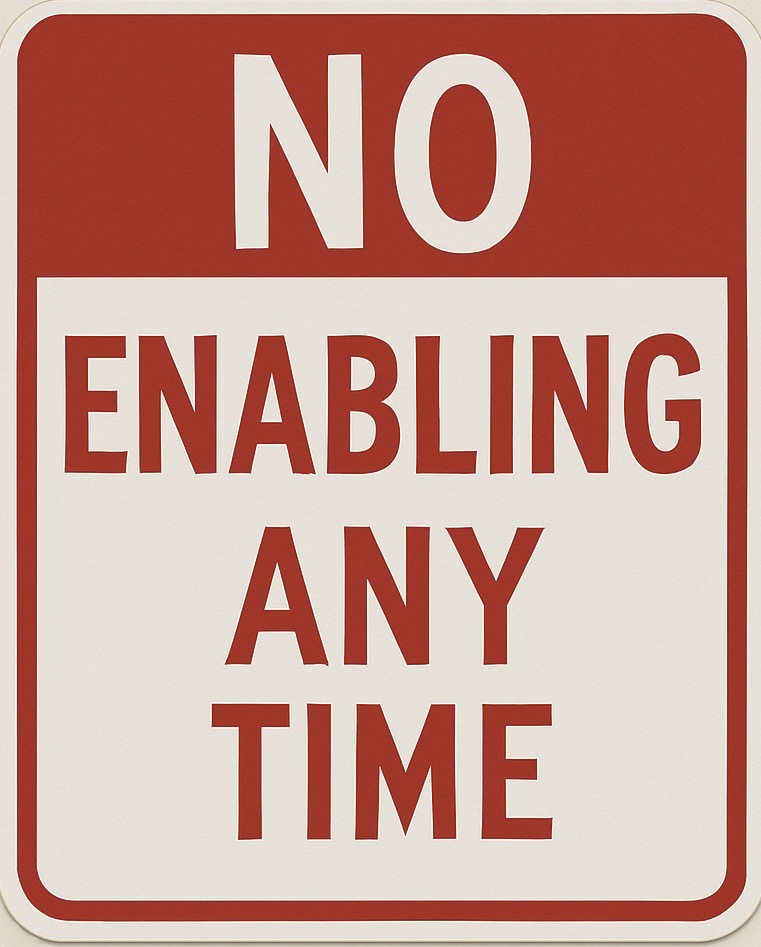

Is It Hope or Is It Enabling? Supporting Recovery Without Sliding Back Into Old Patterns
Your loved one is in recovery, and you're not sure how to help anymore. Here's how to tell support from enabling in recovery — and keep helping without old habits.
Direct answer
How do I know if I am helping or enabling?
Helping supports responsibility, truth, treatment, and repair. Enabling protects addiction from consequences, usually through money, excuses, housing, secrecy, or emotional rescue.
Reviewed through Matt Brown's family intervention and coaching lens.
Open full answer →Why this is here
Families rarely need more pressure. They need clearer patterns, steadier boundaries, and a next step they can actually hold.
Written from intervention experience
This article is part of No More Enabling’s family education library, shaped by Matt Brown’s work with families affected by addiction, treatment resistance, relapse, and boundary breakdowns since 2004.
Author and editorial reviewer: Matt Brown, professional interventionist and family addiction coach. Medical claims require separate qualified clinical review.
Read this as part of a bigger pattern
If this article hits home, these guided hubs will help you keep reading in a smarter order instead of starting from scratch each time.
Adult Child Addiction Hub
Best when you are asking how to stay loving without becoming the safety net for active addiction.
Open hub →
Financial Enabling Hub
Best when you need to help without becoming the financial safety net that keeps the addiction cycle alive.
Open hub →
After Treatment Hub
Best when the crisis is quieter but the family still needs structure, support, and clear limits.
Open hub →
If this article sounds like your family
Do this next
If the real issue is holding the line, don’t stop at reading. Work through the boundaries course next.
Next best step
Choose your next step
If this article sounds like your family, use the short assessment to route the situation before the next hard conversation.
When your family needs a real plan
Coaching and intervention guidance with Matt Brown
If articles are helping but the situation at home is still escalating, you can ask for direct help with family alignment, boundaries, treatment refusal, relapse patterns, or deciding whether an intervention makes sense.
High-intent next step
Family addiction coaching with Matt Brown for enabling and boundaries
Get private family addiction coaching from Matt Brown for enabling, boundaries, treatment refusal, relapse, money decisions, and a clear next step.

You did the hardest part. You stopped covering for missed shifts, stopped handing over cash "just this once," stopped believing every promise that this time would be different. Now your loved one is in recovery — maybe fresh out of treatment, maybe a few months into sobriety — and something new is happening in your chest: relief, hope, and a quiet, nagging fear that you don't know how to be around them anymore. Are you helping, or are you enabling in recovery without even realizing it? The two can look almost identical from the outside, and no one handed you a manual for this stage. That confusion doesn't mean you're doing it wrong. It means you're paying attention.
What's the Difference Between Support and Enabling in Recovery?
Support respects your loved one's ability to handle their own life and lets them feel the natural results of their choices — the good ones and the hard ones. Enabling removes those results, does for them what they are capable of doing themselves, and is usually driven more by your own fear than by what they actually need in that moment.
In early recovery, this line gets blurry fast. Reminding your loved one about a therapy appointment is support. Calling their sponsor for them because they "forgot" is enabling. Encouraging them to apply for a job is support. Calling the employer to smooth things over after they no-showed is enabling. The test isn't whether you're being kind — it's whether your kindness is quietly taking away something they need to practice for themselves.
Why Does Enabling Sneak Back In After Treatment?
Enabling often returns after treatment because relief and fear are both powerful motivators. You're so grateful your loved one is trying that you want to reward every good day, and so afraid of triggering a setback that you avoid anything that feels like conflict.
This shows up in small, understandable ways: paying a bill you know they could cover themselves "just until they're back on their feet." Softening a hard conversation because you don't want to be the reason they relapse. Checking their phone or tracking their location because your anxiety, not their behavior, is asking you to. None of this makes you a bad family member. It means the habits you built during active addiction — vigilance, rescuing, managing your fear through their behavior — don't disappear the moment treatment ends. They have to be unlearned on purpose.
What Are the Warning Signs You're Enabling Again?
A few patterns tend to show up first. If you recognize more than one of these, it's worth pausing to ask whether you're supporting recovery or managing your own fear.
- Making excuses for setbacks ("they've been under so much stress") instead of naming them honestly
- Doing tasks for them that they're capable of doing themselves — calls, paperwork, appointments
- Avoiding a boundary because you're afraid it might "push them" toward relapse
- Feeling a flicker of relief when they need you, because it means you're still essential
- Giving money "just this once" when the pattern has already repeated more than once
- Staying quiet about your own needs so you don't add stress to their recovery
For a broader look, see these common enabling behaviors to watch for.
How Can You Support Recovery Without Enabling It?
You can support recovery and hold boundaries at the same time — they aren't opposites. The shift is from managing your loved one's choices to managing your own responses.
- Offer help with things they genuinely can't yet do alone, and let them handle the rest, even if they stumble.
- Say what you mean directly instead of managing things quietly behind the scenes — clear communication is a form of respect, not a risk.
- Get your own support. A therapist, a family program, or an Al-Anon meeting gives you somewhere to put your fear that isn't your loved one's recovery.
- Let consequences happen. A missed shift, a hard conversation, a natural setback — these often teach recovery skills faster than any lecture from you.
- Notice effort, not just outcomes. Celebrating that they showed up to a meeting, even on a hard day, reinforces the behavior you want to see more of.
When Is It Time to Consider More Support?
Sometimes the warning signs point to something bigger than your own habits — your loved one may be struggling more than they're letting on, or your family may need outside structure to hold boundaries consistently. If setbacks are becoming a pattern rather than a moment, or if you find yourself back in full crisis mode, it's a sign to bring in professional support rather than trying to manage it alone.
No family does this perfectly, and you won't either — that's not the goal. The goal is to keep noticing, keep adjusting, and keep choosing love that includes boundaries instead of love that erases them. Every time you catch yourself mid-rescue and choose to step back instead, you're building a new pattern, one your loved one gets to lean into as they build their own. You've already proven you can change. That's the same skill that carries you through this next part.
If you want ongoing coaching and education as you navigate this stage, SoberHelpline.com offers family coaching for recovery support designed for exactly this kind of in-between season. And if you're seeing signs it's time for a professional intervention — that your loved one needs a higher level of care or a structured push toward treatment — FreedomInterventions.com can help you plan a professional intervention with support every step of the way.
Frequently Asked Questions
Is it enabling if I still help my loved one financially during recovery?
Not automatically. Occasional, time-limited help tied to a clear plan — like covering a security deposit while they secure a job — is support. It becomes enabling when the same request repeats without change, or when the money removes a consequence they need to feel in order to grow.
How do I know if I'm rescuing them or genuinely supporting their recovery?
Ask yourself whether they could do this themselves with some discomfort, and whether your help is driven by their need or your own anxiety. If the honest answer is "they could, but I can't stand watching them struggle," that discomfort is worth sitting with instead of fixing.
What if setting a boundary might trigger a relapse?
This fear is common, but boundaries don't cause relapse — they clarify reality. Avoiding honesty to prevent a relapse usually just delays a harder conversation later while adding resentment on both sides. Set the boundary with care and follow through with support, not punishment.
Should I stop checking in on my loved one once they're in recovery?
Checking in with genuine care is different from monitoring out of fear. A simple "thinking of you, how's your week going" supports connection; tracking their location or reading their messages usually signals your own anxiety needs attention, not their behavior.
How long does it take to stop enabling patterns after treatment?
There's no fixed timeline — old patterns can resurface months or even years into recovery, especially during stressful periods. What matters more than speed is noticing when you slip and adjusting again rather than expecting yourself to get it right the first time.
What if I realize I've been enabling again — what do I do now?
Notice it without shame, name it honestly to yourself, and make one small change rather than overhauling everything at once. A brief conversation with a therapist, a family coach, or an Al-Anon group can help you figure out which boundary to reset first.
Free family tool
Financial Boundaries Script
A short script for saying no to cash, rent, bills, and last-minute rescue requests without getting pulled into another negotiation.
This does not replace the Family Squares meeting. It gives you a practical tool first, then points you toward the live support room if you need help using it.
Get weekly guidance for families dealing with enabling
Every Sunday, one short email with practical family guidance on boundaries, enabling, relapse, and next steps.
"Practical, not preachy. It reads like someone who has actually sat with families instead of a wellness blog."
— Sister of a brother in relapse
Trust signals
Source-worthy public resources
These links are not a substitute for medical, legal, or crisis care. They are included to help families verify safety and treatment information from official sources.
Next best answers
If this is what you were really asking
How do I know if I am helping or enabling?
Helping supports responsibility, truth, treatment, and repair. Enabling protects addiction from consequences, usually through money, excuses, housing, secrecy, or emotional rescue.
Open answer →
How do I stop enabling without abandoning someone I love?
Stop doing what protects the addiction, but stay available for recovery-supporting action. The goal is not less love. The goal is cleaner support.
Open answer →
What should I do when an addicted loved one breaks a boundary?
Do not renegotiate the boundary in the heat of the moment. Follow through calmly, document the pattern, and review whether the boundary was specific enough to hold.
Open answer →
How should a family respond to relapse without enabling?
Respond to relapse with safety, honesty, and structure. Do not erase the consequence, rewrite the story, or rebuild the old rescue pattern.
Open answer →
Need a steadier next step?
Don’t stop at insight
The families who make progress usually do three things: they get honest about the pattern, choose one clearer next step, and stop trying to manage everything at once.
Helping or Enabling? Tool
Best when you keep second-guessing what support should look like.
Family Support Guide
Best when everything feels heavy, urgent, or emotionally scrambled.
Free Boundaries Course
Best when your limits keep getting negotiated away under pressure.
About Matt Brown and this site
Understand the experience and point of view behind the guidance here.

FamilyBridge
AI support for families across the recovery journey.