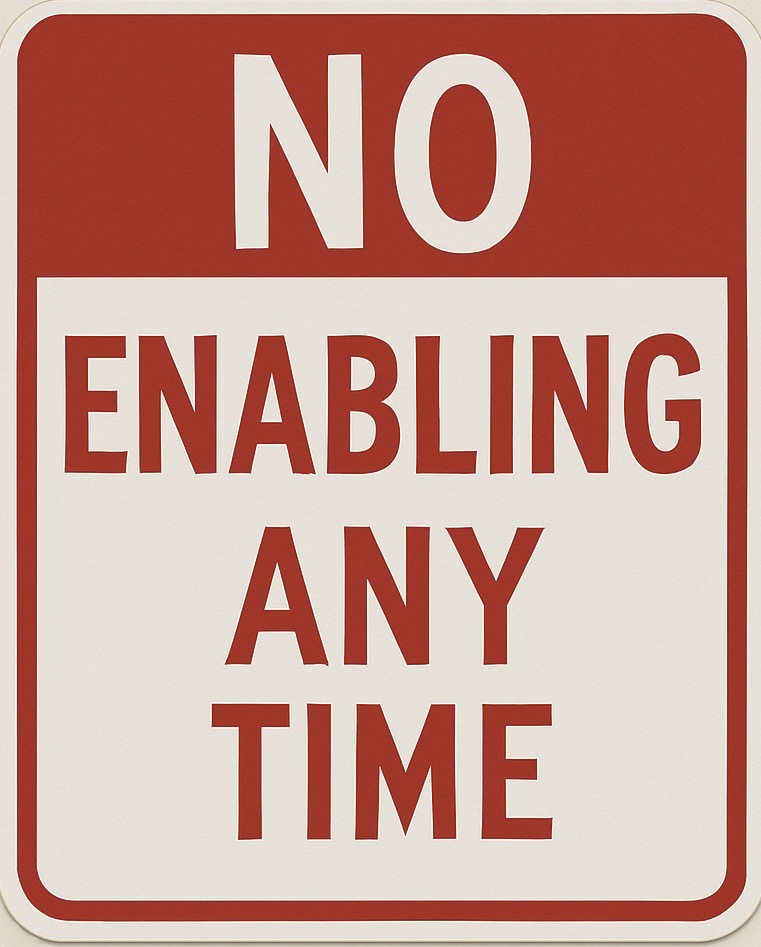

How Families Become Emotional Shock Absorbers for Addiction
In many families affected by addiction, the chaos never fully explodes outward. It gets absorbed. Smoothed over. Softened. Managed. Over time, families become emotional shock absorbers—taking the impact so the addicted person doesn't have to. This pattern feels protective, even loving. But absorbing every shock often prevents the very friction that could create change.
Direct answer
How do I know if I am helping or enabling?
Helping supports responsibility, truth, treatment, and repair. Enabling protects addiction from consequences, usually through money, excuses, housing, secrecy, or emotional rescue.
Reviewed through Matt Brown's family intervention and coaching lens.
Open full answer →Why this is here
Families rarely need more pressure. They need clearer patterns, steadier boundaries, and a next step they can actually hold.
Written from intervention experience
This article is part of No More Enabling’s family education library, shaped by Matt Brown’s work with families affected by addiction, treatment resistance, relapse, and boundary breakdowns since 2004.
Author and editorial reviewer: Matt Brown, professional interventionist and family addiction coach. Medical claims require separate qualified clinical review.
Read this as part of a bigger pattern
If this article hits home, these guided hubs will help you keep reading in a smarter order instead of starting from scratch each time.
Enabling Hub
Best when you keep wondering whether your support is helping or making the pattern worse.
Open hub →
Boundaries Hub
Best when your loved one keeps crossing lines and you are tired of repeating yourself.
Open hub →
Codependency Hub
Best when exhaustion, guilt, hypervigilance, and over-functioning have become normal.
Open hub →
If this article sounds like your family
Do this next
If the real issue is holding the line, don’t stop at reading. Work through the boundaries course next.
Next best step
Choose your next step
If this article sounds like your family, use the short assessment to route the situation before the next hard conversation.
When your family needs a real plan
Coaching and intervention guidance with Matt Brown
If articles are helping but the situation at home is still escalating, you can ask for direct help with family alignment, boundaries, treatment refusal, relapse patterns, or deciding whether an intervention makes sense.
High-intent next step
Family addiction coaching with Matt Brown for enabling and boundaries
Get private family addiction coaching from Matt Brown for enabling, boundaries, treatment refusal, relapse, money decisions, and a clear next step.

In many families affected by addiction, the chaos never fully explodes outward. It gets absorbed. Smoothed over. Softened. Managed. Someone pays the bill. Someone calms the argument. Someone explains the absence. Over time, families become emotional shock absorbers—taking the impact so the addicted person doesn't have to. This pattern feels protective, even loving. But absorbing every shock often prevents the very friction that could create change.
What an Emotional Shock Absorber Actually Does
In mechanical terms, a shock absorber reduces impact.
In addiction systems, families reduce impact by:
Covering financial gaps. Making excuses to employers. Calming extended family. Minimizing behavior publicly. Soothing anger privately. Avoiding confrontation.
The goal is stability.
The result is insulation.
Addiction continues—but the external shock never fully lands.
Why This Pattern Develops
Families don't choose this role consciously.
It develops gradually because conflict is exhausting, embarrassment feels overwhelming, children need stability, extended family asks questions, and employers threaten consequences.
Someone steps in to contain the damage.
That containment feels responsible.
But it also redistributes consequences.
The Cost of Absorbing Impact
When families absorb the shock: financial consequences soften, social consequences decrease, emotional fallout gets managed, and external pressure reduces.
Addiction thrives in low-pressure environments.
The more impact is absorbed, the longer the system remains intact.
The Silent Burnout
Being a shock absorber is exhausting.
Family members often experience anxiety, sleep disruption, resentment, emotional fatigue, and isolation.
They become hypervigilant. They anticipate problems before they happen. They carry tension constantly.
Meanwhile, the addicted individual may appear less burdened.
That imbalance builds quietly.
"We're Just Trying to Keep the Peace"
Families often justify shock-absorbing behavior with: "We don't want to escalate." "This isn't the right time." "We're protecting the kids." "It would make things worse."
Sometimes short-term containment is necessary.
But when containment becomes chronic, it becomes enabling.
Peace without accountability is temporary.
How Children Experience Shock Absorption
Children in these systems often notice more than adults realize.
They observe emotional tension, inconsistent rules, avoided topics, and sudden mood shifts.
When families absorb impact instead of addressing patterns, children learn that conflict is hidden, truth is softened, and stability is fragile.
Protecting children sometimes means confronting reality—not buffering it indefinitely.
Protecting Reputation vs Protecting Health
Families frequently protect public image. They downplay incidents, offer alternative explanations, avoid sharing concerns, and pretend normalcy.
This protects reputation.
But it can isolate the family from needed support.
Secrecy protects the addiction more than the family.
The Emotional Math Behind Shock Absorption
The internal calculation often sounds like: "If I don't fix this, it will explode."
So the family member pays the fine, covers the rent, smooths the apology, and makes the call.
Explosion avoided.
But pattern preserved.
The Fear Driving the Pattern
Shock absorption is usually rooted in fear: fear of legal trouble, fear of losing housing, fear of violence, fear of public shame, and fear of abandonment.
Fear is understandable.
But decisions based purely on fear often delay necessary change.
The Difference Between Support and Absorption
Support means encouraging treatment, holding boundaries, offering structured help, and being emotionally present.
Absorption means removing consequences, fixing repeated damage, avoiding accountability conversations, and taking responsibility for someone else's choices.
One strengthens recovery. The other stabilizes addiction.
When to Step Out of the Shock Absorber Role
Stepping out does not require hostility.
It requires clarity.
It means allowing natural consequences, stopping financial rescue, refusing to lie or cover, aligning family members internally, and preparing for discomfort.
Discomfort is not failure.
It is often the first signal that the system is shifting.
Why Families Feel Cruel When They Stop Absorbing
When families stop buffering consequences, guilt surfaces.
They think: "We're abandoning them." "What if something happens?" "Are we being too harsh?"
But refusing to absorb impact does not create the consequence.
The behavior created it.
Allowing reality to land is not cruelty. It is honesty.
The Role of Professional Guidance
Shock absorber patterns are deeply embedded.
An experienced interventionist helps families identify enabling structures, develop aligned boundaries, plan for pushback, maintain consistency, and reduce guilt-based reversals.
Outside perspective strengthens resolve.
A More Useful Question
Instead of asking: "How do we keep this from blowing up?"
Ask: "What are we protecting—and at what cost?"
That question reveals the tradeoff.
A Grounded Takeaway
Families become emotional shock absorbers because they care.
They want stability. They want protection. They want peace.
But absorbing every impact prevents accountability from doing its work.
You cannot cushion addiction into recovery.
At some point, the shock must land where it belongs.
Stepping out of the absorber role is not abandonment.
It is strategic clarity.
And clarity is what shifts systems—not silence.
Free family tool
Family Rules After Rehab Worksheet
A simple worksheet for turning post-treatment hope into clear house rules, communication expectations, and relapse-response agreements.
This does not replace the Family Squares meeting. It gives you a practical tool first, then points you toward the live support room if you need help using it.
Get weekly guidance for families dealing with enabling
Every Sunday, one short email with practical family guidance on boundaries, enabling, relapse, and next steps.
"Practical, not preachy. It reads like someone who has actually sat with families instead of a wellness blog."
— Sister of a brother in relapse
Trust signals
Source-worthy public resources
These links are not a substitute for medical, legal, or crisis care. They are included to help families verify safety and treatment information from official sources.
Next best answers
If this is what you were really asking
How do I know if I am helping or enabling?
Helping supports responsibility, truth, treatment, and repair. Enabling protects addiction from consequences, usually through money, excuses, housing, secrecy, or emotional rescue.
Open answer →
What is codependency in addiction families?
Codependency is the pattern where a family member becomes over-responsible for another person's addiction, emotions, consequences, or recovery.
Open answer →
What if the other house is running a different plan?
Two houses. One disease. If one parent pays rent and the other hands over the keys, nothing holds. Money, housing, and contact have to be the same line in both kitchens. You cannot control the other house. You can stop being the second rescue.
Open answer →
How do I stop enabling without abandoning someone I love?
Stop doing what protects the addiction, but stay available for recovery-supporting action. The goal is not less love. The goal is cleaner support.
Open answer →
Need a steadier next step?
Don’t stop at insight
The families who make progress usually do three things: they get honest about the pattern, choose one clearer next step, and stop trying to manage everything at once.
Helping or Enabling? Tool
Best when you keep second-guessing what support should look like.
Family Support Guide
Best when everything feels heavy, urgent, or emotionally scrambled.
Free Boundaries Course
Best when your limits keep getting negotiated away under pressure.
About Matt Brown and this site
Understand the experience and point of view behind the guidance here.

FamilyBridge
AI support for families across the recovery journey.