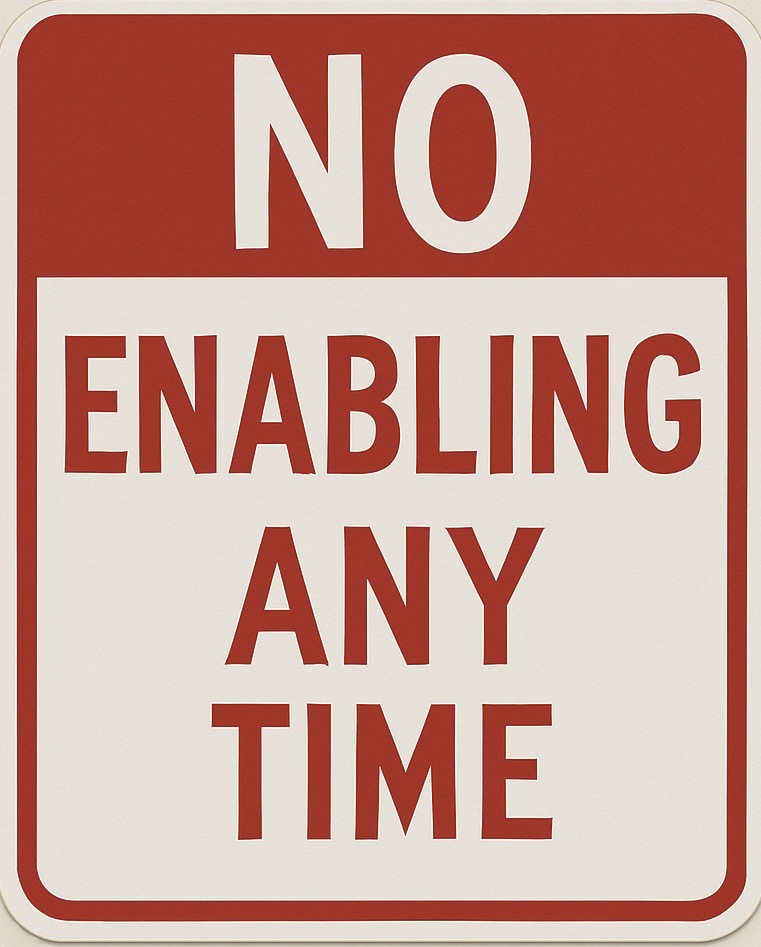

When Helping Becomes Taking Over: Doing Everything for an Addicted Loved One
Doing everything for an addicted loved one feels like love, but it can quietly become enabling. Learn how to tell the difference and hand responsibility back.
Direct answer
How do I know if I am helping or enabling?
Helping supports responsibility, truth, treatment, and repair. Enabling protects addiction from consequences, usually through money, excuses, housing, secrecy, or emotional rescue.
Reviewed through Matt Brown's family intervention and coaching lens.
Open full answer →Why this is here
Families rarely need more pressure. They need clearer patterns, steadier boundaries, and a next step they can actually hold.
Written from intervention experience
This article is part of No More Enabling’s family education library, shaped by Matt Brown’s work with families affected by addiction, treatment resistance, relapse, and boundary breakdowns since 2004.
Author and editorial reviewer: Matt Brown, professional interventionist and family addiction coach. Medical claims require separate qualified clinical review.
Read this as part of a bigger pattern
If this article hits home, these guided hubs will help you keep reading in a smarter order instead of starting from scratch each time.
Adult Child Addiction Hub
Best when you are asking how to stay loving without becoming the safety net for active addiction.
Open hub →
Financial Enabling Hub
Best when you need to help without becoming the financial safety net that keeps the addiction cycle alive.
Open hub →
Treatment Resistance Hub
Best when conversations about treatment keep failing and the family needs a calmer, more structured next move.
Open hub →
If this article sounds like your family
Do this next
If the real issue is holding the line, don’t stop at reading. Work through the boundaries course next.
Next best step
Choose your next step
If this article sounds like your family, use the short assessment to route the situation before the next hard conversation.
When your family needs a real plan
Coaching and intervention guidance with Matt Brown
If articles are helping but the situation at home is still escalating, you can ask for direct help with family alignment, boundaries, treatment refusal, relapse patterns, or deciding whether an intervention makes sense.
High-intent next step
Family addiction coaching with Matt Brown for enabling and boundaries
Get private family addiction coaching from Matt Brown for enabling, boundaries, treatment refusal, relapse, money decisions, and a clear next step.

Nobody sets out to take over another adult's life. It happens one favor at a time. You pay the phone bill because the phone matters in an emergency. You call the boss because the job matters. You handle the laundry, the rides, the vet appointment, the rent, the apology to the neighbor. Doing everything for an addicted loved one rarely starts as a decision. It starts as a series of small rescues that each made sense on the day you made them.
If you're reading this with a knot in your stomach, hear this first: you are not a bad person. You are a person who loves someone and has been trying to keep them alive and functioning. That is not a character flaw. But there is a real difference between helping someone and carrying them, and the difference matters more than almost anything else you can change right now.
This article will help you see where you've crossed from support into substitution, why it happens to good and capable people, and how to begin handing responsibility back without abandoning anyone.
What Does It Mean to Be Doing Everything for an Addicted Loved One?
Doing everything for an addicted loved one means you have taken over tasks and consequences that belong to them: their bills, their obligations, their explanations, their emotional regulation. It is enabling in its most practical form. Enabling simply means removing the natural consequences of someone's choices so that the behavior can continue with less friction.
Here's the test that cuts through most confusion. Support helps a person do something they are capable of doing. Substitution does it for them. When you drive your son to a job interview he asked for, that's support. When you write his resume, email his prospective boss, and set three alarms on your phone so he wakes up, you have become the applicant.
Common forms of substitution in families dealing with addiction:
- Managing their money — paying rent, covering overdrafts, buying groceries they had money for last week
- Managing their reputation — calling employers, texting friends, smoothing over what happened at the family dinner
- Managing their logistics — rides, appointments, paperwork, court dates, phone plans
- Managing their emotions — monitoring their mood, adjusting the household so they don't get upset
- Managing their legal or medical fallout — hiring the attorney, negotiating with the landlord, refilling the prescription
None of these are wrong every time. All of them become a problem when they are the pattern rather than the exception. If you're still sorting out which is which, it helps to start with telling enabling apart from helping.
Why Do Families End Up Taking Over?
Families take over because the short-term math is compelling. Stepping in produces immediate relief; stepping back produces immediate fear. When someone you love is using substances, the risks are real, so your nervous system chooses relief every time.
The Stakes Feel Life-or-Death — Because Sometimes They Are
You are not imagining the danger. Overdose is real. Homelessness is real. That reality makes it very hard to distinguish between a consequence that could kill someone and a consequence that could wake them up. So many families default to preventing all consequences, just in case.
Here's the honest cost of that approach. If you remove every consequence, you also remove most of the information your loved one would use to conclude that something has to change. You become the buffer between them and their own life.
It Is Faster, Cleaner, and Less Painful
Watching someone you love fumble something you could handle in ten minutes is genuinely uncomfortable. Doing it yourself takes less time and produces less conflict. Over months and years, that efficiency quietly transfers the entire weight of an adult life onto your shoulders.
Being Needed Becomes an Identity
This one is tender, and it's worth sitting with. When you are the one who holds everything together, you have a role. You matter. You know what to do when you wake up. Handing responsibility back can feel like losing your purpose along with your usefulness. That feeling is common and it is not shameful — but it is worth naming, because it will fight you when you try to change.
What Is It Costing You and the Rest of the Family?
Taking over another adult's life has a price, and it is usually paid by people who are not in the room. Your health, your finances, your other children, your marriage, and your own sense of self all absorb the overflow.
Watch for these signs that the cost has gotten steep:
- You have depleted savings, retirement, or taken on debt to manage someone else's crises
- Your other children have learned not to bring you their problems because you already have your hands full
- You cannot remember the last decision you made based on what you wanted
- Your sleep, blood pressure, or appetite have changed and you have not been to a doctor about it
- You feel resentment toward the person you are helping, then guilt about the resentment
Resentment is not a sign that you love them less. It is a signal from your own body that you are giving beyond what you actually have. Listen to it as data, not as a verdict on your character.
How Do You Start Handing Responsibility Back?
You start small, specific, and in writing. Don't attempt to hand back everything at once — that isn't a boundary, that's a rupture. Pick one responsibility, return it clearly, and hold steady while everyone adjusts. It also helps to be clear on what a healthy boundary actually is before you start.
1. Make an Inventory
Write down every task you currently perform that belongs to your loved one. Be exhaustive: the small ones matter, because they are the ones you don't notice. Next to each, mark whether a capable adult could do it themselves.
2. Pick the Lowest-Stakes Item First
Not the rent. Not the medication. Start with something like a phone bill, a ride, or an email you have been sending on their behalf. You are building your own capacity to tolerate discomfort, and you build that with reps, not with one enormous confrontation.
3. Say It Plainly and Once
Something like: "Starting October 1st, I'm not paying your phone bill. I love you, and I'm not doing this one anymore." No lecture. No list of past failures. No negotiation about whether it's fair. The announcement is short because the decision is already made.
4. Expect Pushback and Plan for It
When you stop doing something you have always done, the first response is usually escalation — anger, guilt-tripping, a crisis that seems to prove you were needed all along. This is predictable. It is not evidence that you made the wrong call. Decide in advance what you will do when it comes, and tell one other person your plan so you are not holding it alone.
5. Replace Substitution With Presence
Handing back a task is not the same as withdrawing love. You can say no to the bill and yes to lunch on Sunday. Families often assume the choice is between doing everything and doing nothing. It isn't. The goal is to stop carrying their life while staying present in it.
You Are Allowed to Stop Carrying This Alone
If you have spent years managing another adult's existence, stepping back will feel like negligence long before it feels like health. That is normal. The feeling lags behind the decision. Do the next right thing anyway, and let your emotions catch up on their own schedule.
You do not have to figure this out by yourself, and you do not have to do it perfectly. Every family that has come out the other side of this started with one small responsibility handed back and one very uncomfortable week. You can do that. Start there.
Frequently Asked Questions
Is doing everything for an addicted loved one always enabling?
Not always — context matters. Helping during a genuine emergency, a medical crisis, or the early days of treatment can be appropriate support. It becomes enabling when it is the ongoing pattern, when it removes consequences that might otherwise motivate change, and when it continues regardless of whether the person is taking any responsibility themselves.
What if they end up homeless or hurt because I stopped helping?
This fear is the reason most families never step back, and it deserves a real answer rather than reassurance. You are not obligated to withdraw everything — you get to decide which supports genuinely protect life and which ones simply protect comfort. Many families keep a safety-related support in place (a phone, food, a path to treatment) while releasing financial and logistical rescues. Talk it through with a family coach or counselor before you act, not after.
How do I know which responsibilities to hand back first?
Start with anything low-stakes and reversible — a bill, a ride, an errand, an email you have been sending for them. The point of the first one is not the money or the time. It is proving to yourself that you can tolerate the discomfort of not fixing something, which is the muscle every later boundary will depend on.
My spouse thinks I'm being harsh. What do we do?
Split households are one of the most common obstacles families face, and an addicted person will usually find the softer parent or partner. Don't try to win the argument in the middle of a crisis. Sit down at a neutral time, agree on one specific item you will both handle the same way, and get outside help — a family coach or counselor — to mediate the larger disagreements.
Will handing responsibility back make them get sober?
It might, and it might not. You cannot control another person's recovery, and no boundary guarantees an outcome. What you can control is whether your loved one experiences the actual weight of their choices, and whether your own life, health, and finances survive this. Both of those matter, regardless of what they decide to do.
What if I've already been doing everything for years?
Then you start today with one thing. Years of substitution do not have to be undone all at once, and the fact that a pattern is old does not make it permanent. Families change these dynamics after decades. The only requirement is that you begin somewhere small and stay decided.
Where to Go From Here
If you recognized yourself in this article, you don't need more information — you need support while you change the pattern. For family coaching for addiction, visit SoberHelpline.com, where you can join our free Monday night family support call, work one-on-one with a coach, or become a member of our family community. You'll be around people who have made these exact decisions and lived through the week that follows.
If your loved one's substance use has escalated past the point where boundaries alone are enough — if there is imminent danger, repeated overdose, or a complete refusal to consider help — visit FreedomInterventions.com for guidance on when it's time for a professional intervention. A professional intervention gives your family a structured, unified plan and a direct path into treatment. You have been carrying this alone long enough.
Free family tool
Financial Boundaries Script
A short script for saying no to cash, rent, bills, and last-minute rescue requests without getting pulled into another negotiation.
This does not replace the Family Squares meeting. It gives you a practical tool first, then points you toward the live support room if you need help using it.
Get weekly guidance for families dealing with enabling
Every Sunday, one short email with practical family guidance on boundaries, enabling, relapse, and next steps.
"Practical, not preachy. It reads like someone who has actually sat with families instead of a wellness blog."
— Sister of a brother in relapse
Trust signals
Source-worthy public resources
These links are not a substitute for medical, legal, or crisis care. They are included to help families verify safety and treatment information from official sources.
Next best answers
If this is what you were really asking
How do I know if I am helping or enabling?
Helping supports responsibility, truth, treatment, and repair. Enabling protects addiction from consequences, usually through money, excuses, housing, secrecy, or emotional rescue.
Open answer →
How do I stop enabling without abandoning someone I love?
Stop doing what protects the addiction, but stay available for recovery-supporting action. The goal is not less love. The goal is cleaner support.
Open answer →
What if the other house is running a different plan?
Two houses. One disease. If one parent pays rent and the other hands over the keys, nothing holds. Money, housing, and contact have to be the same line in both kitchens. You cannot control the other house. You can stop being the second rescue.
Open answer →
What should I do when an addicted loved one breaks a boundary?
Do not renegotiate the boundary in the heat of the moment. Follow through calmly, document the pattern, and review whether the boundary was specific enough to hold.
Open answer →
Need a steadier next step?
Don’t stop at insight
The families who make progress usually do three things: they get honest about the pattern, choose one clearer next step, and stop trying to manage everything at once.
Helping or Enabling? Tool
Best when you keep second-guessing what support should look like.
Family Support Guide
Best when everything feels heavy, urgent, or emotionally scrambled.
Free Boundaries Course
Best when your limits keep getting negotiated away under pressure.
About Matt Brown and this site
Understand the experience and point of view behind the guidance here.

FamilyBridge
AI support for families across the recovery journey.