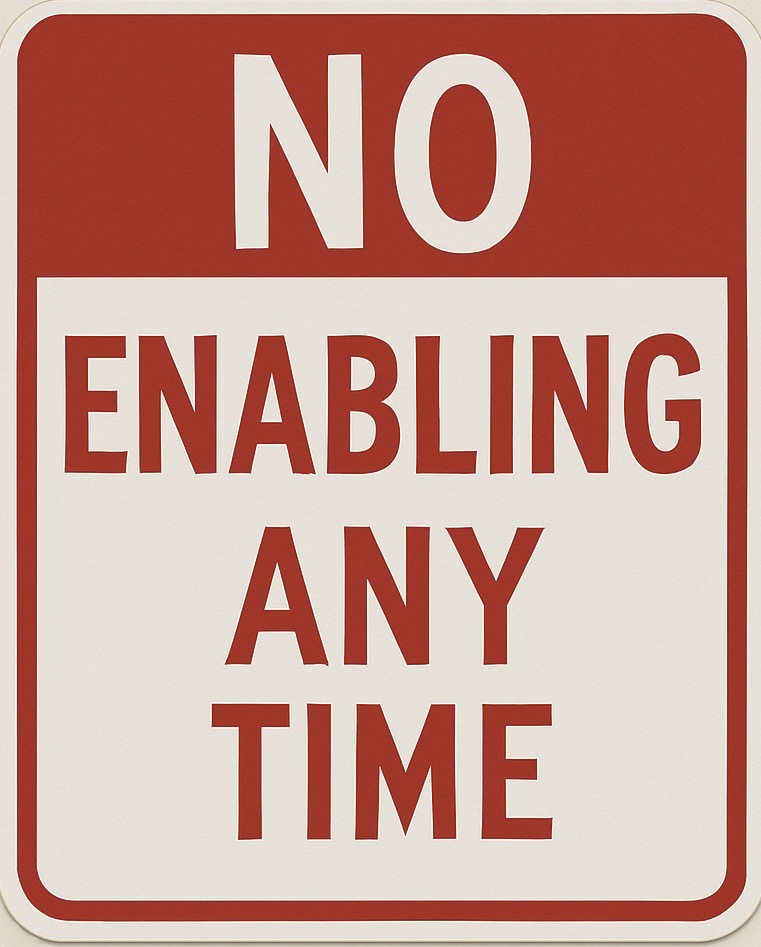

The Codependent Rescue Trap: Why Protecting Your Loved One From Consequences Is Keeping Them Sick
If you've spent months or years trying to save someone you love from their addiction, you know the exhaustion. The hard truth is that codependent rescuing behavior may actually be making things worse.
Direct answer
How do I know if I am helping or enabling?
Helping supports responsibility, truth, treatment, and repair. Enabling protects addiction from consequences, usually through money, excuses, housing, secrecy, or emotional rescue.
Reviewed through Matt Brown's family intervention and coaching lens.
Open full answer →Why this is here
Families rarely need more pressure. They need clearer patterns, steadier boundaries, and a next step they can actually hold.
Written from intervention experience
This article is part of No More Enabling’s family education library, shaped by Matt Brown’s work with families affected by addiction, treatment resistance, relapse, and boundary breakdowns since 2004.
Author and editorial reviewer: Matt Brown, professional interventionist and family addiction coach. Medical claims require separate qualified clinical review.
Read this as part of a bigger pattern
If this article hits home, these guided hubs will help you keep reading in a smarter order instead of starting from scratch each time.
Enabling Hub
Best when you keep wondering whether your support is helping or making the pattern worse.
Open hub →
Boundaries Hub
Best when your loved one keeps crossing lines and you are tired of repeating yourself.
Open hub →
Codependency Hub
Best when exhaustion, guilt, hypervigilance, and over-functioning have become normal.
Open hub →
If this article sounds like your family
Do this next
If the real issue is holding the line, don’t stop at reading. Work through the boundaries course next.
Next best step
Choose your next step
If this article sounds like your family, use the short assessment to route the situation before the next hard conversation.
When your family needs a real plan
Coaching and intervention guidance with Matt Brown
If articles are helping but the situation at home is still escalating, you can ask for direct help with family alignment, boundaries, treatment refusal, relapse patterns, or deciding whether an intervention makes sense.
High-intent next step
Family addiction coaching with Matt Brown for enabling and boundaries
Get private family addiction coaching from Matt Brown for enabling, boundaries, treatment refusal, relapse, money decisions, and a clear next step.

If you've spent months or years trying to save someone you love from their addiction, you know the exhaustion that comes with it. You've bailed them out, covered for them at work, cleaned up the messes, and lain awake at 2 a.m. wondering what else you can possibly do. The hard truth—and one that's painful to sit with—is that codependent rescuing behavior may actually be making things worse.
This isn't about blame. Rescuing comes from love. It comes from fear. It comes from the desperate wish that if you just do enough, your loved one will finally get better. But there's a critical difference between supporting someone in recovery and shielding them from the natural consequences of their addiction. Understanding that difference can change everything.
What Is Codependent Rescuing Behavior?
Codependent rescuing behavior refers to patterns where a family member steps in to protect their addicted loved one from experiencing the full consequences of their choices. Rather than allowing natural outcomes to unfold, the rescuer intervenes—emotionally, financially, or practically—in ways that temporarily reduce pain but ultimately remove the motivation to seek help.
Codependent rescuing often looks like care. It feels like care. But at its core, it is a way of managing your own anxiety by controlling the situation around your loved one. When you can't tolerate watching them struggle, you step in. And each time you do, you inadvertently send one powerful message: you don't have to change, because I'll handle it.
Why the Rescue Feels Like Love
There's a reason codependent rescuing behavior is so hard to stop—because it genuinely is rooted in love. When you love someone, you want to protect them. Watching a person you care about face eviction, job loss, legal trouble, or serious health consequences is agonizing. Doing something feels better than doing nothing.
But there's another layer at work here. Many family members in codependent patterns have spent years defining themselves through their ability to help. When your identity is tied to being the one who holds everything together, stepping back feels like losing yourself—not just losing them.
How Codependent Rescuing Behavior Fuels Addiction
Research and clinical experience consistently show the same thing: people struggling with addiction are more likely to seek treatment when they experience the painful consequences of their substance use. Consequences—financial hardship, job loss, damaged relationships, legal trouble—are not punishments. They are life naturally responding to a serious problem that needs to be addressed.
When family members engage in codependent rescuing behavior, they create a buffer between the addicted person and those consequences. The person never quite hits a genuine bottom. Life keeps functioning, at least partially, because someone is always there to patch the holes.
This doesn't mean consequences alone will fix addiction—professional treatment is almost always necessary. But consequences create the conditions for motivation, and motivation is what makes treatment work. When someone genuinely wants help and has experienced real pain, they engage in recovery very differently than someone who still has a safety net absorbing every fall.
Common Codependent Rescuing Patterns That Families Don't Recognize
Many families are surprised to discover how deeply their rescuing behaviors have taken root, because so many of them feel completely normal. Here are some codependent rescuing patterns that often go unrecognized:
- Paying bills or rent to prevent eviction, even repeatedly after promises to change
- Calling in sick for your loved one to protect their job when they're unable to function
- Making excuses to extended family, employers, or friends about their behavior
- Giving cash in the hope it won't be spent on substances—even when it always is
- Bailing them out of jail or quietly paying legal fines and consequences
- Picking up the slack for their parenting, household duties, or work responsibilities
- Minimizing or justifying their behavior to yourself or others ("it's not that bad")
- Threatening consequences and then not following through
That last pattern is especially important. When you repeatedly threaten to do something and then don't, you teach your loved one that your words don't carry weight. Over time, this erodes your own credibility and deepens the sense that nothing will really change—for either of you.
How to Stop Rescuing Without Feeling Like You're Giving Up
Stopping codependent rescuing behavior does not mean stopping love. It means redirecting your energy in ways that actually support recovery rather than delay it.
Get Support for Yourself First
Al-Anon, Nar-Anon, and professional family support programs exist for exactly this reason. When you have your own community and your own healing process, it becomes much easier to step back without feeling alone. You'll also begin to understand your own patterns more clearly—which makes change feel possible rather than terrifying.
Learn to Distinguish Support From Rescue
Supporting recovery might look like driving your loved one to a treatment appointment, attending family therapy together, or holding space for an honest conversation. Codependent rescuing looks like handling the consequences instead of them. The question to ask yourself is: does this help them get better, or does it help them stay comfortable while staying sick?
Let Natural Consequences Stand
This is the hardest part for most families. Allowing someone you love to experience pain feels cruel—especially when you're watching. But allowing consequences to stand is often the most loving thing you can do. A professional interventionist or family therapist can help you navigate this process with clarity and compassion, so you don't have to figure it out alone.
Consider a Professional Intervention
If your loved one is resistant to seeking help and your family is in crisis, a structured intervention led by a certified professional can create a genuine turning point. This is not about confrontation or ultimatums for their own sake. It is about presenting reality clearly, with love, in a way that's very difficult to dismiss. Many families find that a professional intervention is the moment everything finally shifts.
You Can't Force Recovery—But You Can Stop Preventing It
One of the most liberating truths in family recovery is this: you cannot make someone get sober. You cannot love someone into recovery. But you can stop removing the conditions that might finally lead them there.
This is not about giving up on your loved one. This is about recognizing that your love is real, your exhaustion is real, and the patterns that have developed in your family have made both of your lives harder. It is about choosing a different kind of love—one that holds firm, allows consequences, and says with every action: I believe you are capable of getting better, and I will no longer stand between you and that possibility.
If you're ready to stop the rescue cycle and get real support, visit SoberHelpline.com for education, coaching, and family guidance. If your loved one is resistant and you believe a professional intervention may be necessary, FreedomInterventions.com has certified interventionists who can walk your family through this process with compassion and expertise.
Frequently Asked Questions
What is codependent rescuing behavior?
Codependent rescuing behavior is when a family member repeatedly protects their addicted loved one from experiencing the natural consequences of their addiction—such as paying their debts, covering their mistakes, or making excuses for their behavior. While motivated by love, these actions can delay recovery by removing the internal motivation to change.
How do I know if I'm rescuing vs. genuinely helping my loved one?
Ask yourself: am I doing this because it genuinely supports their recovery, or because I can't tolerate watching them struggle? If your help prevents them from experiencing consequences and allows their addiction to continue without meaningful disruption, it is likely rescuing rather than helping. The distinction matters enormously.
Is it wrong to help a family member who has an addiction?
Not at all—but the kind of help matters. Helping someone get into treatment, attending family therapy, or actively supporting their recovery efforts is healthy and constructive. Repeatedly bailing them out, making excuses, or absorbing the financial fallout of their addiction is enabling, and it tends to delay the moment they seek real help.
Can stopping the rescue feel like abandonment?
Yes, and this is one of the most common fears families have. It's important to understand that stepping back from rescuing is not the same as withdrawing love. Many families find that establishing firm limits and allowing consequences to stand actually opens the door to more honest, real conversations—and ultimately leads to their loved one seeking help.
Where can I get support for codependency and family addiction?
SoberHelpline.com offers education, resources, and coaching for families navigating addiction. If your loved one is resistant to treatment and you need professional intervention support, FreedomInterventions.com connects families with certified professional interventionists.
Published on NoMoreEnabling.com | Content is for informational purposes and does not constitute medical advice. If you or a loved one are in crisis, please contact SAMHSA's National Helpline: 1-800-662-4357.
Free family tool
Family Rules After Rehab Worksheet
A simple worksheet for turning post-treatment hope into clear house rules, communication expectations, and relapse-response agreements.
This does not replace the Family Squares meeting. It gives you a practical tool first, then points you toward the live support room if you need help using it.
Get weekly guidance for families dealing with codependency
Every Sunday, one short email with practical family guidance on boundaries, enabling, relapse, and next steps.
"These emails helped me stop the fight I have had with my son for years. I finally know what a real boundary sounds like."
— Parent of an adult son in active addiction
Trust signals
Source-worthy public resources
These links are not a substitute for medical, legal, or crisis care. They are included to help families verify safety and treatment information from official sources.
Next best answers
If this is what you were really asking
How do I know if I am helping or enabling?
Helping supports responsibility, truth, treatment, and repair. Enabling protects addiction from consequences, usually through money, excuses, housing, secrecy, or emotional rescue.
Open answer →
What should I do when an addicted loved one breaks a boundary?
Do not renegotiate the boundary in the heat of the moment. Follow through calmly, document the pattern, and review whether the boundary was specific enough to hold.
Open answer →
What is codependency in addiction families?
Codependency is the pattern where a family member becomes over-responsible for another person's addiction, emotions, consequences, or recovery.
Open answer →
What if the other house is running a different plan?
Two houses. One disease. If one parent pays rent and the other hands over the keys, nothing holds. Money, housing, and contact have to be the same line in both kitchens. You cannot control the other house. You can stop being the second rescue.
Open answer →
Need a steadier next step?
Don’t stop at insight
The families who make progress usually do three things: they get honest about the pattern, choose one clearer next step, and stop trying to manage everything at once.
Helping or Enabling? Tool
Best when you keep second-guessing what support should look like.
Family Support Guide
Best when everything feels heavy, urgent, or emotionally scrambled.
Free Boundaries Course
Best when your limits keep getting negotiated away under pressure.
About Matt Brown and this site
Understand the experience and point of view behind the guidance here.

FamilyBridge
AI support for families across the recovery journey.