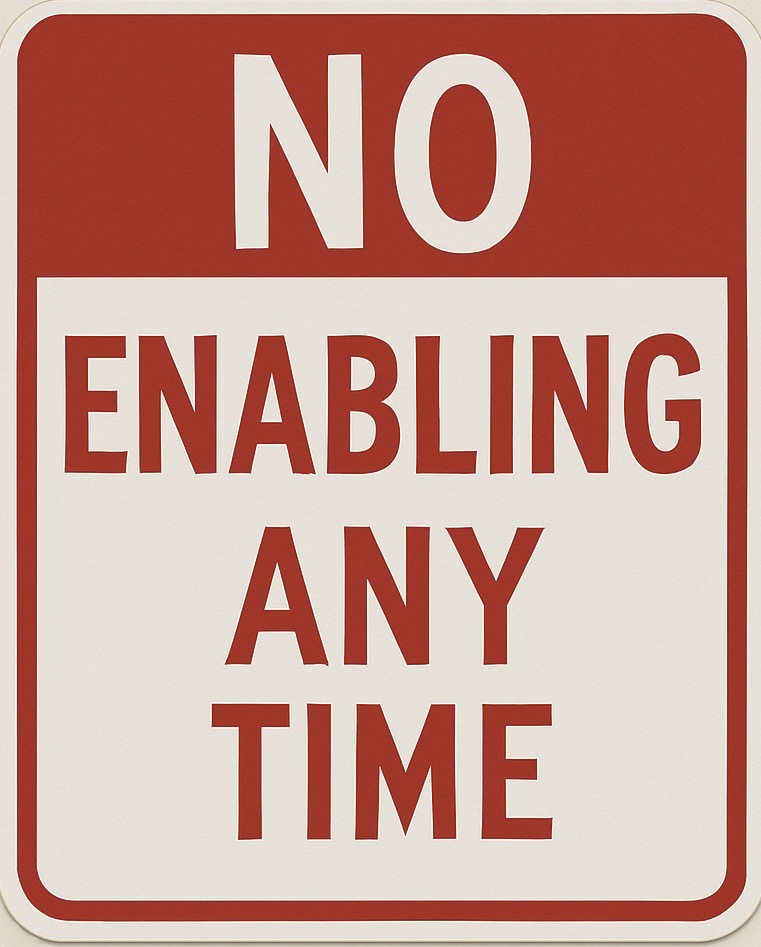

Breaking the Cycle: When Helping Becomes Hurting
There's a fine line between support and enabling. Learn to distinguish between the two and how to truly help.
Direct answer
How do I know if I am helping or enabling?
Helping supports responsibility, truth, treatment, and repair. Enabling protects addiction from consequences, usually through money, excuses, housing, secrecy, or emotional rescue.
Reviewed through Matt Brown's family intervention and coaching lens.
Open full answer →Why this is here
Families rarely need more pressure. They need clearer patterns, steadier boundaries, and a next step they can actually hold.
Written from intervention experience
This article is part of No More Enabling’s family education library, shaped by Matt Brown’s work with families affected by addiction, treatment resistance, relapse, and boundary breakdowns since 2004.
Author and editorial reviewer: Matt Brown, professional interventionist and family addiction coach. Medical claims require separate qualified clinical review.
Read this as part of a bigger pattern
If this article hits home, these guided hubs will help you keep reading in a smarter order instead of starting from scratch each time.
After Treatment Hub
Best when the crisis is quieter but the family still needs structure, support, and clear limits.
Open hub →
Spouse or Partner Addiction Hub
Best when you are asking how to love someone without surrendering your safety, children, money, or sense of reality.
Open hub →
Recovery Hub
Best when you are asking what support should look like now, not just what went wrong before.
Open hub →
If this article sounds like your family
Do this next
If the real issue is holding the line, don’t stop at reading. Work through the boundaries course next.
When your family needs a real plan
Coaching and intervention guidance with Matt Brown
If articles are helping but the situation at home is still escalating, you can ask for direct help with family alignment, boundaries, treatment refusal, relapse patterns, or deciding whether an intervention makes sense.

We want to help the people we love. When they're struggling, our instinct is to step in, to fix, to rescue. But what happens when our help isn't actually helping? What happens when our well-intentioned support becomes a barrier to someone else's growth?
This is the painful reality of enabling: sometimes the kindest thing we can do is step back.
The Difference Between Helping and Enabling
Helping empowers someone to solve their own problems and grow stronger. Enabling removes consequences and keeps someone dependent, preventing them from developing the skills and resilience they need.
Helping looks like: offering emotional support, providing resources and information, being present during difficult times, encouraging someone to seek professional help.
Enabling looks like: making excuses for someone's behavior, repeatedly bailing them out of consequences, doing things for them that they should do themselves, tolerating unacceptable treatment to keep the peace.
The key distinction is who does the work. Helping provides a ladder; enabling carries the person up the stairs. One builds strength; the other builds dependency.
Why We Enable
Most of us don't set out to enable someone. We start from a place of love and care. We see someone struggling and we can't bear their pain. We step in because watching them suffer feels unbearable.
But often, there's something deeper at work. Enabling can make us feel needed, important, indispensable. If we're the one who always rescues, we have a role, a purpose. Our identity becomes tied to being the helper, the fixer, the one who holds everything together.
We might also enable because we fear the alternative. What if we step back and things fall apart? What if they fail? What if they're angry with us for not helping? These fears keep us stuck in patterns that don't serve anyone.
The Cost of Enabling
Enabling exacts a heavy toll—on everyone involved.
For the person being enabled, it prevents growth. They never learn to face consequences, solve problems, or build resilience. They remain stuck, their potential untapped. They may even come to resent the helper, sensing on some level that they're being treated as incapable.
For the enabler, it leads to exhaustion, resentment, and loss of self. You pour and pour from your cup until nothing remains. Your own life, goals, and well-being fade into the background. You become a supporting character in someone else's story.
Breaking the Cycle
Breaking enabling patterns is painful work. It means tolerating discomfort—yours and theirs. It means watching someone you love struggle without rushing to rescue them. It means accepting that you cannot control another person's choices or outcomes.
Start by examining your motivations honestly. When you feel the urge to help, pause and ask: Am I doing this because it's truly helpful, or because I can't tolerate their discomfort? Am I empowering them or creating dependency? What would happen if I didn't step in?
Learn to offer support without taking over. You can say, "I believe in you. I know you can figure this out. I'm here if you want to talk through options." This communicates care while leaving the responsibility where it belongs.
Allow natural consequences to unfold. This is perhaps the hardest part. Consequences are often our greatest teachers. When we shield someone from consequences, we rob them of valuable lessons.
Trusting the Process
Stepping back from enabling requires faith—faith that the person you love is capable of more than you've been giving them credit for, faith that struggle can lead to growth, faith that your relationship can survive this shift.
It won't be easy. There may be anger, accusations, difficult conversations. But on the other side of this discomfort is the possibility of genuine change. By breaking the enabling cycle, you open the door for healthier dynamics, real growth, and relationships built on mutual respect rather than dependency.
Remember: loving someone doesn't mean protecting them from all pain. Sometimes, love means having the courage to step back and trust them to find their own way.
Free family tool
Family Rules After Rehab Worksheet
A simple worksheet for turning post-treatment hope into clear house rules, communication expectations, and relapse-response agreements.
This does not replace the Family Squares meeting. It gives you a practical tool first, then points you toward the live support room if you need help using it.
Get weekly guidance for families dealing with relationships
Every Sunday, one short email with practical family guidance on boundaries, enabling, relapse, and next steps.
"Practical, not preachy. It reads like someone who has actually sat with families instead of a wellness blog."
— Sister of a brother in relapse
Trust signals
Source-worthy public resources
These links are not a substitute for medical, legal, or crisis care. They are included to help families verify safety and treatment information from official sources.
Next best answers
If this is what you were really asking
How do I know if I am helping or enabling?
Helping supports responsibility, truth, treatment, and repair. Enabling protects addiction from consequences, usually through money, excuses, housing, secrecy, or emotional rescue.
Open answer →
How do I stop enabling without abandoning someone I love?
Stop doing what protects the addiction, but stay available for recovery-supporting action. The goal is not less love. The goal is cleaner support.
Open answer →
What should I do when an addicted loved one breaks a boundary?
Do not renegotiate the boundary in the heat of the moment. Follow through calmly, document the pattern, and review whether the boundary was specific enough to hold.
Open answer →
How should a family respond to relapse without enabling?
Respond to relapse with safety, honesty, and structure. Do not erase the consequence, rewrite the story, or rebuild the old rescue pattern.
Open answer →
Need a steadier next step?
Don’t stop at insight
The families who make progress usually do three things: they get honest about the pattern, choose one clearer next step, and stop trying to manage everything at once.
Helping or Enabling? Tool
Best when you keep second-guessing what support should look like.
Family Support Guide
Best when everything feels heavy, urgent, or emotionally scrambled.
Free Boundaries Course
Best when your limits keep getting negotiated away under pressure.
About Matt Brown and this site
Understand the experience and point of view behind the guidance here.

FamilyBridge
AI support for families across the recovery journey.